The following mediation was written by Nathanael Cameron Hood, MA, New York University; MDiv, Princeton Theological Seminary
“But now, says the Lord—the one who created you, Jacob, the one who formed you, Israel: Don’t fear, for I have redeemed yo; I have called you by name; you are mine.”
Isaiah 43:1 (Common English Bible)
It was a hot summer day in July 2006 when U.S. Air Force military chaplain Lt. Col. Brian Bohlman first reported for duty at the Landstuhl Regional Medical Center (LRMC) in Germany. As the largest American hospital outside the United States, it became the epicenter for treating American, NATO, and other allied soldiers critically wounded during the War on Terror. Though tired and slightly jetlagged, Chaplain Bohlman was immediately thrown into the deep end of military chaplaincy when, during his initial tour of the hospital, he was alerted that a bus of wounded soldiers would be arriving at the ER in half an hour. Many were in critical condition after receiving catastrophic “blast and burn injuries” from IEDs. Indeed, Chaplain Bohlman recounts how some arrived attached to life-support equipment that literally weighed hundreds of pounds. Though separated by an ocean from active combat zones, right then, Chaplain Bohlman found himself face-to-face with the very worst realities of war.
Military chaplains have served as part of the United States Armed Forces since the Revolutionary War, and though their duties have evolved over the years, they’ve traditionally had certain privileges unique to them. It was on that hot day in July that Chaplain Bohlman discovered one such exception to standard military etiquette when he was informed by his superior that upon arrival, each patient would be introduced to him in turn not by their rank and last name, but by their first name—just their first name. He recalls meeting his first patient and being told by an attending sergeant that his name was John. Looking down on the stretcher, the scared, scarred soldier grabbed his hand and wouldn’t let go. “John, welcome to Germany,” Chaplain Bohlman soothed, “you’re safe now, and we’re here to take good care of you.” In that moment, the two were no longer chaplain and soldier—they were just Brian and John, two human beings under the care of God.[1]
There’s a simple power in names, one reflected all throughout the Bible. In the Ancient Near East where the Hebrew Bible was first written and compiled, names were more than just labels—they were “symbols, magical keys…to the nature and essence of the given being or thing.”[2] Put simply, your name wasn’t just what people called you—your name was who and what you were. Many of the most dramatic moments in Scripture are moments of naming and re-naming as they mark some of the most intimate encounters between humanity and the divine: Abram becoming Abraham, the father of nations; Saul becoming Paul, the great evangelist; the Annunciation when Gabriel told Mary that she would bear a son named Immanuel, meaning “God is with us.”
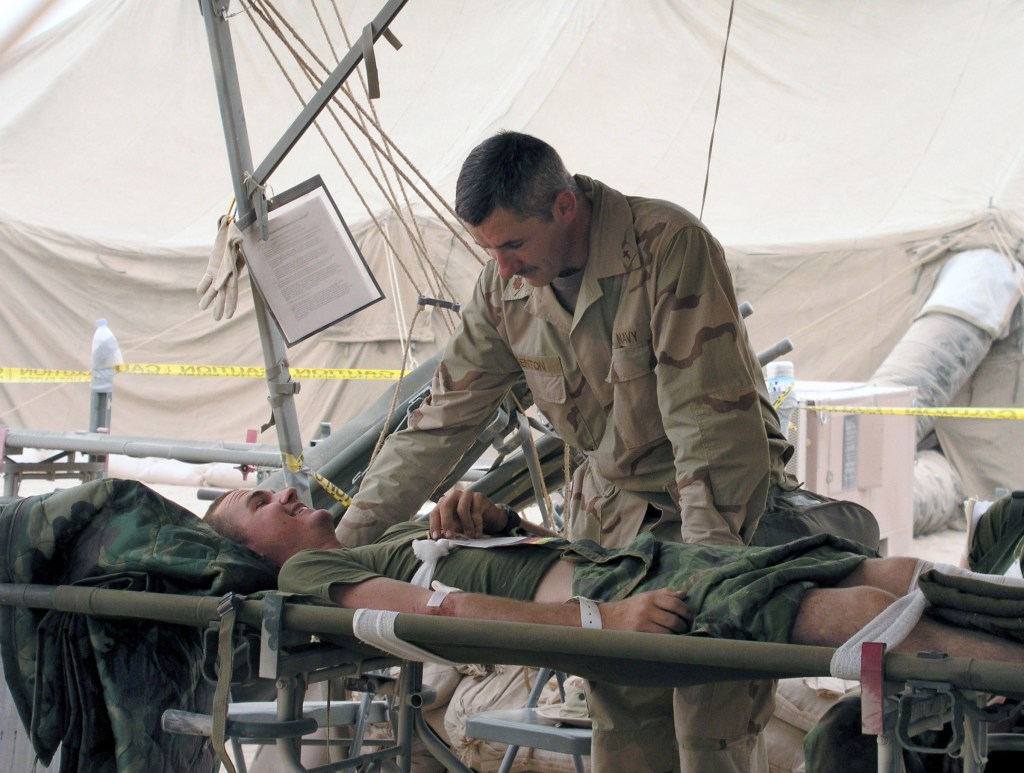
The forty-third chapter of Isaiah contains another such example of the power of names. Written during a time when Jerusalem had been destroyed, and its people carried off to exile in Babylon, many of the survivors were given new names by their conquerors. Ah! But in this first verse God strikes down these new names, reminding them who created and formed them, that “I have called you by name; you are mine!” I wonder how many people in our modern society in the millennia after Isaiah was written similarly labor under false names: immigrants forced to adopt easy-to-pronounce English names for fear of ostracization; workaholics who disappear into their jobs and job titles; persecuted minorities debased by racial and ethnic slurs. How wonderful, then, that ours is a God who sees through these things and calls us by our names. Our true names that reflect our true, inner selves. The ones given to us at our birth, the ones no foreign power like Babylon, the ones no military pretension or IEDs, can change or take from us. Praise be to our God and the names God has named us! Israel. Emmanuel. Brian. John.
Joy,
[1] Bohlman, Brian. “Voices from the Field: Ready on the Ground: A Military Chaplain’s Reflection on Wounded Warrior Ministry at Landstuhl Regional Medical Center, Germany.” Essay. In Chaplaincy and Spiritual Care in the Twenty-First Century: An Introduction, edited by Wendy Cadge and Shelly Rambo. Chapel Hill, NC: The University of North Carolina Press, 2022, 62-64.
[2] Speiser, E. A. The Anchor Bible – Genesis. Garden City, NY: Doubleday & Company, Inc., 1964, 16.
~~~~~~~~~~~~~~~~~~~~~~
To read more meditations by Dr. Doug Hood and Nathanael Cameron Hood, you can purchase Nurture Faith: Five Minute Meditations to Strengthen Your Walk with Christ from your favorite book seller.
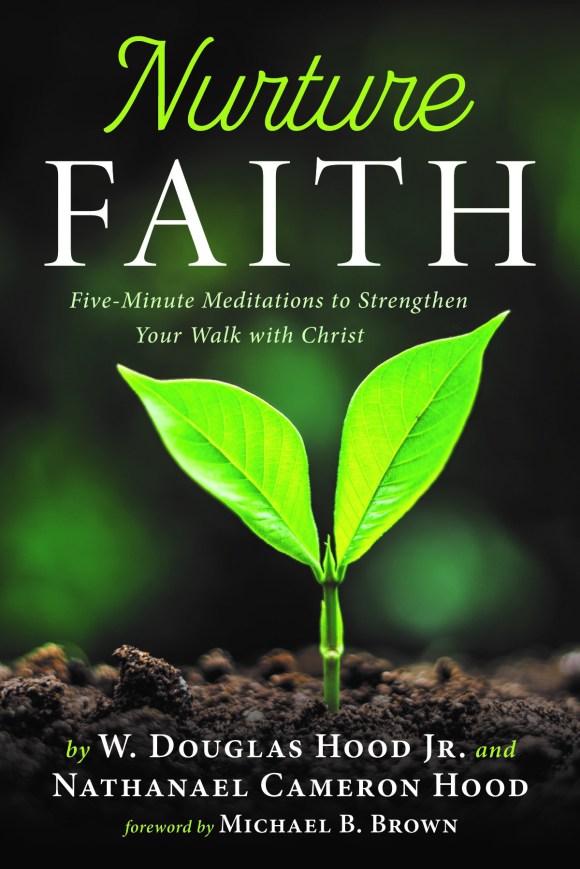
Any royalties received support the ministry and mission of First Presbyterian Church of Delray Beach.
 Nurture Faith with Dr. Doug Hood