Categories
Religious

A Call to Prayer

“Early in the morning, well before sunrise, Jesus rose and went to a deserted place where he could be alone in prayer.”

Mark 1:35 (Common English Bible)

My grandmother kept a large, white, faux leather cover Bible prominently in her home—usually on a coffee table, though she would occasionally move it about her home as though it was a traveling exhibit. Embossed into the cover was a full-color picture of Jesus kneeling by a great rock in the wilderness. Each time my eyes fell upon that Bible, I felt as though it was a call to prayer. The face of Jesus was not anxious, not desperate as my own on those occasions I did pray. His face portrayed confidence; a radiance one has in the company of loved ones who care deeply about us. Absent was worry, doubt, or any trace of anxiety that threatened to consume. Yes, a call to prayer was evident in this picture of Jesus. However, that call made me uncomfortable—uncomfortable because I would experience a lack of spiritual power. With the disciples, I heard my own heart say, “Lord, teach us to pray like that.”

In this Scripture, Jesus had just finished a hard, demanding day. Another day of similar demands stretched before him. How could Jesus be ready for it? Mark’s Gospel gives us the answer and, with it, important insight into Jesus’ power, “Early in the morning, well before sunrise, Jesus rose and went to a deserted place where he could be alone in prayer.” Jesus was intentional with prayer. Jesus wove into the fabric of each day a time to be alone with God. Jesus regarded this time as a vital part of the human experience. Prayer was an opportunity to link his life with the purposes of God and cultivate a friendship with God. This friendship produced the confidence that Jesus would not face any of life’s demands alone. That would be the source of Jesus’ spiritual power.

My lack of spiritual power as a child was from an inadequate view of prayer. I had reduced prayer to those occasions when I would ask God for a favor or for help with a difficulty. Consequently, days without prayer would pass—I simply did not have any request to make of God. Yet, as I matured, I continued to pay attention to that picture on my grandmother’s Bible, that picture of Jesus at prayer. It grew upon my consciousness that prayer is the same as time spent with a friend or loved one. I may not have anything to ask of my friend, but I did enjoy their company. I felt valued by them, loved by them, and strengthened because of their friendship. The same happens with prayer—a strong hand on the shoulder and the confidence to face each day swelling within. Power comes as we find ourselves surrounded by God’s love, guidance, and strength.
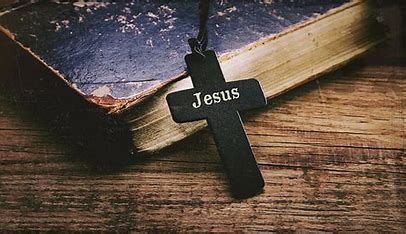
With this refreshing surge of power that flows from regular time in prayer, it is very strange then that we should be content with so little prayer. The weakest, most fearful individual can experience greater strength through the regular rhythm of prayer each day. As this passage of Scripture demonstrates, prayer each day for Jesus was as ordinary as enjoying a meal. Jesus prayed often. Jesus prayed for himself and for others. Jesus prayed when he faced a crisis, and Jesus prayed simply to be alone with God. Jesus urged his disciples to pray, and Jesus taught prayer by example. What the disciples discovered is that regular prayer did not only sustain Jesus’ ministry; it gave direction. Immediately after Jesus rose from prayer this particular morning, Jesus knew what he must do that day. He was not to return to the previous day’s work. Jesus was to head in the other direction. God had new work for him there.

Joy,


This meditation is from Dr. Doug Hood’s soon to be published book, “A Month of Prayer: Five Minute Meditations for a Deeper Experience of Prayer”.

Categories
Religious

Brush Strokes

Don’t be conformed to the patterns of this world, but be transformed by the renewing of your minds so that you can figure out what God’s will is—what is good and pleasing and mature.”

Romans 12:2 (Common English Bible)

Gilbert “Dibo” Doran holds the Curacao’s 2019 title as the King of Tumba, Curacao’s Carnival anthem. A music genre indigenous to this area of the Caribbean, Tumba has its roots in the history of slavery and remains popular for ending parties on a high note. “Nowadays, the Tumba Festival is the biggest music festival on the island. Local composers and musicians compete for living their culture to the max.”[1] Doran self-identifies as a “patriot to the bone” asserting that one’s culture and tradition are part of your identity. It’s your roots. Through his original music compositions, Doran desires to leave his mark on the music genre, to be an example, and contribute to the longevity of the cultural imprint of the Tumba Festival. Perseverance is key, adds Doran.

Gilbert Doran is a man whose life is organized around a central purpose. Raised in a single-parent home, Doran neither ran away from life nor ran along with life. He set himself apart from other children by intentionally directing his life around a core passion—a passion for the culture, folklore, and tradition of Curacao, particularly as expressed in music. “Instead of a bike or a Nintendo, I would ask for drums, a piano, or cymbals as a gift.”[2] Doran stands proudly among women and men who have done the most for the world precisely because they are nonconformists. He has elevated the level of life for ages to come for the people of Curacao because of a driving passion to contribute positively to his corner of the world.

This is precisely what the Apostle Paul is asking of those who would follow Jesus Christ. Be a nonconformist! Don’t go along with life, drifting wherever the flow of life may take you, becoming shaped by whatever forces surround you. Set your mind on God. Learn of God. Seek to know God’s will and discern all that is good, pleasing, and mature. As Doran held, perseverance is key. The distinguished preacher from another generation, Robert J. McCracken once observed, “The reason why so many people are at the mercy of circumstance is that they have neither discovered a faith by which to live nor a cause to serve.”[3] The “patterns of this world” exert a powerful shaping influence upon each person. The Apostle Paul provides another way. Draw on spiritual resources greater than your own. Fix your eyes on God.

Many people today take the path of least resistance. Without a driving conviction to mature in the faith through regular time with God by prayer and reading the Bible, they are caught by the flow of life and carried along paths and channels they have not chosen. The usual result is that their life begins to reflect the standards and practices of their environment. The people they meet and the things that happen to them likely shape who they become. It is as though they surrender the brush strokes that paint their life portrait to an unknown hand. Here, in his letter to the church in Rome, the Apostle Paul urges that we submit the brush strokes that will paint our portrait to the hand of the Master, Jesus Christ.

Joy,


[1] Rosa, Nelly, “I Want My Legacy to Live On”, Caribbean Beat, January/February 2020. 85.

[2] Rosa, Nelly, “I Want My Legacy to Live On”, Caribbean Beat, January/February 2020. 85.

[3] McCracken, Robert J., “The Peril of Conformity”, Best Sermons: 1951-1952 Edition, New York: McMillan Company, 1952, 24.


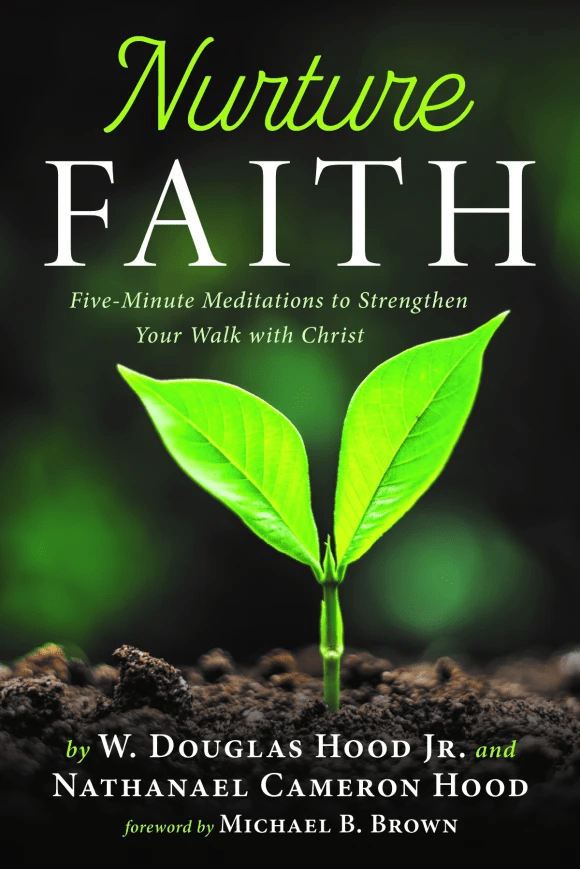
To read more meditations by Dr. Doug Hood and Nathanael Cameron Hood, you can purchase Nurture Faith: Five Minute Meditations to Strengthen Your Walk with Christ from your favorite book seller.

Any royalties received support the ministry and mission of First Presbyterian Church of Delray Beach.

Categories
Religious

A Thankful People

“The peace of Christ must control your hearts—a peace into which you were called in one body. And be thankful people.”

Colossians 3:15 (Common English Bible)

There is an unsettling moment in the novel, Girl with A Pearl Earring, by Tracy Chevalier. Set in the Netherlands in the mid-1600s, a family that struggles to have enough grieves the loss of a young daughter, Agnes, from a plague that griped their residential quarter of Delft. With a despairing shake of the head, the mother laments, “God has punished us for taking for granted our good fortune. We must not forget that.”i The loss of a young daughter is tragic, particularly a loss due to a plague that outruns us. Yet, the loss is made even more tragic when one is gripped with a flawed notion of the character of God. A lack of gratitude does not stir the wrath of God; it does not move God to punish. Continuing from one generation to the next is a failure to grasp what God is up to into the cross—God’s movement toward our brokenness is one of grace, not vengeance.

A theme of Paul’s correspondence to the church in Colossae is gratitude—one captured three times in three verses! But this theme is not generated as a warning to the church. Rather, the invitation to gratitude is promised as an opportunity to break, and finally diminish, a culture of ingratitude that permeates our lives. Ours is a culture that seeks to grasp more and more as though there exists a scarcity of resources. Hidden deep within our consciousness is a fear that failure to acquire good things now will result in our missing out. The result is a growing hunger to acquire more. Fear grows that we may not have enough, exhaustion in our striving diminishes appreciation—even joy—in what we presently have, and a competitive spirit shapes a heart that results in dissatisfaction. Finally, we are consumed by this endless striving, our hearts are emptied of peace, and we become an ungrateful, even unhappy, people.

Paul’s antidote is gratitude—generating intentional thankfulness for God’s good creation, for the gift of our lives and the opportunity to love and be loved, and for the gift of redemption from brokenness and sin. Cultivation of gratitude for the ordinary as well as the extraordinary moments available each day will break the culture of ingratitude that tightly secures us in chains. A simple lunch shared with friends, the laughter of children at play, and taking notice once again of the beauty of the earth—the seashore, lush mountains, or flowery meadows—grows upon our consciousness, and we question how we failed to enjoy them before. More, we realize a movement away from a lonely and competitive pursuit of new riches and a movement toward a strong sense of community cohesion that marks us as part of something so much more than our individual lives—members of the body of Christ.

David L. Bartlett shares that in Decatur, Georgia, there is a church that might have been named with Colossians in mind: The Thankful Baptist Church. “Colossians claims that, as with Thankful Baptist Church, when we dress up for each day’s work, we dress ourselves in Christ, with thanksgiving. In a religious marketplace that pushes happy Christianity, Colossians speaks a word for thankful Christianity.”ii Bartlett advances his observation here that thankfulness is harder to come by than happiness but is immeasurably better. Vibrant churches—as well as vibrant disciples—understand the need for gratitude to guard from self-absorption and, finally, despair. Jesus’ own prayers sparkled with expressions of gratitude. Each prayer cultivated, strengthened, and reminded him that God is the very center of our life. Bartlett suggests this prayer, “You have given me so much, O God—I ask but for one thing more, a grateful heart.”iii

Joy,


i Tracy Chevalier, Girl with A Pearl Earring (New York, New York: Penguin Books 76.

ii David L. Bartlett, Feasting on the Word: Preaching the Revised Common Lectionary, Year C, Volume 1: Advent Through Transfiguration (Louisville, Kentucky: Westminster John Knox Press) 163.

iii Ibid, 163.


To read more meditations by Dr. Doug Hood and Nathanael Cameron Hood, you can purchase Nurture Faith: Five Minute Meditations to Strengthen Your Walk with Christ from your favorite book seller.

Any royalties received support the ministry and mission of First Presbyterian Church of Delray Beach.

Categories
Religious

Borrowing Time for Prayer

“Jesus was telling them a parable about their need to pray continuously and not to be discouraged.”

Luke 18:1 (Common English Bible)

Near the beginning of my present ministry, I placed a brass plaque on the pulpit positioned just above the Bible. It reads, “The pulpit must be the grave of all human words” by Edward Thurneysen. We don’t come to worship for human advice. If we did, a church service would be no different than a Ted Talk. I need to be reminded each week that people come not for an expression of my opinion; they come for the Word of God. Here in this teaching from Luke’s Gospel, Jesus is telling a parable about an opportunity to pray continuously. Jesus believed in prayer. Jesus prayed often. Jesus now wants us to know that prayer is nothing less than approaching the presence of an infinitely holy God. It is an invitation received from God. We must sense the gravity of that invitation and not be relaxed about prayer. Thought, preparation, and intentionality are a more responsible response to God’s invitation to prayer.

A shared difficulty with this approach to prayer is sheer busyness. A man I admire in my present congregation once told me that Jesus’ invitation for regular, daily prayer was a “tall ask.” He owned a business with nearly nine hundred employees. Regular demands upon him rarely left time for reading the Bible, a helpful daily meditation, and prayer. I sympathized and tried to understand. Yet, I also hear that God’s claim upon us—God’s claim upon the life of my friend—isn’t negotiable. Jesus asks that we pray continuously. That isn’t advice from the pastor. It isn’t the opinion of a human. It is all Jesus. A hit-or-miss casualness toward prayer is simply unacceptable. Close attention to Jesus’ life discloses that Jesus remained busy healing, teaching, and proclaiming God’s Kingdom. It would be an interesting debate between my friend and Jesus, which one of them worked harder.

What my friend failed to grasp is that the time borrowed for reading Scripture, a brief meditation, and prayer will not be lost from his work. The poise, and steadiness, and increased wisdom granted from time with God each morning will be recompensed to him many times over. That great leader of the early church, Martin Luther, understood this. He commented that the busier he was, the more time he took in the morning for prayer. There is simply no substitute for the value added to each day after being steadied and strengthened by God. Bruce Larson, a Presbyterian pastor of another generation, once spoke at a conference I attended on the value of prayer in his life. He said that if he missed a day of prayer, he noticed the difference. If he missed several days of prayer, his family noticed the difference. If he missed three days, his friends noticed the difference. If he missed for a week, his congregation noticed a difference.

Bryant Kirkland shared in a sermon before the faculty and students of Princeton Theological Seminary something he once found on the wall of an army chapel. It said, “Nothing happens here unless you want it to.”[i] Naturally, the question for each of us is, what do we want to happen by prayer? What Jesus found in prayer was less a power to effect miracles and more a presence—God’s presence—that brought in generous measures of strength in weakness, encouragement in discouragement, and inspiration to reach for greater heights. More, Jesus found someone who would never abandon him. Anne Frank wrote that she was prompted to keep a diary simply because, “I don’t have a friend.”[ii] Jesus doesn’t want that to be our story. Rather, Jesus desires to introduce to us, through prayer, a God who not only desires to draw close to us but will create in us a transformative story. Confidently, Jesus asks, “Pray continuously and not to be discouraged.”

Joy,


[i] Bryant Kirkland, God’s Gifts, The Princeton Seminary Bulletin, Volume VII, Number 3, p.268.

[ii] Anne Frank, Anne Frank: The Diary of a Young Girl (New York: Anchor Books, 2001) 6.


To read more meditations by Dr. Doug Hood and Nathanael Cameron Hood, you can purchase Nurture Faith: Five Minute Meditations to Strengthen Your Walk with Christ from your favorite book seller.

Any royalties received support the ministry and mission of First Presbyterian Church of Delray Beach.

Categories
Religious

Profit, Loss, and Gratitude

The following meditation was written by Doug Hood’s son, Nathanael Cameron Hood, a recent graduate of Princeton Theological Seminary.

For what shall it profit a man, if he shall gain the whole world, and lose his own soul?”

(Mark 8:36 KJV)

In 2018, Michael Norton, a professor at Harvard Business School, co-led a study where over 2,000 people with a net worth of at least $1 million were interviewed about their personal happiness. Two of the questions which produced the most revealing answers concerned his subjects’ self-satisfaction with their personal wealth. First, Norton asked them to rate their happiness on a scale of one to ten. Second, he would ask them how much more money they would need to get that happiness rating up to a ten. As Norton explained in an interview with The Atlantic: “All the way up the income-wealth spectrum basically everyone says [they’d need] two or three times as much.”1 One would imagine that at a certain point when money stops being an issue, when private planes become as negligible an expense as a morning cup of coffee, enough would be, well, enough. But, as Norton discovered, human psychology doesn’t always work sensibly—or rationally.

The idea that wealth can’t buy happiness isn’t a particularly new or novel revelation. After all, one of the most famous and enduring stories of the last few centuries—Charles Dickens’s A Christmas Carol—centers on a miser whose insatiable hunger for wealth left him so miserable, lonely, and despised that it took an act of God to save him from himself. Or consider J. Paul Getty, the infamous founder of the Getty Oil Company who was once listed in the 1960s as the richest man on earth. He was so single-minded in his pursuit of wealth and so paranoid in clinging to it that he once famously forced his kidnapped grandson to pay him back the ransom money he spent—with interest!

There are many ways that the stories of Scrooge and Getty could (and perhaps should) be read as cautionary tales, but one of the most glaring involves their common lack of gratitude. Was Scrooge thankful as a young man with a successful job and a beautiful fiancée? No, he traded both for loneliness, a gloomy apartment, and a bigger bank account. Was Getty thankful for his grandson’s recovery from kidnappers? No, he saw it as yet another business transaction. There have been scientific studies proving that cultivating gratitude results in improved mental health and personal happiness, but perhaps equally important is the idea that gratitude protects us from losing our very humanity in the search for wealth and success. Put another way; gratitude keeps us from becoming a Scrooge or Getty.

Shortly after he predicted his death for the first time in the Gospel of Mark, Jesus Christ gave a brief sermon to his disciples about the importance of taking up one’s cross and following him. It’s only a few verses long, but it contains one of Jesus’ most startling teachings, namely that anyone who seeks to save their lives by their own power will lose it. What use is gaining the whole world, Jesus asks, if you lose your soul in the process? And indeed, looking at the lives of Scrooge and Getty we see two men who leveraged their souls a long time ago. Imagine how much a little gratitude could have changed the lives of Scrooge and Getty. Let us give thanks that there is still plenty of time for the rest of us to make the change.

Joy,


1Pinsker, Joe. “The Reason Many Ultrarich People Aren’t Satisfied With Their Wealth.” The Atlantic, February 13, 2019. https://www.theatlantic.com/family/archive/2018/12/rich-people-happy-money/577231/.  


To read more meditations by Dr. Doug Hood and Nathanael Cameron Hood, you can purchase Nurture Faith: Five Minute Meditations to Strengthen Your Walk with Christ from your favorite book seller.

Any royalties received support the ministry and mission of First Presbyterian Church of Delray Beach.