Categories
Religious

Faith in Prayer

“Jesus was telling them a parable about their need to pray continuously and not to be discouraged.”

Luke 18:1 (Common English Bible)

I believe in prayer. I believe that prayer is the most important fact in the life of anyone who is determined to follow Jesus. The trouble with prayer is not belief in the practice—it is what is expected from it. For many, prayer is practiced as some sort of holy magic. Pray correctly and with enough faith, and the desired result arrives every time. Unanswered prayer is simply the result of praying incorrectly or with insufficient faith. This belief is troubling, if not downright harmful, to a person of faith. In this sentence from Luke’s Gospel, Jesus teaches that we are to “pray continuously.” Rather than suggesting yet another formula for prayer—pray continuously—I believe our Lord is inviting us to discover at least two ways that prayer is effective.

On one level, prayer opens the one who is praying to a relationship with God. Meaningful relationships are not built by one or two sentences that are shaped into a request, not with God or anyone else. “Continuous prayer” is the cultivation of a regular conversation with God. This is the kind of conversation between two people caring for one another. Whether we are angry or thankful, whether we are sharing from a broken heart or celebrating, we share continuously with those whom we love. Such conversations draw us closer to one another. It is that closeness with us that God desires.

A second level involves the one for whom we pray. By our prayers, that person is not alone. Continuous prayer keeps them in the fellowship of our thoughts and our hearts. A community of faith is created, which liberates them from walking a difficult path unaccompanied by someone who cares. Encouragement and strength bubble forth when we know that there is someone who is “pulling for us.” Creating community among people of faith is one result of continuous prayer.

Faith in prayer does not exclude expectations of the miraculous. God is still in the miracle business. But we are guilty of a grievous error when we reduce prayer to “getting what we want.” That makes God a dispenser of religious goods and services while we continue to build the life we want apart from God’s claim upon us. Christian prayer is always undergirded by a conviction that God is reconciling us to God’s self for the purpose of being used by God for God’s ongoing work in the world. “Continuous prayer” is an affirmation that our life is not ours to do as we wish. We belong to God, and it is for God that we live.

Joy,


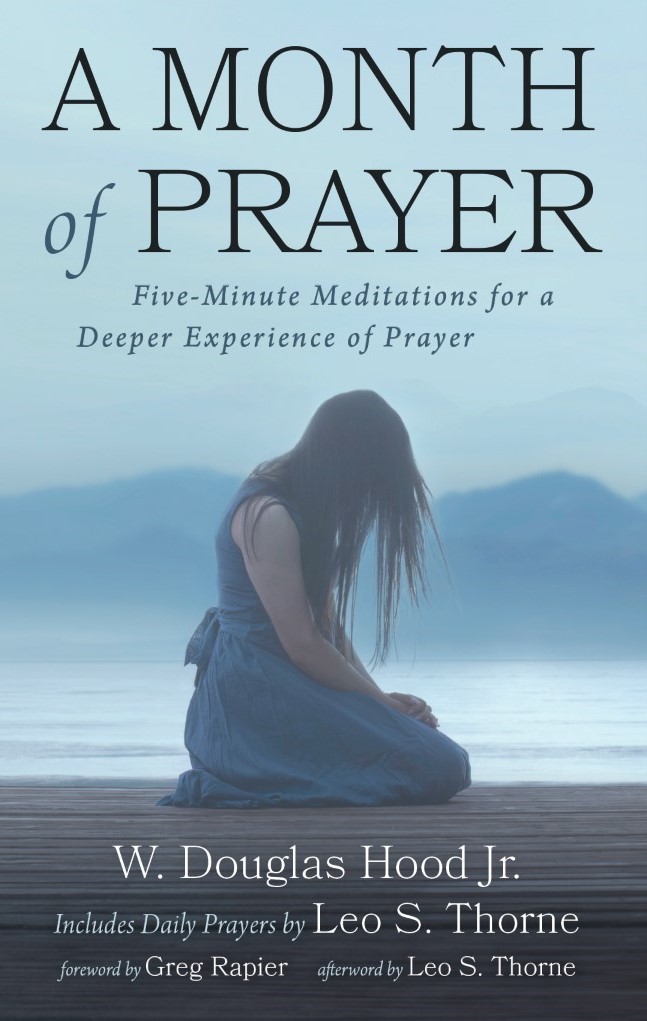
This meditation is from Dr. Doug Hood’s new book, A Month of Prayer: Five-Minute Meditations for a Deeper Experience of Prayer, coming soon.

Categories
Religious

Summons to Gratitude

“Truly God is good to Israel, to those who are pure of heart.”

Psalm 73:1 (Common English Bible)

The creation story of Genesis summons God’s people to gratitude. The Lord took Adam, the first man of God’s creation, and placed him in the Garden of Eden to farm and take care of it. Additionally, Adam is invited to “Eat your fill from all of the garden’s trees.” (Genesis 2:16b). Yet God’s abundance did not end with an orchard. God realized that being well-fed isn’t enough. God declared it was not good for Adam to be alone. So, God fashioned a woman and brought the woman to Adam, who embraced her as his wife. Together, they would share in the goodness and abundance of God. For this, Adam and his wife were created. For this, Adam and his wife were summoned to gratitude, and in this gratitude, they would find their happiness. Gratitude is how we measure what is made available to us, however much or little it may be. It is a spirit that positively shapes us and folds us into a life of faith.

The Seventy-third Psalm celebrates this summons with a ringing declaration, “Truly God is good to Israel, to those who are pure in heart.” But as the psalmist continues to write, we discover that gratitude had nearly been lost for a moment. Immediately after the bold declaration of the first verse, there is a confession that the psalmist’s feet had almost stumbled. The cause is quickly identified: human eyes turned away from what God is providing to look upon the prosperity of another. Comparison is measured between what we have and what another enjoys. The result of this comparison is a perceived imbalance—the other has more! Jealously poisons the heart, and bitterness, or anger, or both, presses against a heart once pure. This sight of another’s prosperity created a sickness of heart and fueled a cynical spirit. And the psalmist’s feet nearly stumble beneath.

The antidote to this sickness, to this cynicism, is then announced: The psalmist went into the sanctuary of God. Eyes were directed away from another, and their prosperity to see God once again. In prayer, in reading the Bible, and in worship, we are reminded once again that we deserve nothing. Yet, in God’s grace, we have. We may have little or much, as the apostle Paul declares in one of his letters, but we have. Eyes directed back to God returns to us a true perspective—to view life, as it were, through the eyes of God. In the creation story of Genesis, Adam is placed in an orchard. Yet, careful attention to the story reveals that Adam is not to eat of one tree. Though this detail holds rich theological implications, let this one thing be understood: we were never created to have it all. Eyes turned away from God strive for much. But eyes turned toward God release gratitude for what we already have.

The Bible’s summons to gratitude does not minimize the pain of loss and disappointment. Each is experienced during life, though some may experience both in greater measure than others. There are people who have longed to marry and never do. Others have wrestled with the loss of marriage, either through divorce or the death of a spouse. Health challenges or the loss of a child challenge the maintenance of a robust faith. The apostle Paul speaks of an unnamed “thorn in the flesh” and asks God on three occasions that God remove this pain from him. God does not. What is important is that Paul turns his attention from his struggle to focus on something beyond himself—the building of the church. Paul demonstrates that experiencing gratitude is possible only when one can direct attention from what one lacks to the presence of God. And God promised Paul that God’s grace continued to abide.

Joy,

Categories
Religious

When Faith Is Difficult

“We can’t find goodness anywhere.”

Psalm 4:6 (Common English Bible)

If there remains anyone who argues that the Bible isn’t relevant for today, they have demonstrated that they haven’t paid attention to the Bible—not close attention, anyway. Is there anything more timeless than the agonizing cry, “We can’t find goodness anywhere?” Each morning our minds are disturbed by the growing threat of the militant Islamic group, ISIS, the conflict between Israel and Palestine, and the racial unrest in Ferguson, Missouri. Beneath these attention-getting headlines is the less-mentioned but the continuing concern of the growing wealth gap in our country and the millions in our nation who struggle daily to simply have enough. There are no snappy answers to the painful question of human struggle.

It is well that the Bible does not offer a quick and pre-fabricated answer to this despairing cry. And it is best for us to refrain from such a temptation. First, we are not free to indulge in cynical or dismissive attitudes such as, “Well, that’s life,” or “Bad things just happen.” As followers of Jesus, we are baptized into the common confession that our lives are in the hands of God and that this God is a God of love. Second, we don’t occupy some place between God and humanity’s struggle. Not one of us has some special insight into the mysterious work of God in the midst of our common difficulty. Each of us must sweat it out with everyone else.

What remains is a prayer: “Lord, show us once more the light of your face.” This is the prayer of the Psalmist, and nothing new can be added. The prayer is the same today as it was yesterday, fresh and urgent. It is as new as the earthquake that shook the San Francisco Bay Area a few days ago and the agony that kept someone awake last night. It is new when we utter it personally today. No devotional, not one inspirational book can answer the plea, the emotional depth of that prayer.

On our knees, we pray. If we listen in the silence between our words, the Holy Spirit reminds us that God was never absent in the horrors of human life in the Bible—nor will God be absent today. On the Via Dolorosa—the way of the cross—in Jerusalem, God was very present in the heart of human misery, giving, giving, and giving himself so that after this, there would be no fear, no despair, and no doubt of God’s love. The cry, “We can’t find goodness anywhere,” still sounds in the streets of our communities. We live with it, and we hear it echo in our souls. But the spirit helps us recall the suffering of Christ—a suffering accepted out of Christ’s love for us. It is a love that will work for the good of all those who love him.

Joy,


This meditation is from Dr. Doug Hood’s soon to be published book, “A Month of Prayer: Five Minute Meditations for a Deeper Experience of Prayer”.

Categories
Religious

When Our Hearts Are Anxious

“Don’t be anxious about anything; rather bring up all of your requests to God in your prayers and petitions, along with giving thanks.”

Philippians 4:6 (Common English Bible)

There seems to be no shortage of excruciating stresses, interpersonal struggles, and reasons to be anxious. Some are better than others at putting on a brave face, but their demeanor hides what we all know is a fact of life—life is difficult. And many days, we find it a struggle simply to push through ordinary chores and responsibilities. A heart heavy with anxiety is exhausting.

The careful reader of the Bible will notice that anxiety and worry are mentioned often. This is good news because it says that anxious hearts matter to God. Certainly, it is important to the Apostle Paul. He writes in this sentence of Scripture that we are not to be anxious about anything. The difficulty, of course, is that saying is one thing. Doing this is quite another matter.

Fortunately, Paul doesn’t simply slap us on the back, admonish us not to worry, and leave it at that. What Paul does is offer an antidote for anxious hearts: “rather bring up all of your requests to God in your prayers and petitions, along with giving thanks.” Paul is asking that we make God a partner with everything that weighs so heavily on us. Giving voice to those things that trouble us goes a long way in reducing their grip on our lives. Yet, Paul’s advice is more than simply talking about our problems. Paul tells us additionally to give thanks, to remember in the midst of our anxiety that God has been faithful in the past, and to realize that past performance does indicate the promise of continued faithfulness.

Some years ago, a pastor in New York City would conclude his prayers by saying, “Help us to lean back into the strong arms of Jesus Christ. Amen.” Paul is saying the same thing here. Paul is not denying the power of anxiety. There was no shortage of anxious moments in his ministry. What Paul is asking that we do is remember the faithfulness of God in our past and then lean into that same faithfulness now when our hearts become heavy. There is no promise that our problems will all go away. What Paul promises is God’s peace.

Joy,


This meditation is from Dr. Doug Hood’s soon to be published book, “A Month of Prayer: Five Minute Meditations for a Deeper Experience of Prayer”.