Categories
Religious

Write Them on Your Doorframes

The following meditation was written by Dr. Doug Hood’s son, Nathanael Hood, MA, New York University; MDiv, Princeton Theological Seminary

These words that I am commanding you today must always be on your minds…tie them on your hand as a sign. They should be on your forehead as a symbol. Write them on your house’s doorframes and on your city’s gates.

(Deuteronomy 6: 6,8,9 (Common English Bible)

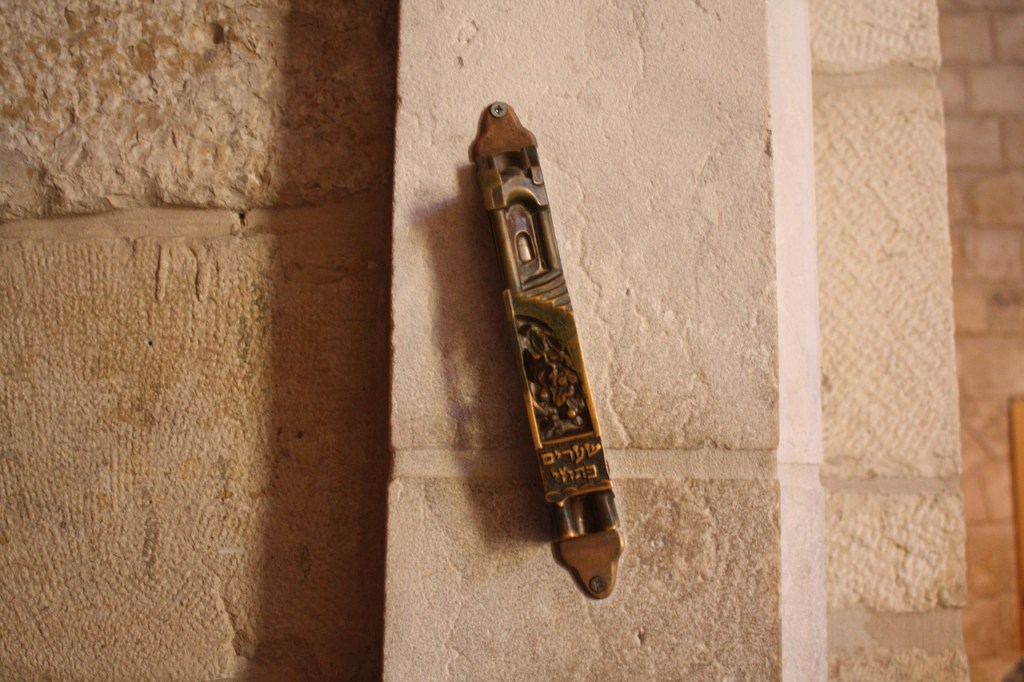
Throughout the world, if you visit a religiously observant Jewish household, you’ll likely notice a tiny tilted cylinder called a mezuzah affixed to their doorposts. Usually no more than a few inches in size, a mezuzah—or the plural “mezuzot”—is commonly inscribed with nothing but the Hebrew letter “ש,‎” an abbreviation for the word Shaddai which both Jews and Christians will recognize as one of God’s many names in the Bible. With a handful of exceptions, mezuzot are placed in each doorway within a Jewish household. These mezuzot are not solid talismans but hollow containers holding a parchment scrape inscribed with verses from the Torah, the first five books of the Old Testament. There are many rules and regulations surrounding their construction, installation, and maintenance—only a specific kind of parchment can be used, the verses must be written by a specifically trained scribe, they must be affixed within a specific time frame after moving in, a specific blessing must be said as they’re installed, and they must be specifically checked for deterioration or damage every few years.

For religious outsiders, this might seem quite the hassle! After all, when observant Christians put up crosses or crucifixes in our homes, we don’t usually have a clergyperson make, install, and maintain them! But for observant Jews, mezuzot are not simple ornaments—they fulfill one of the 613 mitzvot or “commandments” required of them in the Torah, specifically the command from the Book of Deuteronomy to affix God’s words to their “doorframes and on [their] city’s gates.” What respect! What piety! What gratitude. And “gratitude” is the proper word here, for the bestowal of the Torah and its 613 mitzvot is considered by Jewish people as cause for joy and celebration. Mezuzot, therefore, are not grim, compulsory reminders of religious doctrine, but everyday reminders that they are God’s precious covenant people.

As early Christianity diverged from traditional Judaism in the first and second centuries AD and became a religion dominated by Gentile converts, we discarded most of the 613 mitzvot—including the use of mezuzot. But there are times when I wonder whether Christianity may have lost something precious by abandoning them. I think, in particular, of a dear friend in New York City who identifies as Modern Orthodox and has mezuzot posted all throughout his apartment. I’m always deeply moved by how he’ll reverently touch them as he passes them by, lifting his hand to his lips to kiss the fingers that themselves have touched God’s words.
Understand this—I’m not advocating the Christian “reclamation” of mezuzot, but I do believe we stand to learn from our Jewish neighbors’ model of everyday religious gratitude. Too often, we Christians limit our devotions to one hour of worship on Sunday morning and to prayers before meals and bedtime. But if the promises of the Gospels are true—if we truly are redeemed from sin through Christ and guaranteed everlasting life—why shouldn’t we express a similar kind of gratitude? A joyous, sometimes euphoric everyday gratitude of amazement that, sinners though we be, we too have been chosen and redeemed, blessed and protected, cherished and beloved? So while we maybe shouldn’t affix Gospel verses to our doorposts, perhaps we Christians should strive in our own way to keep our gratitude alive and fresh all the days of our lives, in all our comings and goings. What other proper response could there be for a redemption such as that earned on the cross?

Joy,
Categories
Religious

Where to Begin

“Rather, you will receive power when the Holy Spirit has come upon you, and you will be my witnesses in Jerusalem, in all Judea and Samaria, and to the end of the earth.”

Acts 1:8 (Common English Bible)

When the king in Alice in Wonderland was asked where to begin, he said gravely, “Begin at the beginning… and go on till you come to the end: then stop.” Begin at the beginning. Naturally, that guidance seems reasonable. That is, until you have to actually open your mouth, and speak. With thoughts racing from one place to another, it quickly becomes apparent that there are many fine places to begin. Jesus tells his disciples, here in Acts, “you will be my witnesses.” Where do the disciples begin? Where are we to begin? Sharing our faith in Jesus seems reasonable until we actually confront that moment – that moment when we are asked, “Who is Jesus?”

That moment came to me one Easter morning. I was enjoying breakfast in a Doylestown, PA diner, looking over the message I would preach in just a few hours. Mary, the waitress assigned to the table where I was seated, approached with coffee and said, “I guess this is your big day, pastor!” “I guess so,” I remarked. Then Mary asked, “What is Easter all about anyway?” Initially, I dismissed her question, not thinking she was serious. But I was mistaken; Mary was very serious. It was then I took the time to really notice her, to look into her eyes and really see her. I will not forget those eyes—eyes that betrayed her silence; silence of considerable pain. “Where do I begin?” I thought. I began with her pain. “Easter means that you can stop beating yourself up. Whatever guilt you may have now, whatever mistakes you have made in life, Easter means that you are to stop immediately from beating yourself up. God has removed it all.”

“But there is more,” I said to Mary. “Easter is an invitation to pay attention to Jesus.” I shared with Mary that as she paid attention to Jesus, by reading of him in the Bible, she will discover that she will want to be more than she is now. “Pay attention long enough to Jesus and you will experience a compulsion to be something more; you will begin to live differently.”  Mary needed to hear that Jesus doesn’t leave a life unchanged. Any significant time spent with Jesus always results in a desire to be made new. “Your whole world will appear different. You will want to be different.”

“Finally, Mary, begin to follow Jesus as you learn about him.” I shared with her that what that means is to “do what he asks in his teaching.” Imagine Jesus as a mentor in life and do everything that is asked of you. Something inexplicable happens when someone commits to doing all that Jesus’ asks: they receive an uncommon power to do so. People who obey all that they understand of Jesus’ teachings receive a power from outside of themselves; a power that actually makes them something so much more than what they were. Mary began to cry and asked how to begin. That is when I knew I had come to the end. And there, in a diner in Doylestown, PA, Mary gave her life to Jesus.

Joy,

Categories
Religious

The Promise of Something New (Location: Jerusalem)

The following meditation was written by Doug Hood’s son,

Nathanael Hood, MA, New York University; MDiv, Princeton Theological Seminary

As Jesus came to the city and observed it, he wept over it.

Luke 19:41 (Common English Bible)

Pause a moment, and consider the city of Jerusalem as Jesus once saw it. Jesus the man—the Nazarene rabbi—looked upon an already ancient city straining under the yoke of Roman imperialism. Centurions elbowed through marketplaces crowded with Samaritans and Sadducees; self-righteous Israelites prayed in the squares as scabrous lepers scurried through the outskirts. In a few hours, he would be welcomed as a savior by the oppressed masses who would lay their coats and palm branches before him, singing the Psalms of David in joyous delirium. In a few days, those same crowds would scream for his death, demanding his execution at the hands of Pontius Pilate.

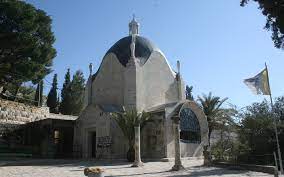
There is a small Roman Catholic church on the spot believed to be where Jesus wept in the nineteenth chapter of Luke—shaped like a tear drop, it sits on the Mount of Olives east of the city. Not too far from it is the Church of the Holy Sepulchre, believed to be situated on Golgotha, where Jesus was crucified. Did he know, when he looked upon that city, that in a week’s time he would be seeing a nearly identical view, this time tortured, beaten, and nailed to a cross? Yes, Jesus looked upon the city that would be his doom and wept.

Now consider Jesus the Divine, the physical incarnation of the holy Godhead, the living Word that is and was and will be. See the city he saw, the city first inhabited 6000-7000 years ago by shepherds thirsty for freshwater springs. See the city ruled in turn by Canaanites, Egyptians, Babylonians, and Romans, dashed by waves of invaders and dynastic restorers. See the city whose legacy is warfare and carnage, as even God’s chosen king David took it by force from its Jebusite inhabitants. See the city that would be ravaged by emperor Vespasian less than a century after his death, the second temple reduced to ashes and a single wall while over a million civilians lay dead with another 97,000 enslaved. See the city conquered by Muslims in the seventh century, contested by crusaders in the eleventh, twelfth, and thirteenth, controlled by Ottoman Turks until the nineteenth, and torn between Israelis and Palestinians to this very day. See the city originally named the “dwelling of peace” which would know none for countless generations.

How can we see this city and not weep? Earlier in the Gospel of Luke, Jesus had mourned the sacred city upon learning of Herod’s plot to murder him:

“Jerusalem, Jerusalem, you who kill the prophets and stone those who were sent to you! How often I have wanted to gather your people just as a hen gathers her chicks under her wings. But you didn’t want that.” (Luke 13:34 CEB)

Two thousand years later and the chicks have still not come home. We look out and see a world more bitterly divided than ever, edged on the brink of cataclysm. How similar it must have felt for first century Jews living under the thumb of Rome where a single order from the emperor could ravage their holiest of holies as was done in the time of Jeremiah. Yet let us not forget that it was out of this swirling void of chaos that God chose to unmake the world itself with a new covenant, one that transcended all the sorrow and brokenness of this life with the promise of a new one. These times are not the end, merely a transition from which to emerge like a certain lowly carpenter all those years ago towards a great glory.

Joy,

Categories
Religious

Wheat and Weeds

The following mediation is by Dr. Michael B. Brown, former senior minister at Marble Collegiate Church in New York City.

“Two men looked out from prison bars. One saw the mud. The other, stars.” (Dale Carnegie)

We’ve all been told time and time again that life is 10% circumstance and 90% perspective. I’m not sure the stats are that dramatic, but it’s probably close. We hear it all the time: “It is what it is.” Life happens. It’s how we interpret it that makes the difference between happiness and hopelessness.

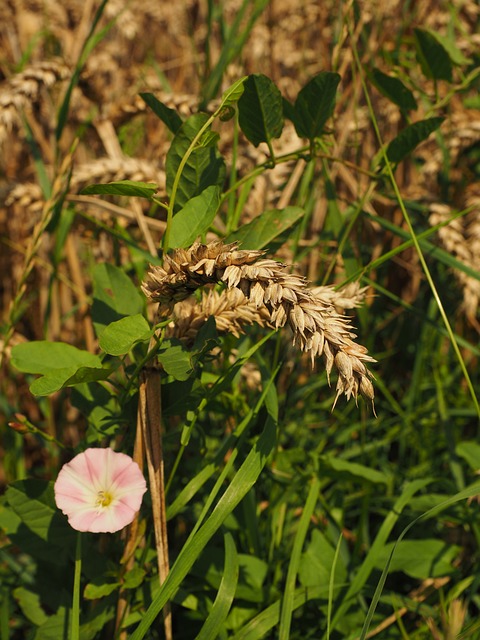
Jesus told a fascinating parable about how we see things (Matthew 23:24-43). The owner of a field and one of his chief servants were standing side-by-side looking through the same window at the same plot of ground. The servant was alarmed, pointing out that an enemy of the farmer had come and sowed weeds in the wheatfield. There were weeds were everywhere. Might as well just set fire to the whole acreage. The owner, however, replied that if his servant would take a closer look, he would also see wheat growing in the field alongside the weeds. HIs advice was to wait till the day of harvest, gather the wheat, and then burn the weeds. One saw a disaster. The other saw a harvest. Two men looked out from prison bars. One saw the mud. The other, stars.

Fred Craddock was asked what gift he would give to each of his children if he could give them only one. He immediately replied: “That’s easy. I would give them the gift of a grateful heart because that will determine how they experience everything else in life.” There are weeds in every field, if that’s where we decide to focus.

  • No person is perfect. You may recall the story of a husband and wife driving home from church one Sunday. The minister had preached on the text, “Be ye perfect, even as God is perfect.” The husband said to his wife: “I wonder how many perfect people there actually are in the world.” She answered: “One less than you think!” No person is perfect, but they (we) always exist alongside the assurance of grace.
  • No job is perfect. There will be bumps and bruises, but they always exist alongside the reality of senses of accomplishment, purpose, fulfillment, and personal pride. 
  • No marriage is perfect. But husbands and wives always exist alongside the vows “to love and to cherish” even in spite of the wheat of “ in sickness and in health, for richer or poorer.”
  • No church is perfect, but every church exists alongside the biblical truth that “we have this treasure in clay pots” (II Corinthians 4:7), and though imperfect, they are still holy. In every church I’ve ever served there were saints—not sinless people, but good and decent and faithful people who made the world a better place.

We could go on and on with this, but you get the point. Life happens. It’s how we interpret it that makes the difference between happiness and hopelessness. Craddock was right—A grateful heart will determine how we experience everything else in life. 

I often encourage people to create A Thanksgiving Journal. That’s simply a book or notepad which you put next to your bed. Every night before the lights are turned off, write down one good thing you experienced or witnessed that day. Admittedly, it may have been a long, tiring, or difficult day. Even so, there is always at least one blessing we can recall. Write it down. Then write down another the next night, and another the next. On the final night of every month, read aloud the entries from your journal. Doing so will remind us that when we pay attention, we will always discover blessings. In time, that practice will create within us spirits of gratitude which will determine how we experience life itself. It will help us, in spite of the weeds, to see the wheat and celebrate it.

Joy,

Categories
Religious

An Attitude of Gratitude

The following meditation is by Dr. Michael B. Brown, former senior minister of Marble Collegiate Church in New York City.

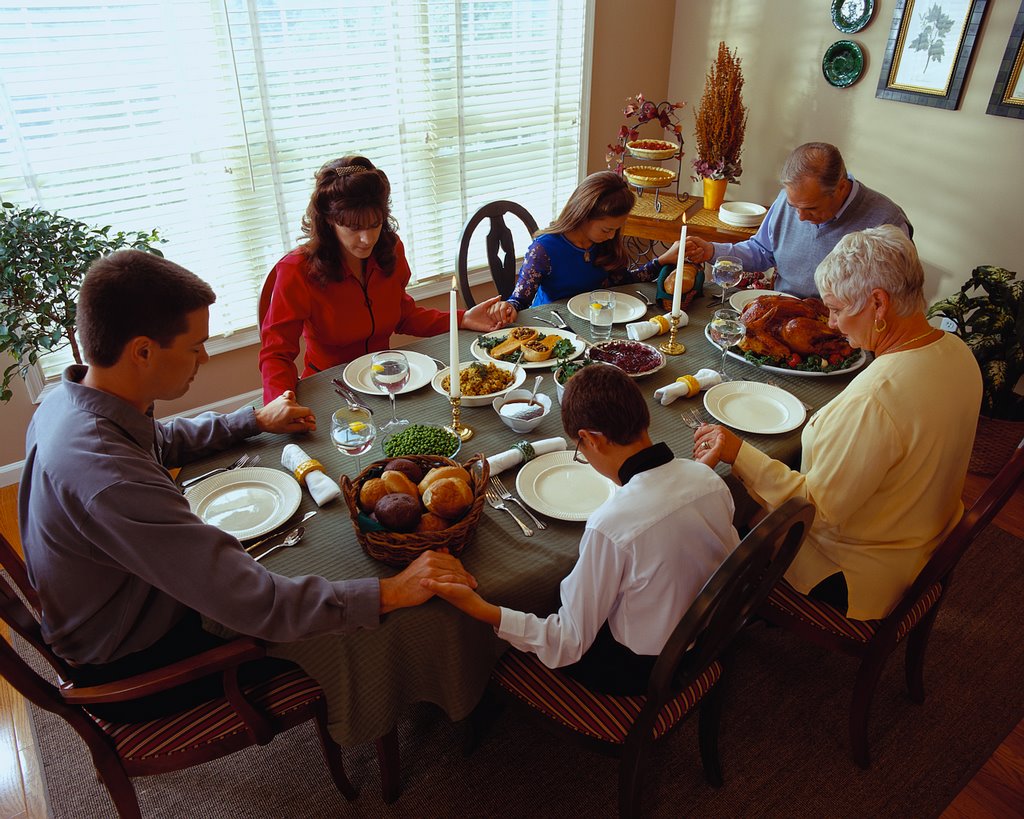
The late Dr. Charlie White told a humorous story about an elderly woman deep in the Ozark Mountains. She possessed very little in material ways, but always maintained a spirit thankfulness for what she did have. When asked to say Grace at a family holiday dinner (with a huge spread on the table), she bowed her head and said: “Dear Lord, as I look at this food I find myself thinking, I may have only two teeth, but thank God they both meet!”  

Laughter is good medicine, the Bible tells us (Proverbs 17:22). It can also be the source of deep wisdom, as in the story of that woman who said Grace. An attitude of gratitude focuses not so much on the amount of possessions as on their quality. My dad was a man with that sort of perspective about things. As a teen, whenever I would return from a friend’s house and remark to Dad about how big and beautiful it was, he had a standard answer: “You can’t live in but one room at a time.” Or, when I would brag (hint, perhaps?) about some buddy’s new car and how great it was, he would say: “The purpose of a car is to get you safely from Point A to Point B. Yours does that, so it’s a `good’ car.” The older I grow, the more I understand the astuteness of his words.

This doesn’t mean, of course, that we should denigrate nice things or fail to appreciate such things when we possess them. It is rather to say that anything which is useful, anything that brings joy or comfort, is a “nice thing.” Think of Mary, as Luke tells her story in the first chapter of his gospel. 

  • She is an unwed young girl (probably in her early teens). 
  • She is betrothed (engaged in a legally binding way). 
  • She and her fiancee are not people of means. 
  • She is startled (Luke says “confused”) by an unexpected angel who brings an equally unexpected message. Mary “will conceive and give birth to a son” though, in her own words, she has not been “with no man.” (Luke 1:28-34)

At that moment, Mary was sure of a handful of things:

  • Joseph would neither believe nor understand this strange tale, and he would in all likelihood end their relationship. 
  • Neither his family nor her own would take her at her word.
  • In her small town where everyone knew everyone else, her reputation would be ruined (she would be forever branded with a scarlet letter).
  • Even her life could be in danger, as infidelity when betrothed was a capital offense should the betrayed party choose to pursue it. 

No wonder that young girl was alarmed. And yet, when she assessed the situation in its full context, and when she focused on the angel’s words, “the one who is to be born will be holy. He will be called God’s Son (Luke 1:35),” Mary exclaimed not with fear but with joy: “The mighty one has done great things for me!” (Luke 1:49)

Mary had every reason to envy others who possessed more, or to lament the challenges that had been placed before her. But instead, she focused on the blessings, hope in the midst of hard times, goodness located in a world of challenge. She realized it is not the quantity of one’s possessions that matter, but rather the quality. And what could bring greater quality than to know she had a personal relation with the Holy One who “will be called God’s Son”? (Luke 1:35) Her awareness of quality and her gratitude for it brought her a sense of deep joy. “The mighty one has done great things for me!” That’s the place we always wind up if we cultivate attitudes of gratitude.

Joy,