Dr. Thomas K. Tewell wrote the following meditation to be featured in Dr. Doug Hood’s upcoming book, A Month of Prayer and Gratitude: Five-Minute Meditations for a Deeper Experience of Gratitude.
“Rejoice always. Pray continually. Give thanks in every situation because this is God’s will for you in Christ Jesus.”
1 Thessalonians 5:16–18 (Common English Bible)
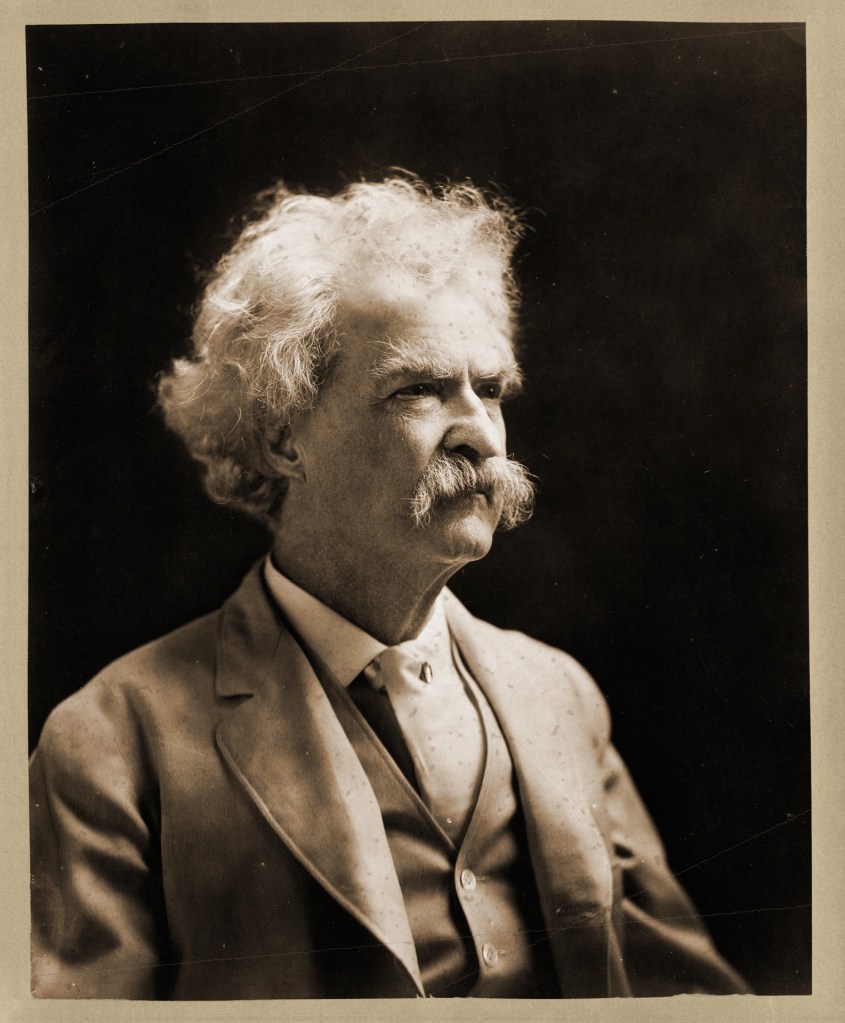
When Mark Twain was the most well-known and respected writer in the United States, he was paid $5 for every word he wrote. Someone sent him a note that said, “Dear Mr. Twain, please send me your best word,” and enclosed a $5 bill in the envelope. Mark Twain sent back a one-word response . . . “Thanks!”
Thanks really was Mark Twain’s favorite word!
In the passage from 1 Thessalonians 5, the Apostle Paul encourages us to give thanks in all circumstances. Notice that Paul didn’t say, “Give thanks for all circumstances!” The reason we give thanks is that God is with us in all circumstances! We give thanks that the same God who raised Jesus from the dead, and who guided us in the past, will guide us in the future. We give thanks that we are not alone as we face challenging situations . . . God is with us! Even when we feel that God has abandoned us, and we think that God has forgotten about us . . . God is with us! It is important to open our eyes and focus on God and not on the circumstances! This is especially true when the circumstances seem overwhelming!
This was the case in the 1630s in Germany when the Thirty Years’s War was raging throughout Europe. The walled city of Eilenberg, Germany, was so overrun with refugees, wounded soldiers, and unsanitary conditions that infection and pestilence broke out in waves and spread uncontrollably. In the year 1636, the Plague hit! That was when a thirty-one-year-old minister and a native of Eilenberg, Rev Martin Rinkart was assigned by the Lutheran Bishop to serve the Lutheran parish in his hometown. He was the only minister who survived the Plague! So, he served the parish churches throughout the city as a solo ministry! Imagine the load that he carried in those years! And as one who grew up there, Martin knew most of the citizens of Eilenberg who were dying. There were so many deaths in the city that Rev. Rinkart led as many as ten funerals and memorial services every few days!
During this bleak period, Rinkart did not focus on the tragedy of the circumstances . . . he got up every morning and he focused on God! He focused on what God was doing. How do I know? In 1636, Rinkart wrote one of the great hymns of our faith. “Now Thank We All Our God,” that focused on Mark Twain’s best word . . . “thanks!” Rinkart focused on the presence of God and the love and support of the congregations in those tumultuous times and not on the tragic deaths or the circumstances. The first two stanzas bear witness to a God who remained steadfast in a time of tragedy and unanswered questions.
Stanza 1. Now thank we all our God with heart and hands and voices
Who wondrous things hath done, in whom this world rejoices;
Who from our mothers’ arms hath blessed us on our way
With countless gifts of love, and still is ours today.
Stanza 2. O may this bounteous God through all our life be near us,
With ever joyful hearts and blessed peace to cheer us;
And keep us in God’s grace, and guide us when perplexed,
And free us from all ills in this world and the next![1]
Martin Rinkart was honest enough with his feelings to admit that he was perplexed about the circumstances, and he wondered out loud during his daily prayer and memorial services, “where is God in the midst of this tragedy?” But as he wrestled with God and wondered about God’s presence and God’s seeming absence, Martin’s focus was still on God’s provision of comfort in this life, and eternal life in the next. This hymn is a powerful testimony to Mark Twain’s best word . . . thanks!
I have a dear friend who is a Jewish rabbi. The Rabbi urges his congregation to give thanks for one hundred things every day. And, with a twinkle in his eye, he tells them that if they can’t think of one hundred things for which they are thankful, they should open their eyes. The rabbi is quite right. God is at work in all circumstances. But we don’t see God at work because our focus is on the severity of the circumstances and not on God!
When we ask God to open our eyes, and we start to see God at work, even in overwhelming circumstances, then we will have no problem giving thanks daily for one hundred things! And, when that happens . . . like Mark Twain, thanks will become our best word, too! May it be so!
Joy,
[1] Rinkart, Martin. “Now Thank We All Our God”, 1636.
 Nurture Faith with Dr. Doug Hood