Categories
Religious

A New Outlook

“Therefore, you are no longer a slave but a son or daughter, and if you are his child, then you are also an heir through God.”

Galatians 4:7 (Common English Bible)

When Sara Roosevelt was asked if she ever imagined that her son, Franklin Roosevelt, might become president, she replied: “Never, no never! That was the last thing I should ever have imagined for him, or that he should be in public life of any sort.” Both she and her son, she insisted, shared a far simpler ambition – “The highest ideal – to grow to be like his father, straight and honorable, just and kind, an upstanding American.”i An only child, and with few playmates his own age, Franklin viewed his attentive and protective father as a companion and friend. Presidential biographer, Doris Kearns Goodwin observes that Franklin’s optimistic spirit and general expectation that things would turn out happily is a testament to the self-confidence developed within the atmosphere of love and affection that enveloped him as a child.ii

The prevailing wisdom today – and imbedded in many approaches to psychological counseling – is that all of life consists of two elements: first, the facts, and second, our way of looking at them. Few of us escape some disappointment, some physical or mental limitation, or some distressing circumstance. It is a fact of life. We have very little control over these facts. Yet, what is largely within our power is how we look at these facts. We may permit these facts to debilitate us, to ruin our temper, spoil our work, and hurt our relationships with others, or we can become a master over their influence. Any cursory examination of Franklin Roosevelt’s life reveals a good measure of challenges, disappointments, and loss. But Roosevelt remained a master over everyone, convinced that there was a larger purpose for his life and nothing would stop his pursuit of that purpose. A positive home environment and the knowledge that he bore a strong and respected family name directed Roosevelt’s outlook.

The Christian faith is a call to a new outlook – a call to a changed point of view on the facts of life. In this teaching from Paul’s letter to the church in Galatia, Paul reminds us that we were once slaves and, consequently, of diminished value. And those who perceive to have a diminished value as a person have a dim view of life. But now, in the person of Jesus Christ, we are no longer slaves but children of God. If children of God, then an heir. Our name has been connected, as was Roosevelt’s, to a strong and respected name. For Paul, this makes a profound difference in how we are to live. We live as members of a royal household.

The deep divergence that commonly separates those who move positively through life from those who don’t lies in their outlook. Jesus’ word for “repent” meant to “change your mind” or “look at things differently”. When Jesus called those who would become his disciples he didn’t ask them to join a church or subscribe to some creed. He asked them to look at the facts differently. The laws concerning the Sabbath were reconsidered. The place of children was elevated. For those caught in the very act of sin, grace prevailed over punishment. Jesus called for a radical shift in how life would be lived – a shift that now recognized that with God on our side any handicap could be overcome and every challenge met positively. When we get a new way of seeing things it is then that we find a new life.

Joy,

_______________

i Doris Kearns Goodwin, Leadership In Turbulent Times (New York, London, Toronto, Sydney, New Delhi: Simon & Schuster, 2018), 50.

ii Goodwin, 43.

Categories
Religious

Jesus’ Prayer Basics

“But when you pray, go to your room, shut the door, and pray to your Father who is present in that secret place. Your Father who sees what you do in secret will reward you. When you pray, don’t pour out a flood of empty words, as the Gentiles do. They think that saying many words they’ll be heard. Don’t be like them, because your Father knows what you need before you ask.”

Matthew 6:6-8 (Common English Bible)

What does Jesus say about prayer? It is important to return to Jesus’ teaching, as there is much foolish talk about prayer. Some of that talk is in its favor but develops in directions unknown to Jesus, such as finding the right structure or cadence that elevates the effectiveness of prayer. Other talk appeals to reason that suggests that prayer only shapes a positive mental attitude and no more. Neither conversation is helpful for a person of faith – a person who believes the Jesus of the Bible continues to be available to God’s people today as the risen Christ. In this teaching on prayer in Matthew’s Gospel, Jesus assumes that God’s people will pray. On that assumption, Jesus makes two common sense observations – two basics of effective prayer.

Jesus first asks that any prayer be a sincere prayer. Honest, genuine prayer is a conversation with God, no one else. Prayer that is offered in a manner that hopes for or anticipates an audience is not authentic. Rather than a conversation with God, such prayer is for show. God’s response to prayer is of little importance – if at all. What is sought is the adulation and praise of another. The dominant desire is to advance a positive impression upon those who are near when the prayer is spoken. According to Jesus, the reward that is offered by the audience will be the only response to such prayers. God is not the primary audience of such prayers, so a response from God should not be expected.

Second, we must not indulge in repetitions – repeating a prayer over and over as though the flood of words will make a deeper impression on God. Jesus tells us that such repetitions become “empty” words. God will not be forced by such a pattern of prayer. Saying a prayer twenty, fifty, or a hundred times cannot unlock God’s gracious movement toward us. God desires a relationship, not one that is manipulated or cajoled by the repetition of pious expressions. Once again, Jesus is appealing to our common sense, appealing to us to approach God as we would a close friend. It would be ridiculous to approach anyone we are close to with a request that is made over and over again. That simply would not be very pleasing.

Prayer is communion with God. The aim of prayer is a deeper relationship with God – not drawing the attention of others or supposing the God who placed the stars in the sky and every living thing upon the earth can be harnessed by pious phrases. Jesus wants us to know that if we desire to draw near to God, that desire must come from a sincere heart. Standing in a public place while praying, seeking the notice of others, and searching for some magical formula to draw God’s attention isn’t sincere. Nor would we use either approach to draw near someone we cared about. A heart that is affectionate, attentive, and genuine is one that captures the same from another. This is the prayer that captures the heart of God.

Joy,

Categories
Religious

Ordinary Saints

“Whoever is faithful with little is also faithful with much, and the one who is dishonest with little is also dishonest with much.”

Luke 16:10 (Common English Bible)

There are people who live daily in the grip of a vast inferiority complex. Always ready to do some great thing, contribute on a grand scale, and produce extraordinary changes or innovations they fail to value the small and ordinary. With an insufficient view of less imposing matters of life they settle into a pattern of mediocrity. Worse, failure to appreciate the importance of common occasions and tasks their lives tumble into defeat and despair. Their take on a life well lived is in variance to the view of God, “Whoever is faithful with little is also faithful with much.” God does not despise the common, ordinary, and small. On one particular occasion, Jesus celebrates the power of faith that is as small as a mustard seed.

Generally, the failure to value the common and small is located in the ignorance of the real significance of events, which we think we understand. Recently, a pastor received a note from someone in a former church who wrote of how their life was turned by some single word of compassion and hope given at a time of desperation and fear. The pastor struggled to remember the occasion, an incident that seemed so small and trivial as to scarcely warrant the pastor’s notice. On the other hand, many of us can recount high and stirring occasions, in which, at the time, appeared to have occupied a large stage in the unfolding drama of the day only now leaving no trace of importance in their memory.

One personal experience suggests that there may be more value and honor and reward in attending to the daily small and ordinary occasions than one great event. When my daughter, Rachael, was very young she spoke of a friend from school. Seated at the family dinner table, Rachael shared that Cathy’s father was taking her to Hawaii that summer for vacation. My wife and I glanced at one another, bracing for our daughter’s certain disappointment when we had to share that we simply could not afford a vacation as nice. But Rachael continued, “But I have a family that loves me and that is all I need.” That should have been enough for me but I probed deeper. “Doesn’t Cathy’s parents love her?” I asked. “Maybe. But Cathy’s dad works long hours. She never sees her dad. You help me everyday with my homework and read to me at bedtime. I prefer that.”

Jesus is asking that we reappraise the value of living honorably in the ordinary and small things of life. Not all of us will occupy a leading role in a Broadway play, serve on a prestigious board, or appear on the cover of a magazine for some extraordinary achievement. As a young disciple, Jesus tells us that we all begin “first the stalk, then the head, then the full head of grain.” (Mark 4:28) It is the very nature of growth that we have a humble beginning. The character of a disciple is developed by attention to the small things as growth occurs. The disciple that accepts – and loves – the duties of the common, daily walk with Christ shines brightly not because they purpose to shine, but because they are filled with the light of Christ. It is then that what may appear small and ordinary grows dignified and sacred in our sight.

Joy,

Categories
Religious

Holy Moments

“So then let’s also run the race that is laid out in front of us, since we have such a great cloud of witnesses surrounding us. Let’s throw off any extra baggage, get rid of the sin that trips us up, and fix our eyes on Jesus, faith’s pioneer and perfecter.”

Hebrews 12:1, 2 (Common English Bible)

Emerson wrote, “Our faith comes in moments; our vice is habitual. Yet there is depth in those brief moments which constrains us to ascribe more reality to them than to all other experiences.”[i] Moments that are holy, moments filled with richness, and depth, and mystery are rare for many of us. Yet, they do come, however fleeting they may be. They strike us as a welcomed breeze that brushes our face on an otherwise hot and still day. At one moment, it is felt, and appreciated. The next, it is gone. The difficulty that often challenges any of us is that we live largely in the ordinary. The exceptional holy moment is dismissed for practical matters of meeting the present struggle of simply getting through the day.

The author of Hebrews urges a redirection of our natural impulse to be carried by whatever distracts us from completing the race that Christ has set before us – the race to know God and live richly that life God desires for us. Here in the twelfth chapter of Hebrews we are reminded of, “a great cloud of witness surrounding us.” That is our encouragement when the race becomes difficult. If we are honest, all races become difficult. Any athlete will acknowledge the multiple forces that pull against a resolve to train – to remain with any athletic endeavor that, in one moment, inspires our best effort. When that resolve becomes weak, nothing holds our eyes on the goal quite as well as family and friends who cheer us forward.

I am a runner. The boldness to declare that comes from multiple books and magazines on running. When I look in the mirror, I see considerably more trunk fat than others who run. I see in others lean bodies covering vast distances. I still have weight to lose and I only run two miles, five mornings a week. Yet, the literature I read each evening declares that I am a runner. A runner is not determined by a measure of fitness or the speed of the run or the distance that is covered. A runner is simply someone who runs regularly. So, I am a runner. But I am a distracted runner. Each morning I walk out the door I am creatively engaged with reasons not to run. That is why I subscribe to Runner’s World magazine and read books on running. They are my “great cloud of witnesses” that keeps me in the race.

Hebrews encourages that we remain in the race that has been laid out in front of us – the race to know and live for God. And Hebrews urges that we reorganize our life, to throw off any “extra baggage” and “sin that trips us up” that hinders our run. Like an athlete, Hebrews ask that we get rid of all the extra weight of anything that creatively engages us not to spend time regularly with God – time alone in a quiet moment reading God’s word and listening. We begin by remembering – remembering a grandmother, or a father, or someone we deeply admire who ran the Christian race before us. They will be our cloud of witnesses that pushes us forward. Emerson said: “When a man lives with God, his voice shall be as sweet as the murmur of the brook and the rustle of the corn.”[ii]


[i] Ralph Waldo Emerson, Essays & Lectures (New York, NY: Literary Classics of the United States, Inc., 1983), 385

[ii] Emerson, 309

Categories
Religious

Flawed Prayers

“When you pray, don’t be like the hypocrites. They love to pray standing in the synagogues and on the street corners so that people will see them. I assure you, that’s the only reward they’ll get.”

Matthew 6:5 (Common English Bible)

“In the same way, the Spirit comes to help our weakness. We don’t know what we should pray, but the Spirit himself pleads our case with unexpressed groans.”

Romans 8:26 (Common English Bible)

The Russian novelist, Fyodor Dostoyevsky, creates a vivid image of inadequacy that unsettles the heart of a lonely individual in the short story, White Nights: A Sentimental Love Story From The Memoirs Of A Dreamer.[i]  The protagonist moves from day to day in a stale and unprofitable life that lacks any meaningful connection to another. All that changes one night on a bridge when his life intersects that of a woman crying. A gentle expression of concern plunges into an experience of such previously unknown intimacy of conversation that he asks of the woman if he might return the next night, “I can’t help coming here tomorrow. I am a dreamer. I know so little of real life that I just can’t help reliving such moments as these in my dreams, for such moments are something I have very rarely experienced.”[ii] Jesus points to someone praying and dares to insist, “Don’t pray like that!” and Paul writes that no one really knows how to pray. From the mouth of Jesus and the writing of Paul, we learn that our prayers can be inadequate.

The prayers we utter may be flawed, but prayer remains mandated by God. Prayer makes us conscious of the presence of God and reminds us that sin and death are still at work in our lives. Prayer directs our steps and enlightens us, and changes us. Prayer expands our vision beyond ourselves – makes us something bigger than we are. The paradox is that the very thing Paul tells us we don’t know how to do is the very thing we must do. God intends it. What are we to do? Paul helps us here. Moving beyond the shattering recognition that our prayers are flawed, Paul declares that we are not left alone in our stumbling. Moving us toward Dostoyevsky’s bridge, our prayers intersect with the very Spirit of God. It is an encounter of intimacy that is found in attention to the Scriptures. As our hearts are steeped in the story of God, we are led to see the world through the eyes of God. Minds and hearts are transformed by this new intimacy, which makes us co-creators of God’s Kingdom. The Spirit takes up residency within us and makes our prayers for us.

It is the ultimate paradox – where we are the weakest, God’s power is the strongest. Unable to pray, as God would have us pray, the Holy Spirit, who knows no weaknesses, searches our hearts and makes the prayers that are most urgent on our behalf. Finally, it is an act of grace. Where we are inadequate, God completes the work of prayer – and it is work because changes in attitudes and behaviors are a direct outcome of prayer. It is dangerous work because it risks conversion from seeking God’s blessings for our own small projects and wants and needs to becoming caught up in God’s hopes and dreams for the world. The Spirit’s prayer on our behalf results in an interruption of our lives and attaches us to God’s redemptive work in the world. As we look back on the shape and character, and sense of urgency that many of our prayers of yesterday had, we realize how flawed our prayers really were. They were about us, not God. They were about our individual pursuits, not about a life in a relationship with God.  

What remains for us is to take the time regularly to read Scripture and immerse ourselves in the great story of God in the pages of the Old and New Testament. Then we reflect deeply upon what we hear in the reading and ask God what we are to do. It is not time that we find. We never find time to pray in the crush of daily life. We must take the time. Just as surely as we take the time to place a call to a loved one in the midst of an overscheduled day, block out an evening for a child’s game, or linger in bed a few additional minutes to watch a beautiful sunrise out our bedroom window, we take the time to be with God in the pages of the Bible. This intentional time of reading the Bible and prayer doesn’t further deplete our energy – it restores it! Without “God time” each day, the energy for life runs down. Yet, the marvelous discovery that waits to be experienced is that we no longer pray for God’s divine help in our lives. Day upon day of prayer will demonstrate that divine help has always been present.

Joy,


[i] Dostoyevsky, Fyodor, The Best Short Stories of Fyodor Dostoyevsky, London: Folio Society, 2021, 3-48.

[ii] Dostoyevsky, 11.

Categories
Religious

Knowing God’s Will

“Don’t be conformed to the patterns of this world, but be transformed by the renewing of your minds so that you can figure out what God’s will is—what is good and pleasing and mature.”

Romans 12:2 (Common English Bible)

Recently, my friend Tom Tewell shared with me a basic and helpful approach to seeking God’s will—an approach he had learned years earlier from Lloyd J. Ogilvie. The place to begin is a careful reading of the Bible and prayer. Seeking God’s will in a particular circumstance, or more generally for one’s life, must always begin with some grasp of who God is. What can we know of God and how God has worked through human history from God’s Word in the Holy Scriptures? God’s desire for today will not contradict God’s character as disclosed in the Bible. If God is opposed to adultery in the Bible, for instance, God remains opposed to adultery. Simply, we will never discern that God may be calling us to violate our marriage vows.

The second movement to discerning God’s will is by consulting with a few trusted people who have demonstrated, in some way, that they listen carefully for God’s direction. These will be people who have been widely noticed by others as “paying attention to God” as they live each day. Share with them what you think God may be calling you to do. Then invite them to place what you think you hear alongside what they know of God and God’s activity. Is there consistency? Does what you believe God is saying match up with the God your friends have come to know from years of following Christ? Some Christian leaders refer to this practice as “discernment in community.” Bring what you hear to a faithful community so they can say if it makes sense to them from what they know of God.

Finally, pay attention to the opportunities that present themselves—and those that don’t. What some may simply call “circumstances” may be powerful indicators of what God is up to in your life. If you believe God is calling you to missionary work overseas and no doors seem to be opening for that to happen, it is well to rethink if God’s will has been properly discerned. On the other hand, if you sense God is calling you to partner with Habitat for Humanity for building homes for the poor, and you have particular skills for building homes, and have discretionary time available in your routine rhythm of life and then hear of a specific need from that organization that you can meet, and feel a burden for those who can’t afford a home—well, you see where I am going.

Many ask why finding God’s will has to be such a struggle. My own take on that is that God planned it that way. It is in the struggle that we go deeper and deeper in a relationship with God. Think of it this way. A meaningful relationship with a spouse is built by paying close attention to their likes and dislikes over a long period of time. We listen carefully when they speak. We watch what makes them happy and what discourages them. We take notice of their idiosyncrasies. This takes effort, naturally. But it is the effort—over time—that results in a deep and satisfying relationship with another. God wants no less from us.

Joy,

Categories
Religious

Maintaining Calm in the Tumult

“Most important, live together in a manner worthy of Christ’s gospel. Do this, whether I come and see you or I’m absent and hear about you. Do this so that you stand firm, united in one spirit and mind as you struggle together to remain faithful to the gospel. That way, you won’t be afraid of anything your enemies do.”

Philippians 1:27, 28a (Common English Bible)

Some years ago, a young man shared with me that years earlier he made a profession of faith in Jesus Christ. However, in the time that followed, he never sought to grow in his relationship with Jesus. Now his life was moving through a crisis, and not moving through it very well. This brought uncommon insight for him. He said, “I never did anything with my faith so now my faith is not doing anything for me.”  Apparently, this young man reduced the Christian faith to right beliefs. He confessed before a church that Jesus Christ is his Lord. He believed in Jesus Christ and that was that. Nothing more required. What he was now learning – in the midst of a personal crisis – is that the Christian faith is not merely right beliefs. The Christian faith is something that we do, and optimally, in community with others.     

In his present tumult, what this man desired is calm. Some years ago, William George Jordan wrote, “Calmness is the rarest quality in human life. It is the poise of a great nature, in harmony with itself and its ideals. It is the moral atmosphere of a life self-reliant and self-controlled. Calmness is singleness of purpose, absolute confidence, and conscious power ready to be focused in an instant to meet any crisis.”[i] Simply, the person who is calm identifies a singleness of purpose and pursues that purpose with both a sturdy confidence and an intentional strength of resolve. This is precisely the point Paul makes in his letter to the Church in Philippi: “live together in a manner worthy of Christ’s gospel.” That is our purpose. Further, Paul asks for a steady resolve toward this regardless of external circumstances – whether Paul comes to see them or is absent from them.

A familiar song during the Christmas season has this refrain, “I’ll be home for Christmas, you can count on me. I’ll be home for Christmas, if only in my dreams.” Initially, the response is a chest that swells with anticipation and joy. A loved one is coming home for Christmas! However, the chest deflates when the refrain continues, “if only in my dreams.” Notice here that joy, or its absence, is dependent on something from outside of the individual – something that is beyond the grasp of the individual to control. Will a loved one be home for Christmas or not? Paul is saying that joy and a life of obedience to Jesus Christ is not dependent upon some external circumstance; not dependent upon whether Paul comes to be with them or is absent from them. Calm is available either way once a mind is focused upon a great purpose.

These few sentences of Paul conclude with the promise that fear and uncertainty will not fill the heart if the mind is set upon the single purpose of living for Christ’s gospel. If we hand authority to external circumstances for our well-being, we confess our inferiority to them. We grant them the power to dominate us. It is then that worries of every measure stir us to unease, wear upon us, and eventually, we wear down to surrender. Calm dissipates. Paul announces it does not have to come to that. “Live together in a manner worthy of Christ’s gospel.” Do that and the natural result is that you will not be afraid of anything your enemies do. Malice and slander, difficulties and hardships, disappointments and failures may assail you. Calmness will remain.

Joy,


[i]Earl Nightingale, “Managing Your Inner World,” Transformational Living: Positivity, Mindset, and Persistence(Shippensburg, PA: Sound Wisdom, 2019) 39.

Categories
Religious

How Can I Find God?

“It’s impossible to please God without faith because the one who draws near to God must believe that he exists and that he rewards people who try to find him.”

Hebrews 11:6 (Common English Bible)

The beginning of the matter is faith. Faith does not mean the absence of doubt. As Jesus spoke to his disciples for the last time, the Bible tells us that some of them doubted. Their doubt did not bother Jesus. What Jesus did was to command them how they were to live after he left them. Here, faith is the determination to live “as though it is true.” When two people make marriage vows to remain together “until death do they part,” they are aware of the staggering divorce rates. They are aware of the possibility that their marriage may fail. Yet, they begin their life together on faith, the determination that they will remain together until death. Hebrews instructs that we begin the search for God “as though God does exist.”

Faith is not putting aside all doubt. It is determining to believe that God is there, just as we are present in the world. Faith is not putting aside all arguments against the existence of God but, rather, choosing to “accept as true” that God loves and understands and is interested in the smallest details of our life. A serious quest for God will put away all excuses for not beginning to seek God, excuses such as not having sufficient time to be alone with God each day, and sincerely striving to be in a personal relationship with someone as real and present as a spouse or dear friend. Faith is an acknowledgment that God is someone who is worth our worship, our love, our striving to learn from, and a decision to follow.

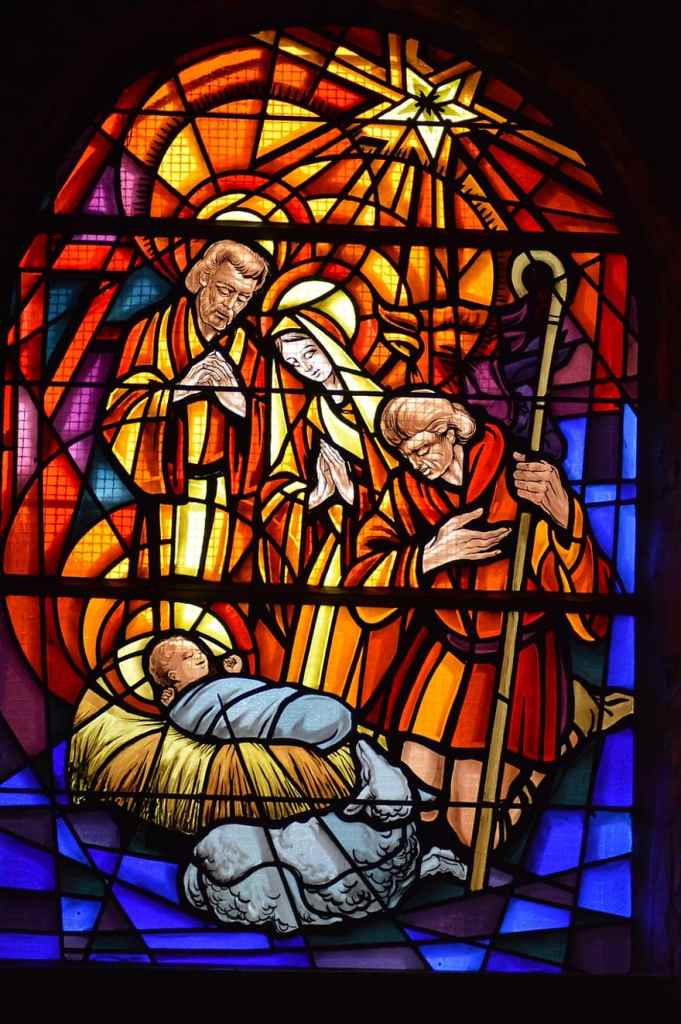
Let the one looking for God then turn each day into a quiet place, a place free of the possibility of interruption and distraction. In silence, think of God as present. Perhaps make a mental picture of God standing directly in front of you or seated right beside you. If it helps, picture God as Jesus groomed as your favorite picture of Jesus, wearing the traditional dress of the Hebrew people of Jesus’ day. Some find sitting in a church before a stained-glass window of Jesus helpful, as do I. Imaginatively, look into tender eyes and see arms outstretched to embrace you. At that moment, confess how you have wronged others and God. Pour out your hurts, disappointments, and longings. Share with God your unmet needs.

Then, after the silence, accept the forgiveness of God, the forgiveness you have heard proclaimed from the pulpit, read in the Bible, or shared with you by those who believe in Jesus. Accept the forgiveness even if you find it difficult to believe that anyone can forgive you, even God. By faith, trust the promise that you are forgiven. Trust that God has taken all that you are ashamed of and removed it from you. As God has placed all of it behind you, now make a mental picture that your back is turned to it, and you face forward with no guilt. In that new freedom—and in gratitude—resolve to learn from Jesus and to live as Jesus teaches us to live. Hebrews promises that God will reward you—promises that you will find God.

Joy,

Categories
Religious

A Life Trained by Christ

Train yourself for a holy life!”

1 Timothy 4:7b

A physician once taught me an important lesson about spiritual growth—there is simply no substitute for regularly paying attention to God. He shared this story with me. In the midst of a successful practice as a doctor, he had little time for his wife, and for his children. Seventy and eighty-hour workweeks were customary. He loved his patients. He loved his work. Time at home was for rest and renewal for the next day. Dinners with his family were rare. Hard work seemed to pay dividends. His salary rose steadily each year. Admiration for him and his exceptional work held a privileged position in the community. Everything seemed right until it did not. Both his wife and his children had found a way to get on in life without him. “The day I realized that was the most painful day of my life,” the doctor said.

The doctor held a stethoscope in his hand. “Perhaps, this is the most important tool for a physician’s work,” he shared. Doctors study and train to know how to listen to a patient with this tool. What is supremely important is to know what “regular” sounds like when we hold the stethoscope to a patient’s chest or back. If the doctor does not know what “regular” sounds like, then the doctor simply does not know what they are listening to with a patient seated in front of them. Doctors must learn well what “regular” sounds like so when using a stethoscope, they can recognize immediately what sounds “irregular.” Once an “irregular” comes through the stethoscope, a decision, with the patient, is required. This one part of practicing medicine is all about listening carefully, listening correctly.

“I was failing at listening carefully to my life, to my family,” said the doctor. “Then, I almost lost them.” “That terrified me.” The difficulty was that I did not know what “regular” was, or what “regular” sounded like as a part of a family. Here is a man who is an excellent doctor but is a poor husband and father. Training was required. Good training is about consistent, regular effort over time. Good training demands the proper tools. “I went back to school,” said the doctor. The textbook was the Bible. The classroom was a chair in his backyard for one hour at the close of every day. Reading the Bible every evening, the doctor learned what “regular” sounded like. Then he listened carefully to his own life, his daily practices, and his priorities. What the doctor heard was irregular.

It is remarkable what listening to God will do for a life. A “regular” life, a healthy life, is a lived experience of faith in God. Practices change, and as practices change, a reshaping occurs. Each life that listens carefully to God, in regular time reading the Bible and prayer, redevelops from the inside out. Such a life embodies more and more the way of Jesus. Trust in God increases, persistent hope in the coming of God’s reign expands, and love overcomes hatred and selfishness. Life moves from unhealthy “instinctual reactions” to learned behaviors—behaviors that enter the heart from habitual practice in the way of Christ. This is a trained life. A life trained by Christ.

Joy,

Categories
Religious

A Fresh Approach to Prayer

“Jesus was praying in a certain place. When he finished, one of his disciples said, ‘Lord, teach us to pray, just as John taught his disciples.’”

Luke 11:1 (Common English Bible)

The Newlywed Game was a popular television show in the late sixties and early seventies. The show would place newly married couples against each other in a series of revealing question rounds that determined how well the spouses knew or did not know each other. There would be two rounds; the wives were taken off stage first, while the husbands were asked three questions. The wives were then brought back into the studio and asked for their answers to the same three questions. Once the wife gave her answer, the husband revealed the answer he gave—written on a blue card—in her absence. Five points would be awarded to the couple that shared the same answer. The roles were reversed in round two, and the wives were asked to answer questions about their husbands. The couple with the highest score at the show’s end won.

Imagine a similar game that puts to the test how well we know God and how well we understand God’s purpose for our lives. I suspect many of us would be embarrassed. Here, in Luke’s Gospel, the disciples came upon Jesus when he was praying. Tremendously moved by what they saw, the disciples asked Jesus to teach them to pray. There is no hint in this passage that the disciples witnessed answers to Jesus’ prayers. Results weren’t what caught their imagination. There was something else: something that went much deeper.

If we dispense with the notion that prayer is only about answers, that prayer is simply presenting pleas when we are in need, in danger, or in a crisis; our eyes are cleared to see what the disciples saw when they came upon Jesus at prayer. In Jesus’ prayer, the disciples saw a concentration and absorption into a relationship with God they had no experience with. Jesus’ prayers demonstrated a deliberate and sustained cultivation of a relationship with God that would put Jesus in the winner’s seat of The Newlywed Game. What is clear in this passage is that the disciples wanted the same.

Perhaps the greatest difficulty with prayer today is that many are simply out of touch with God. Prayer is reduced to instinct rather than habit, to approaching God out of need rather than a regular cultivation of a personal relationship with our creator. And that is our deepest need—to renew our acquaintance with God. Prayers that flow from instinct tend to be self-centered. The prayer of Jesus is God-centered. It is prayer that takes time to cultivate and requires extraordinary perseverance. But once this fresh approach to prayer is mastered, don’t be surprised if another approaches you and asks, “Teach me to pray like that.”

Joy,