Categories
Religious

What We Can Know

“If an army camps against me, my heart won’t be afraid. If war comes up against me, I will continue to trust in this.” Psalm 27:3 (Common English Bible)

For some, the greatest struggle of faith is uncertainty. One man spoke to me following worship recently and commented, “I find this Jesus you speak of very attractive. And I have no doubt that living as Jesus taught will positively impact a life. My difficulty is this, what can we know for sure?” The writer of these words in Psalm 27 records an ancient answer to this question that remains very present for some people: “What can we know for sure?” Here, the author makes an honest assessment of the world—a world that is fearful of hostile armies and war—and affirms that, nonetheless, trust in God will abound. Anyone would be grateful that this author is so confident in the presence and power of almighty God. Yet, the question remains, “How shall we find that same confidence?”

Gene E. Bartlett is helpful.[1] First is the consistent witness that God is a loving God. Naturally, this unwavering witness through the ages fails to prove the existence of God. Simply, it asserts agreement that if there is a God, that God is a loving God. Yet, an honest and fair reading of the Bible demands some attention to the cultural norms that shaped the day when these words were written. In the day of Scripture, the notion of “father” was much deeper and richer than our present use of the designation. More than a biological identification, “father” was one who had authority and commanded respect. Unquestioning obedience and honor were expected. So when Jesus addressed God as “Father,” Jesus was making a theological claim—obedience was expected before proof was received. And throughout the ages, as men and women struggled imperfectly to obey God, the consistent experience was love, acceptance, and forgiveness. A common experience through thousands of years of struggling to live faithfully does, at the minimum, hint at the possibility of God’s existence.

Second is the conviction that men and women are responsible creatures. We may shirk responsibility at various times in our lives but none of us can escape the conviction that, ultimately, we are personally responsible for the direction our lives will take. We have the capacity to decide to move in one direction or another, to love or to withhold love. Each person senses the freedom to make decisions that will impact their lives positively or negatively. Except in those cases where there exists some mental deficiently or handicap, the common experience is that there is a tug in those decisions to move positively for the benefit of others and oneself. From where does that tug come; the tug toward kindness, goodness, and mercy?

The third is the common experience that good is more powerful than evil. So pervasive is this thought that it is woven throughout the pages of science fiction. Look at the popular movie franchise, Star Wars. Anyone familiar with it has had the words, “May the force be with you” engraved upon their minds—“the force” is a force for good. Bartlett observes on this one point that in the long sweep of history, there is evidence after evidence that good beats evil at every turn. How is that so? For Gene Bartlett and countless Christians, the answer cannot be a coincidence. Behind the consistent witness of being deeply loved, behind every conviction of personal responsibility, and behind every experience that good is a greater force than evil is the notion that present is a common source. For many millions of people through the pages of Scripture to the present day, that source is God. “What can we know for sure?” The answer is these three things. And they all point to something much deeper.

Joy,


[1] Bartlett, Gene E. “Some Things We Know Without Proof”, In The News in Religion and Other Sermons, New York: Abingdon-Cokesbury, 1947, 96.

Categories
Religious

The Intersection of Loss and Hope

The following meditation was written by Dr. Michael B. Brown.

“Jesus said to her, `I am the resurrection and the life. Whoever believes in me will live, even though they die’.” John 11:25 (Common English Bible)

If you live long enough, you will lose someone or something you love: a person, a home, a marriage or romance, a job, a pet. Even moving from one place to another involves the loss of a community of friends and a sense of belonging. So, what can we do when grief has us in its grips? Among other things, we can practice the fine (and healing) art of remembering.

(1) Things We Know From Those We Remember.

The New Testament book of Hebrews states: “We have such a great cloud of witnesses surrounding us.” (Hebrews 12:1 CEB) They are there—the ones who taught us our most valuable life lessons. They remain around us and within us as long as the lessons we learned from them are remembered and applied. Your mom’s devotion to church, your dad’s commitment to family, your professor’s insistence on academic (and personal) integrity, your friend’s loyalty, your neighbor’s positive outlook—all those influences made (and continue to make) you what you are. The donors may no longer be present, but the impact they left behind lives on. And, thus, in a very real sense they live on, too. “We have such a great cloud of witnesses surrounding us.”

(2) Things We Know For Those We Remember.

The Gospel of John tells of a promise Jesus made to Martha and Mary following the death of Lazarus (their brother). He said, “I am the resurrection and the life. Whoever believes in me will live, even though they die.” (John 11:25) Only one chapter later, Christ made a promise to all his disciples. The NIV phrases it this way: “And I, when I am lifted up from the earth, will draw all people to myself.” (John 12:32) Jesus assured believers that his resurrection would not be a solitary journey but, rather, that he would take his friends with him. That’s what we know for those we have loved and lost. Beyond this life is another life where death shall be no more.

A clergy friend told me of a woman in his church who lost her husband and her son-in-law in an automobile accident. Her world was torn out from beneath her, leaving her understandably devastated. In time, however, as my friend put it, “she came back to life.” Psychologists call that “new normal” (the time when you have processed pain sufficiently to move forward again). He said she told him that the key for her were some words written by a friend who sent a sympathy note. The words simply said: “What feels like the end for you is a new beginning of unbroken joy for them.” “My love for them was stronger than my sadness for myself,” she told my friend. “I learned to embrace their new lives of unbroken joy.”

“We have such a great cloud of witnesses surrounding us.” As long as we remember the love and lessons received from those who went before, they will live on in and through us. 

“Whoever believes in me will live, even though they die.” Those who we have loved and lost are not really lost at all. Instead, when Jesus made his journey home, he took them with him to new lives of unbroken joy.

Joy,

Categories
Religious

We Laugh to Keep from Crying

The following meditation was written by Dr. Michael B. Brown.

WE LAUGH TO KEEP FROM CRYING

Job 8:21, “He will fill your mouth with joy, your lips with a victorious shout.”

Luke 6:21, “Happy are you who weep now, because you will laugh.”

(Common English Bible)

There’s a lovely Presbyterian church not far from where we live that, on Wednesday mornings, has a study group called Laughter and Lamentations. What a great name for a class in this day and age! Some suggest (not just comedians, but psychologists and theologians, too) that sometimes, the more we hurt, the more we need to laugh. And there are always things to laugh about. Humor is not a denial of reality. It is, instead, a gift by which we cope with reality. That theme is beautifully explored in Dr. Susan Sparks’ book Laugh Your Way to Grace. (Woodstock, Vermont: Skylight Paths Publishing, 2010)

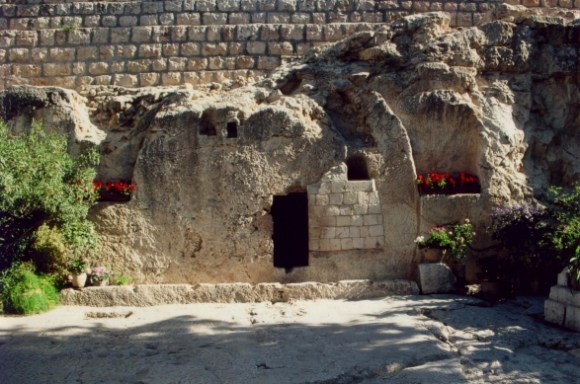
My mom (who from time to time battled depression during her life and who possessed a wild, and sometimes bawdy, sense of humor) often laughed her way to grace. She used to say, “We laugh to keep from crying.” The Bible frequently says pretty much the same. Job lost about as much as one can lose: family members, property, land, farm animals, the support of friends, and physical health. But, in the midst of almost indescribable suffering, as the NIV puts it, he was promised that in time God would “fill your mouth with laughter, and your lips with shouts of joy.” (Job 8:21)In his Sermon on the Plain (Luke’s rendition of the Sermon on the Mount), Jesus talked about poverty, sorrow, and grief. But while dealing with those undeniable realities, He added, “Happy are you who weep now, because you will laugh.” (Luke 6:21) In the Eastern Orthodox tradition, the word Easter literally means “God’s laughter.” Following the most dire and desperate of all the events in human history, the crucifixion of The Messiah on a Roman Cross, Easter came. The stone was rolled away. And according to that ancient liturgical tradition, the heavens were filled with the sound of God’s laughter, the boundless joy of knowing that sin and evil and death had no power anymore. We laugh to keep from crying. But even more, ultimately, we laugh because life wins. Love wins. God wins.

Norman Cousins’ best-selling book from years ago, Anatomy of an Illness as Perceived by the Patient (New York: Norton Press, 1979), told of how he went into remission from a serious illness for which there was no known cure. For hours at a time, Cousins would lock himself away and watch films by the Marx Brothers and old episodes of Candid Camera. He belly-laughed as he viewed them. Laughter produces endorphins which, in his case, began to effectively battle the autoimmune disorder that was crippling him. Eventually, doctors were unable to find any trace of the disease whatsoever. Apparently, the Old Testament Book of Proverbs was correct when it wrote that, “A joyful heart helps healing.” (Proverbs 17:22 CEB) “Blessed are you who weep now, for you will laugh.” 

When things are stressful in my life, in addition to practices like prayer and journaling, I often watch videos by comedians like Leanne Morgan, Stephen Wright, and Martin Short as Giminy Glick, or I turn on the TV and watch old episodes of Andy Griffith or new episodes of Only Murders in the Building. “We laugh to keep from crying” because, in truth, humor really is good medicine. The Bible even prescribes it when stress or fear has us in its grips. We cannot (and should not) ignore the reality of human pain—our own or that of others. But in the midst of it, or perhaps at the end of it, the Book of Job promises that God will “fill your mouth with laughter, and your lips with shouts of joy.” Or, as Jesus put it: “Happy are you who weep now, because you will laugh.” That may be the gift of grace we need sometimes just to survive. 

Joy,

Categories
Religious

God’s Foundation for Confidence

“I can do all things through him who strengthens me.”

Philippians 4:13 (New Revised Standard Version)

Confidence is such an important part of God’s desire for us, for our wholeness in life. It is really a form of positive energy that moves us forward. That great preacher of another generation, Norman Vincent Peale, identified a positive attitude as ‘power’ for meeting all of life’s challenges. Positive thinking or confidence is our equipment that increases the odds that things will turn out the way we hope they will. It is a matter of the mind—a matter of changing our reality by changing our focus.

The root of the word confidence is confide. Confide is derived from the Latin language by placing two words together, (con) which means, “with” and, (fide) which means “trust” or “faith.” Confidence has to do with trusting within a relationship with another. The apostle Paul is teaching here in Philippians that we are asked to place our trust in Jesus. As we do, the very strength of Jesus flows into us and strengthens us. Our confidence grows. God’s foundation for confidence is regularly spending time with Jesus so that we begin to know Jesus as intimately as a good friend or spouse. As that friendship with Jesus grows, the knowledge of how God intends to use us also grows. The knowledge of our life’s purpose then releases confidence that we are capable of anything when we trust Jesus’ strength coming alongside us.

A pastor and friend of mine is often identified as the Energizer Bunny. As someone once noted to me, Tom doesn’t walk into a room—he bursts into a room! His confidence comes from a close walk with his Lord. He knows God’s claim upon him and is aware of the gifts he has for ministry. This knowledge gives him poise and bearing. He can enter a room full of strangers and experience ease for the simple reason that he knows who he is—a man of God who trusts that God is with him in the moment. Consequently, strangers see his confidence and think, “Here is someone I am comfortable approaching because he is so comfortable with himself.” “Here is someone I want to approach because of his positive energy.” Tom’s presence in a room elevates the energy in the room for everyone. Tom is confident because of his close trust and walk with Jesus that is nurtured each day.

To build that kind of energy, that level of confidence, you must first own that you are uniquely made and like no one else. For years I wanted to be like my friend, Tom. The difficulty with that kind of thinking is that I never owned that I am uniquely made for a reason. The world is richer because Tom walks into rooms. But the world is also richer because of who I am—a quieter man who also walks into rooms and immediately identifies those standing in the margins. They are the ones I engage first. I introduce myself and ask them to share with me who they are. I listen to them and value them and watch their own sense of self-value begin to rise as a result. To witness this then strengthens my own confidence. Second, I stop telling myself that I don’t have the gifts of Tom, but that I do have gifts, and talents, and ability forged from years of ministry that add value to others. I stop selling myself short. Uniquely made and endowed with gifts that add value to my small part of the world—that is my bankroll. In relationship with Jesus, these are the things that bring confidence. These are the things that strengthen me.

Joy,

Categories
Religious

Not Why, But What and Who

“But I know that my redeemer is alive, and afterward he’ll rise upon the dust … Whom I’ll see myself – my eyes see, and not a stranger’s.” Job 19:25-27 (Common English Bible)

A course I teach every semester at High Point University is entitled “Biblical Themes.” It’s designed to explore the great themes of our Judeo-Christian faith: Law, Grace, Sin, Salvation, the Centrality of Love, the Search for Meaning, Incarnation, Spirit, etc. One of the lectures is always about Theodicy (a theological consideration of the reality of suffering in a world governed by a good God). Rabbi Harold Kushner wrote a book about that entitled Why Do Bad Things Happen to Good People? (New York: Shocken Books, 1981) It became a bestseller because the book’s title is a question almost everyone asks if they live long enough. 

Our classroom session on theodicy is always based on the Old Testament book of Job, a study in human suffering vis-a-vis the existence of a loving God. Job lost everything a person can imagine losing … except for his belief in God’s presence. He was grief-stricken, angry, confused, unsure why he had done his best in life and seemingly had been repaid with nothing but hurt and heartache. And yet, even when a loved one told him to “curse God and die” (Job 2:9), he did not give up his belief in the Divine. Mind you, he did feel that life was unfair. He did feel Covenant had not been honored, even though he had kept his end of it. He didn’t just glibly say, “It is what it is.” Job kept crying out “Why?” Suffering made no sense to him, as often it makes no sense to us. But amid questions for which he could find no answers, Job never let go of one fundamental belief: “I know that my Redeemer is alive ….” (Job 19:25)

When at last Job got his moment to pose his question to God about why he had suffered so seriously after having done his best, God answered, “Where were you when I laid the earth’s foundations?” (Job 38:4) It was not a curt or unkind response. Instead, it was God’s way of replying that even if the reason for suffering were explained to Job, no mere mortal could wrap his mind around it. Furthermore (and even more importantly), getting an answer to “Why?” wouldn’t change a single thing. If you could determine why an illness or accident took the life of a loved one, that knowledge wouldn’t bring the loved one back. It wouldn’t change anything. So, God helped Job understand that the important questions are not “Why?” but instead “What?” and “Who?” What do I do to survive? To move forward? What resources do I have at my disposal? What friends provide shoulders I can lean on? What inner strengths do I need to call to the surface? And, Who is God? Do I make God into the enemy who caused the pain or the ally who will help me survive and overcome it? Knowing why something happens doesn’t undo it. But knowing what steps to take and who is the God that promises to walk with you on the journey help one to survive it.

I remember hearing my friend Peter Rubenstein, a retired rabbi from New York City, say, “All that the Hebrews were called to do when the waters parted was to take the next step. They did so believing that God was walking with them. Sometimes taking the next step is all we can do, and it is enough.” His words were biblical and absolutely true. Just take the next step. You don’t have to heal in a day or a month or by any imposed calendar or guideline. Just take the next step, one step at a time, one day at a time, and trust that even when you don’t understand, still the One who loves you is walking with you – day by day, step by step. “I know that my redeemer lives, and that in the end he will stand on the earth … I myself will see him with my own eyes.”

Joy,

Categories
Religious

A Quiet Place

The following meditation was written by Dr. Michael B. Brown.

Matthew 14:13, “When Jesus heard about John, he withdrew in a boat to a deserted place by himself.” Matthew 14:13 (Common English Bible)

An out-of-state tourist in Florida was fishing in a marshy inlet when his small boat capsized. Hanging onto the side of it, the man feared there would be alligators in the inlet and his life would be at risk. He cried out to an old fisherman on the shore, “Help me! Please! The alligators will attack me.” The old guy didn’t even look up. He just called back, “There ain’t no gators in this inlet. There used to be, but they’re all gone now.” With that, the fisherman relaxed. The sun and water were warm. He decided to enjoy it and did a slow, lazy backstroke toward land. Growing curious, once more he shouted to the man on the shore and asked, “What did you do to get rid of the alligators?” Again without looking up, the old man answered, “We didn’t do anything. The sharks ate `em.”

Daily life with its rapid pace, incessant demands, strains and stresses sometimes makes us feel like we’re surrounded by sharks. Financial crises. Relational estrangements. Health concerns. Social pressures. Guilt. Grief. Loneliness. The expectations of others that seem impossible to fulfill. There is no magic wand to wave that can make it all disappear. So, how do we cope with our pressure-laden reality? How do we survive the sharks in our waters?

When the stresses of the moment and the needs of the masses bore down upon Jesus, scripture says “He withdrew … to a deserted (solitary or quiet) place.” (Matthew 14:13) He didn’t run away from life, but he did retreat long enough to “restore his soul.” (Psalm 23:3) He understood that in order to continue pushing forward with strength and effectiveness, sometimes temporarily we have to pull back just to breathe.

Norman Vincent Peale used to tell a story about his close friend, Desi Arnaz. Both as a  performer and, especially, as head of Desilu Productions, Arnaz’ responsibilities were mammoth. He told Dr. Peale that one way he coped with that was to slip away from time to time to a small house on the Pacific coast. He would take off his watch as soon as he entered and not put it back on till he left. While there, he ate when he was hungry and slept when he was tired. Otherwise, he would bathe himself in solitude and silence, watch sunrises and sunsets, and give his mind a chance to rest. He said he always returned home with renewed energy and deepened creativity. “He withdrew … to a quiet place.” We all need that. For you it may be reading, quilting, biking, hiking, gardening, golfing, swimming, fishing, museums, movies, or a host of other things that restore your soul. You cannot outswim the sharks if you are weary. You cannot be of significant help to anyone else if you are exhausted. That’s the reason The Ten Commandments include the instruction to set aside personal time for sabbath (rest). “He withdrew … to a quiet place.” If Jesus needed it, so do we. Take care of you. It’s the only way there will be enough you left to take good care of anyone or anything else.

Joy,

Categories
Religious

The Disciple’s Rest

“‘Come to me, all you who are struggling hard and carrying heavy loads, and I will give you rest. Put on my yoke, and learn from me. I’m gentle and humble. And you will find rest for yourselves.’” Matthew 11:28, 29 (Common English Bible)

There is a saying among pastors that in every congregation a third of the people are in a crisis, a third of the people are coming out of a crisis, and a third of the people are about to go into a crisis. If you are not in a crisis, chances are, there is something out in front of you heading your way. Anxiety and uncertainty seem to mark the countenance of many people today. Everywhere there is evidence of a certain strain—exhaustion from struggling to carry more than one person can reasonably bear. Attempting to face challenges that are beyond our strength, people move with fear, the wrinkle of worry etched deeply in their faces. Absent are the rest, the assurance, and the strength available in the person of Jesus Christ.

We require the stimulus of companionship with Jesus—the restful realization of God’s presence and care for us. Such rest is offered here by Jesus, “Come to me . . . I will give you rest.” This rest is always a gift. It is not earned. This rest comes as the fruit of a relationship. It is not from our labor. It is an immediate gift but its value is continuously experienced as we probe deeply into the riches of the relationship with Jesus. Much as falling in love, there are continually rich discoveries that are uncovered and realized as the relationship grows deeper, is explored, and cherished. The invitation to, “Come to me” prepares for, and actually leads to, the second part of the invitation, “Learn from me.”

Author, and teacher, Richard Foster once declared that if you are too busy to read, you are too busy.[1] Similarly, if we are too busy to spend time each day with God, to read the Bible and devotional literature, to “learn of Jesus,” then we are too busy. Each day is then powered by our own strength, which, eventually, becomes exhausted. Writers cannot write from exhaustion. Musicians perform poorly without adequate rest. Those who fight experience defeat without the replenishment received from time off on the battlefield. Woven into the fabric of God’s good creation is the “seventh day” that is for rest and simply knowing God. Jesus asks that we learn from him that the gift of rest might be fully experienced.

Instead of living with aimlessness and exhaustion as though we were on our own, Jesus invites us to a sure and restful intimacy with him. A person who comes to Jesus and spends time in that relationship—learning from Jesus—discovers someone whose strength and force are tremendous! Such people move through the darkest storms of life with apparent ease. But it is the ease that is linked with the infinite—the very God who created all there is. Such people possess spiritual energy rather than manifest symptoms of panic. They recognize the wealth and power of allies in God and face the difficulties of life with restful assurance. “Come to me” invites Jesus, and we will be distinguished from the world. We will have rest.

Joy


[1] Foster, Richard J., Freedom of Simplicity, New York: Harper Collins, 1981, 160.

Categories
Religious

When We Are Depleted

“But those who hope in the Lord will renew their strength; they will fly up on wings like eagles; they will run and not be tired; they will walk and not be weary.”

Isaiah 40: 31 (Common English Bible)

J. H. Jowett offers a fresh hearing of this singular verse of Scripture from the prophecy of Isaiah—that “hope in the Lord” is not merely a passive activity but one of active intimacy with God.[i] As with a relationship with a spouse or a dear friend, intimacy moves deeper than a mere acquaintance. Intimacy reflects continued growth in a relationship, resulting in the capacity to “know the mind, the thoughts, and desires” of the other. It isn’t unusual for intimate friends to complete the sentences of the other. Nor is it unusual for one spouse to sense when the other is troubled though no words have been spoken. These riches of intimacy are not available with an acquaintance. Isaiah wants Israel—and us—to know that God is directly attentive when weakness and powerlessness seek to intrude in our lives. When our energy is depleted, God supplies strength. Yet, that strength flows through the aqueduct of intimacy with God. Such a channel is absent with a meager acquaintance.

The promise in this teaching of Isaiah is that those who “hope in the Lord” will find a marvelous addition to their resources. God is the difference. Those who lack intimacy with God are on their own. They will become depleted. Those who regularly cultivate intimacy with God find energy and power flowing into them. It is either weakness or God. Or, as Isaiah further develops, we will be flightless or be endowed with the wings like eagles and soar into the heights—soar to places above our present difficulty and exhaustion. Taken at face value, to be endowed with wings like eagles is real equipment! Imagine when we have spotted an eagle soaring high above. Collapsed into that singular experience is strength, and majesty, and awe. That is ours when we “Hope in the Lord!” New power, immeasurable capacity, and a buoyancy over what is below. As Walter Brueggemann so strikingly imagines, “The very God taken to be obsolete is the one who governs and gives strength, who makes it possible for life to be taken up again.”[ii]

The question, then, is one of intimacy; how might we pursue such intimacy with God that we might “fly up on wings like eagles” in moments when we are depleted? That answer is no different than building intimacy with a spouse or a friend—we spend time with God, through prayer, and pay attention to God. Early in my relationship with my wife I learned she liked yellow roses more than any other color. I also learned that she doesn’t particularly care for red roses. Whenever I am grocery shopping and pass the floral department, I look for yellow roses. If they are particularly beautiful, I purchase them for my wife. There need not be an occasion such as a birthday or anniversary. I simply purchase them for her because I find every moment with her to be extraordinary. And I want to bring her delight. I know she likes yellow roses because, when I am with her, I pay attention to her. Prayer is paying attention to God. And time with God is both speaking and listening—sharing deeply with God and listening deeply for God.

Here, in this teaching from Isaiah, is the promise of a strong and joyful life. A life that is not defeated when our personal strength, our personal stamina is depleted. The management our own resources is inadequate.  Isaiah invites us to a relationship with God that is transformative. An intimacy with God endows us with the power to rise above things rather than being held in bondage to them.  A focus on difficult circumstances quickly depletes a woman or a man. But when we direct our focus to God, God renews our strength. Available resources are multiplied. Our life takes flight as wings lift an eagle and we soar above our present difficulty. The difficulty may remain but as we take flight and rise above it, we see the difficulty in proportion to all our life. The difficulty becomes “right sized”.  A difficulty from the ground may appear titanic. Viewed from the heights where eagles fly, they appear so much smaller. What a view God offers us! Isaiah declares that those who hope in the Lord shall have this!

Joy,


[i] J. H. Jowett, The Silver Lining: Messages of Hope and Cheer (London and Edinburgh: Fleming H. Revell Company, 1907) 136.

[ii] Walter Brueggemann, Isaiah 40-66: Westminster Bible Companion (Louisville: Westminster John Knox Press, 1998) 28.

Categories
Religious

The Allure of a Defeated Life

“I was given a thorn in my body.” 2 Corinthians 12:7(Common English Bible)

Few things are as unfortunate as to see a woman or man losing heart and all sense of hope, drifting into apathy, and finally despair. When a sense of defeat is permitted to take residence in life, frustration and inaction are too frequently the results. The face becomes sullen, the head is held low, and the shoulders sag. Bitterness grows, the result of an erroneous belief that life has dealt a raw deal or that others have received better opportunities. Left unchecked, the self-pity sentences them to low levels of achievement. A strange comfort is found in simply giving up—experiencing a certain allure of being defeated.

History is replete with men and women who have experienced hardship, anguished over setbacks, and struggled with handicaps—physical, mental, and emotional. Anyone of them may have been resentful and rebellious—and many have—with bad behavior the consequence. Yet, there are others who rise above the circumstances of their lives, press forward with unbelievable determination and consecrate their lives to the service of others. The apostle Paul stands among them. Paul moved through life hindered by “a thorn in the body” but produced nearly two-thirds of our New Testament.

Rather than giving up and accepting defeat, Paul labored under his handicap. Naturally, Paul—like any of us—preferred that the handicap be corrected, the difficulty removed. On three occasions Paul asked the Lord for this. But the handicap remained; the thorn wasn’t removed. But Paul’s prayers were answered. “My grace is enough for you,” answered God. With God’s answer, Paul committed himself to do the very best he could do with what he had. His life and ministry were a vessel of hope for everyone he encountered. To his children, Theodore Roosevelt continually cultivated a hopeful disposition—and in doing so charged the atmosphere of his home with hope.

Paul sought to demonstrate in his life that there is no limitation, no misfortune, no burden of sorrow, suffering, or loss that the human spirit cannot rise above. He endured much of each. But Paul went deeper than self-discipline and self-determination. Paul triumphed over it all because he sought God. Perhaps this was the finest message that Paul left the church—that when the allure of defeat tempts the heart Paul calls us to that deeper place where our life is open to the grace and power of Almighty God.

Joy,

Categories
Religious

Prayer Without Words

“Be still, and know that I am God!

 Psalm 46:10 (New Revised Standard Version)

I have been married for nearly 38 years. Throughout each of those years, I have found every moment with my wife to be extraordinary, even when we have nothing to say to one another.  Walking quietly, holding hands, or traveling together on a Sunday drive, words are not necessary. I am with the love of my life, and that transforms every moment into an extraordinary moment. Just yesterday evening, Grace and I enjoyed dinner at my favorite restaurant, Houston’s. During a large portion of the meal, we did not speak. We both were taking delight in being in a beautiful restaurant, enjoying one of our favorite meals, and simply looking at one another. It was enough. Words were not necessary. Grace and I were together—alone. As I look back over our 38 years together, I am aware that each of those quiet moments together nurtured our relationship perhaps more deeply than conversation.

A common obstacle to prayer is that too much importance is placed upon speaking. Prayers of intercession for others, prayers of gratitude for blessings experienced, or prayers for our own needs are encouraged in the Bible. Each of them flows from the lips of the disciples. Each flows from the lips of our Lord, Jesus. Yet, pay attention to the teaching of Luke 6:12, “Now during those days he went out to the mountain to pray; and he spent the night in prayer to God” (NRSV). It is difficult to believe that all that time in prayer was filled with Jesus speaking. Prayer also involves listening; listening to God through hunches, nudges, and insight. People who are unpracticed in prayer often believe that no prayer is being offered unless they are speaking all the time. They miss the value of quietly listening to God or enjoying moments of God’s presence as I quietly enjoy my wife’s presence.   

During my college studies in Coventry, England, I asked one of my instructors, a clergy of Coventry Cathedral, about his practice of prayer. He shared that each morning, he would spend approximately one hour in prayer. He would read a story from one of the gospels and then sit with that story—sit with the story, listening to what God may be sharing with him that day through that story. It would be a wordless prayer. It is through this practice of prayer that he credits his strongest growth as a disciple. On another occasion, I asked a businessman about his daily practice of prayer. He worked in Manhattan, so he would enjoy a quick sandwich at lunch break and then go into one of the large churches in the city and fix his gaze upon a stained-glass window. For thirty minutes, he would sit silently, his attention focused on one portion of the window, listening for God to speak to him.

Silence before God presents an opportunity to get a new perspective on things. When grief, disappointment, or fear rob us of words, silence before God becomes the most powerful prayer. Our devotion is not dependent upon words. Often, when I experience the need to pray and words fail to show up, I will ask the Holy Spirit to search my heart and make a prayer on my behalf. It is then that I am confident that an articulate prayer is received by God. Psalm 46 is a specific call to Israel to desist from busy activity that seeks to protect them from an enemy. It is a call to attend to God’s presence in silence. It is then that Israel becomes aware, once again, of God’s presence that looms over them. It is an awareness that cannot be known when our mouths or hands are occupied. Simply sitting in the presence of a God who knows our hearts and loves us will be enough.

Joy,