Categories
Religious

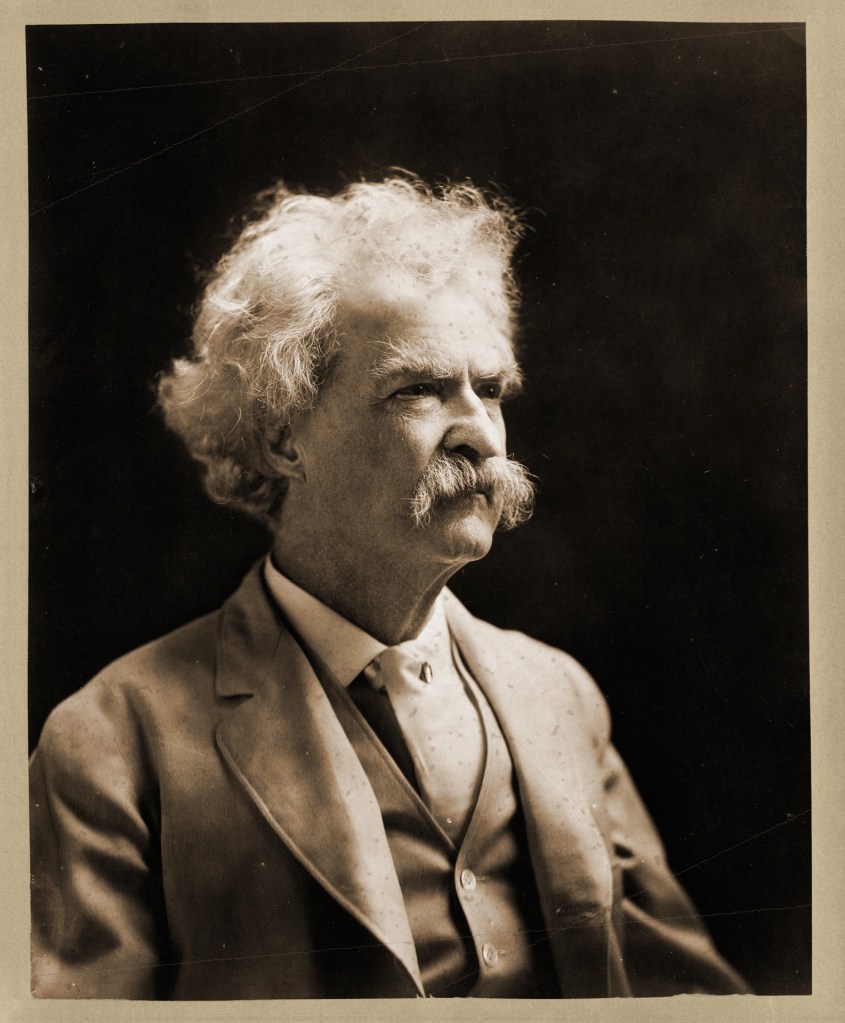
Mark Twain’s Favorite Word

Dr. Thomas K. Tewell wrote the following meditation to be featured in Dr. Doug Hood’s upcoming book, A Month of Prayer and Gratitude: Five-Minute Meditations for a Deeper Experience of Gratitude.

“Rejoice always. Pray continually. Give thanks in every situation because this is God’s will for you in Christ Jesus.”

1 Thessalonians 5:16–18 (Common English Bible)

When Mark Twain was the most well-known and respected writer in the United States, he was paid $5 for every word he wrote. Someone sent him a note that said, “Dear Mr. Twain, please send me your best word,” and enclosed a $5 bill in the envelope. Mark Twain sent back a one-word response . . . “Thanks!”

Thanks really was Mark Twain’s favorite word!

In the passage from 1 Thessalonians 5, the Apostle Paul encourages us to give thanks in all circumstances. Notice that Paul didn’t say, “Give thanks for all circumstances!” The reason we give thanks is that God is with us in all circumstances! We give thanks that the same God who raised Jesus from the dead, and who guided us in the past, will guide us in the future. We give thanks that we are not alone as we face challenging situations . . . God is with us! Even when we feel that God has abandoned us, and we think that God has forgotten about us . . . God is with us! It is important to open our eyes and focus on God and not on the circumstances! This is especially true when the circumstances seem overwhelming!

This was the case in the 1630s in Germany when the Thirty Years’s War was raging throughout Europe. The walled city of Eilenberg, Germany, was so overrun with refugees, wounded soldiers, and unsanitary conditions that infection and pestilence broke out in waves and spread uncontrollably. In the year 1636, the Plague hit! That was when a thirty-one-year-old minister and a native of Eilenberg, Rev Martin Rinkart was assigned by the Lutheran Bishop to serve the Lutheran parish in his hometown. He was the only minister who survived the Plague! So, he served the parish churches throughout the city as a solo ministry! Imagine the load that he carried in those years! And as one who grew up there, Martin knew most of the citizens of Eilenberg who were dying. There were so many deaths in the city that Rev. Rinkart led as many as ten funerals and memorial services every few days!

During this bleak period, Rinkart did not focus on the tragedy of the circumstances . . . he got up every morning and he focused on God! He focused on what God was doing. How do I know? In 1636, Rinkart wrote one of the great hymns of our faith. “Now Thank We All Our God,” that focused on Mark Twain’s best word . . . “thanks!” Rinkart focused on the presence of God and the love and support of the congregations in those tumultuous times and not on the tragic deaths or the circumstances. The first two stanzas bear witness to a God who remained steadfast in a time of tragedy and unanswered questions.

Stanza 1. Now thank we all our God with heart and hands and voices

Who wondrous things hath done, in whom this world rejoices;

Who from our mothers’ arms hath blessed us on our way

With countless gifts of love, and still is ours today.

Stanza 2. O may this bounteous God through all our life be near us,

With ever joyful hearts and blessed peace to cheer us;

And keep us in God’s grace, and guide us when perplexed,

And free us from all ills in this world and the next![1]

Martin Rinkart was honest enough with his feelings to admit that he was perplexed about the circumstances, and he wondered out loud during his daily prayer and memorial services, “where is God in the midst of this tragedy?” But as he wrestled with God and wondered about God’s presence and God’s seeming absence, Martin’s focus was still on God’s provision of comfort in this life, and eternal life in the next. This hymn is a powerful testimony to Mark Twain’s best word . . . thanks!

I have a dear friend who is a Jewish rabbi. The Rabbi urges his congregation to give thanks for one hundred things every day. And, with a twinkle in his eye, he tells them that if they can’t think of one hundred things for which they are thankful, they should open their eyes. The rabbi is quite right. God is at work in all circumstances. But we don’t see God at work because our focus is on the severity of the circumstances and not on God!

When we ask God to open our eyes, and we start to see God at work, even in overwhelming circumstances, then we will have no problem giving thanks daily for one hundred things! And, when that happens . . . like Mark Twain, thanks will become our best word, too! May it be so!

Joy,


[1] Rinkart, Martin. “Now Thank We All Our God”, 1636.

Categories
Religious

More than Conquerors

The following meditation was written by Dr. Yvonne Martinez Thorne for Dr. Doug Hood’s upcoming book, A Month of Prayer & Gratitude: Five-Minute Meditations for a Deeper Experience of Gratitude.

“No, in all these things we are more than conquerors through him who loved us.” Romans 8:37 (NRSV)

“Dr. Martinez, give me hope. We need hope.” These heart-piercing words were uttered by one of my patients in a state psychiatric hospital where I worked as a budding psychologist. I had just finished a psychoeducational session with a group of patients when these words filled that room. As those words lingered in the silence and heaviness in the room, they began to stir something within me. What more was he asking for that I had not provided in the group session? Here was my patient, who usually remained silent, planning his next escape from the hospital, daring to speak these words to others and himself.

I had given him and others in the group what I had perceived as the needed information about substance abuse and mental illness. Yet, his question revealed that what I had presented did not address a deeper need coming from his searching and desperate heart: a deep need for hope. As I wrestled with his request and ensuing questions, I reflected on my own training to give hope and people’s need for hope.

At the beginning of my brother’s life-threatening illness, my family rallied around him, surrounding him with love and hope. Although we had never experienced terminal illness in our family, we were committed to walking alongside our dear brother, no matter the cost. We showered him with loving thoughts, inspiration, and emotional and physical support. As time passed and as the disease progressed in his body, we all found it difficult to sustain hope, his and ours. One day during a visit, he angrily cried out to me: “Don’t put me in the ground. I am not dead yet!” His words registered in my heart that he was reaching out for hope. His words pierced my soul much like my patient’s words did for me that day some months later.

My brother needed hope from his family to continue his journey in hope and in faith, even though we all knew that his life was coming to an end. Truth be told, in these two most challenging years, my family and I became more keenly aware of the power of God’s amazing grace, God’s unconditional love, and God’s abiding presence with us even in end-of-life situations. We were taught valuable lessons about hope, which gave us all a deeper understanding of gratitude in situations that seem to be without hope and in moments of exquisite pain. Hope can light a path to gratitude, if only we choose to remain open and believe in God’s wise purpose for our lives.

Let me put the matter this way. As my dear brother made his way into his eternal home, my family and I experienced the power of faith, compassion, and love that led to the emotional, relational, and spiritual healing we all needed. We learned that when we love as Christ taught us to love—deeply, selflessly, and sacrificially—we are able to reach into the bottomless depths of our capacity to love. This is a life-enriching gift. My family came to understand the Apostle Paul’s reminder to the Christ followers in Rome during their times of unrelenting persecution: “. . . we are more than conquerors through him who loved us.” (Romans 8:37, NSRV) My brother’s sad end became an experience where we all saw our beloved brother fight for his good death in his home with his loved ones surrounding him. With Christ as our hope, we are more than conquerors as we live this life that, at times, asks of us more than we can bear. And, as we struggle in life, and as we grow in our ability to see God in these difficult times, we are able to discover the amazing and faithful love that God has for us, no matter what! For this, I am truly grateful.

The funny thing is. Teachers have confessed that they often learn from their students. Pastors acknowledge that they learn from their parishioners. Psychologists, too, learn from their clients. Gratitude shows up in some strange and wonderful ways.

Joy,

Categories
Religious

Work in Progress

The following meditation was written by Dr. Greg Rapier for Dr. Doug Hood’s upcoming book, A Month of Prayer & Gratitude: Five-Minute Meditations for a Deeper Experience of Gratitude.

“Jesus told this parable to certain people who had convinced themselves that they were righteous and who looked on everyone else with disgust: ‘Two people went up to the temple to pray. One was a Pharisee and the other a tax collector. The Pharisee stood and prayed about himself with these words, “God, I thank you that I’m not like everyone else—crooks, evildoers, adulterers—or even like this tax collector. I fast twice a week. I give a tenth of everything I receive.” But the tax collector stood at a distance. He wouldn’t even lift his eyes to look toward heaven. Rather, he struck his chest and said, “God, show mercy to me, a sinner.”’”

Luke 18:9-13 (Common English Bible)

The big danger in comparing ourselves to others is that we often, even when we don’t mean to, compare our worst with others’ best. We compare the inner machinations of our hearts, our deep and hidden struggles, against the public-facing version of our peers, the pristine and polished, Instagram-filtered, highly curated, tactfully presented as reality but not really reality versions of people we see online. Or at church. Funny how those can feel the same. I imagine most of us, if we’re honest with ourselves, make these comparisons and wince. We feel less-than, broken, and incomplete.

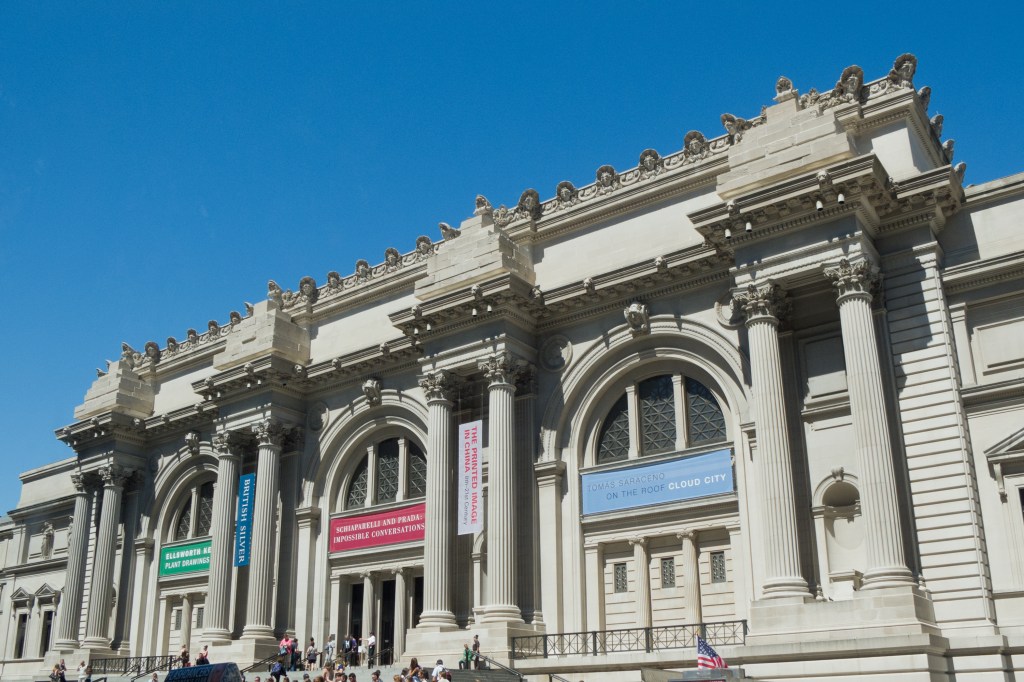
My first time at the Metropolitan Museum of Art in New York, I was absolutely flooded with stimuli—artwork stacked high to the ceiling, people everywhere you look, large tour groups hastily ushered from one room to the next, over two million square feet jam-packed with some of the finest art in the world. In one of the rooms—I couldn’t tell you which because the place was a decadent maze—my friend, a resident New Yorker and de facto tour guide, completely froze. He looked up at a long wall stretched even longer by all the artwork on display. Amongst the ornate, centuries-old, immaculate compositions, one painting stood apart, not because of its perfection, but because of its flaws.

Much of the canvas featured precise, lifelike depictions of saints and angels and Jesus Christ, but in the upper left-hand quadrant, prominently positioned against a blue backdrop, rested two beige mannequin-like figures, sketched out but never completed. Part of the painting was missing. My friend leaned over and whispered, “I like this one because it’s unfinished.”

Jesus’ parable in Luke 18 reminds us that we are all unfinished and that there’s no sense in pretending anything else—not for other people, and certainly not for God. There’s power in humility and dignity in vulnerability. This is how we ought to come before God and pray, not as perfect people, but as works in progress, some quadrants of life more sketched out than others. Because when we do that—when we show up to pray not as our perfect selves but as our whole selves—we discover a God of infinite grace, a God who sees our flaws and loves us anyway, who says this messy, unfinished canvas of a life holds innate beauty and deserves to be displayed. The Scripture reminds us that we’re all God’s people, and that in God’s great gallery, Jesus Christ has reserved a place for us all.

Joy,

Categories
Religious

Standing Up to Life

“I can endure all these things through the power of the one who gives me strength.”

Philippians 4:13 (Common English Bible)

Joan Burns, a friend for over eleven years, recently gave me one of the most honest compliments I have received—“What I enjoy best about our friendship is watching you try to be funny!” That comment demonstrates that Joan is the one—in our relationship—who is genuinely funny. More importantly, the comment demonstrates the strength of our friendship. She doesn’t fear damaging our friendship with her candor. That strength of friendship is what we all seek—and need. It is the strength that defines my relationship with my daughter. I will make a silly comment to Rachael, followed by the self-aggrandizement, “I’m so funny!” Rachael’s simple response is, “No, you’re not!” Naturally, that has become a clever riposte between my daughter and me. Yet, Joan’s quip, “What I enjoy best about our friendship is watching you try to be funny,” has theological depth: Joan acknowledges, in her humor, that I am actually “trying!”

“I can,” begins Paul’s remark to the church in Philippi. The emphasis is not on our dependence upon God. We do not expect God to do everything for us—or we shouldn’t! There are things that we can do and ought to do. There are things we can endure, though they may not be pleasant. A runner understands this. The first mile is unpleasant for every runner, regardless of physical condition. The first mile is a liar. The first mile will plead with us to stop, that this should be a rest day. Or the lie is that we are not strong enough or the weather isn’t ideal for running. Runners are familiar with the lies of the first mile. So, runners endure the lies and continue into the second mile, where the lies are eventually silenced. Our Christian faith calls forth the same endurance. Our faith does not release us from making the best effort within us. We can face difficulties and obstacles that find their way into our lives. It is simply a decision to stand up to life.

But there is more in Paul’s comment to the Philippian Church. The “I can” is matched by strength from God. First comes the resolve that we will stand up to life and make every effort within us to do so. Obstacles, setbacks, and losses will be met with our determination to move through them. That determination will then realize a surge of power that comes from without—the power of the one who gives uncommon strength, the risen Christ. Just as a runner endures the lies of the first mile, the second mile presents new strength for the road ahead. God’s strength always comes alongside our effort, the “I can.” But our own effort comes first. The first mile must be endured. As we approach the end of that first figurative mile of difficulty, a new spiritual confidence emerges that touches every area of one’s manner, disposition, and attitude toward life. The notion of “I can” is not a hope or wishful thinking. It is established upon God’s promise of strength.

The stiffest challenge of life is not questioning God’s presence when we need God. It isn’t asking God to rescue us from difficulty or straighten things out for our family. The stiffest challenge of life is to stop viewing God as a blue genie available to grant our wishes or as a cosmic servant that makes the rough places smooth. God is available to pull us together when we fall into despair and to build upon our own determination to instill courage, strength, and guidance for where we place our next step. God’s desire is that we stand up to life with the confidence that we don’t stand alone. Every success, every accomplishment, every step into the second mile of our life will be through the power of the one who gives strength. Paul’s words here, “I can endure all these things through the power of the one who gives me strength,” renews courage when life becomes difficult. Repeated often, these words will become a vital part of surviving that first mile.

Joy,

Categories
Religious

Beyond the Fence

The following meditation was written by Dr. Greg Rapier for Dr. Doug Hood’s upcoming book, A Month of Prayer & Gratitude: Five-Minute Meditations for a Deeper Experience of Gratitude.

“Jesus did many other things as well. If all of them were recorded, I imagine the world itself wouldn’t have enough room for the scrolls that would be written.”

John 21:25 (Common English Bible)

In elementary school, I had a friend named Clay who bragged that he had the best backyard in the world. He claimed to have two basketball courts, a soccer field, and a playground—all in his backyard. One day, Clay invited me to his house. We walked there after school, and I remember, upon entering, racing toward his backyard.

I rushed outside, looked around, and felt incredibly disappointed. A couple of trees, a barbeque, a football . . . but not much else. The whole yard was smaller than one basketball court—let alone two. Let alone a soccer field. And a playground? Forget about it.

I told Clay his backyard wasn’t big. And it wasn’t special.

Clay calmly picked his football off the grass and chucked it over the fence. Then he began to climb. “Come on,” he said. But I was afraid. I’d never climbed a fence before, and I was scared. Slowly, I began to climb. Just a step or two, enough to peek over the top. And sure enough, next to his football, on the opposite side of the fence, there were two basketball courts, a soccer field, and a playground.

Turns out Clay shared a fence with our elementary school. And that great big backyard that he often spoke of was right there all along.

John 21:25 reminds us that the Bible—for all its value and beauty—is a limited tool and that the verses of Scripture can’t possibly capture the totality of who God is. This verse, the final of John’s gospel, doesn’t seal God’s story shut but rather allows it to unfurl, to open up and bloom like a flower. It reminds us that God is alive and vibrant, even outside of Scripture. It invites us to see past the fences we construct—the fence of church, the fence of Scripture, the fence of scarcity and limited resources—to see past the small-minded lies we tell ourselves about a limited God in a scarce and Godless world, and to imagine a God of abundance. The Scripture calls us to get rid of a boxed-in God and instead, step across the fence into God’s great big backyard, an open space full of wonder, mystery, and abundance, where God’s story is still being written today. And where every new discovery is a reason for gratitude.

Joy,

Categories
Religious

Life’s Undertow

Rev. Dr. Yvonne Martinez Thorne wrote the following meditation to be featured in Dr. Doug Hood’s upcoming book, A Month of Prayer and Gratitude: Five-Minute Meditations for a Deeper Experience of Gratitude.

“But God definitely listened. He heard the sound of my prayer. Bless God! He didn’t reject my prayer; he didn’t withhold his faithful love from me.”

Psalm 66:19, 20 (Common English Bible)

It was the night before my husband and I were to fly back home. We enjoyed our Christmas holidays on the island of Tobago. The sunny days, lush tropical landscapes, the majestic Caribbean Sea, lagoons, tropical birds, and fresh coconut water had done much to restore me from the hustle and bustle of work and ministry. For some unknown reason, I could not fall asleep. After tossing and turning, I quietly got up, went to our patio, and began to pray. I then opened up my Bible. Psalm 66 drew me. I became curious about how verses 11 and 12 might apply to my life: “You brought us into prison and laid burdens on our backs. You let people ride over our heads; we went through fire and water, but you brought us to a place of abundance,” (Psalm 66:11, 12 NIV) I quietly wondered if something was about to happen. Little did I know that I would soon be encountering such a moment.

We took our final swim before heading back to our cabana. The Caribbean Sea was at its best for swimming through the waves and body surfing. My husband and I swam together as we waited for the perfect waves. As we were nearing our time to get out of the water, my husband made a gesture that I interpreted as: “This wave is a beauty. Let’s body surf it.” What I did not know was that this wave was not one to engage. I began to bodysurf the wave when suddenly and immediately, I became caught up in an undertow. What was I to do? Just as I wondered what to do, I heard the word “Surrender.” And I did. The undertow violently tossed me to and fro. I was thrust up into the air perpendicular to the ground by the force of the waves. At one point, another wave slammed my head into the sand. After what seemed like an eternity, the undertow let me go and I wobbly raised myself up and slowly walked to the shore and into the arms of my husband.

As we walked back to the cabana, I remembered the verses I had read. With tears welling up in my eyes, I knew that God had prepared me for what unexpectedly happened. I cried out, and he answered me. He brought me through an undertow and showed me an abundance of his love. I am ever so grateful to him.

As I reflected on what happened that morning, I came away with the thought that God sometimes allows undertows in our lives that we may experience our deep need and dependence on God and on his infinite love for us.

Undertows are powerful ocean currents. They form when receding waters from waves that have previously broken onto the shore merge together with incoming waves. Sometimes in our lives, we can experience the pull of undertows created by situations that come over us like waves breaking against our souls. They overwhelm us. Sometimes, we are able to face them and resolve them. At other times, the waves of life seem to break continuously against us and create an undertow, a powerful current that renders us unable to break free. The divine instruction remains the same: Surrender. “You let people ride over our heads; we went through fire and water, but you brought us to a place of abundance.” (Psalm 66:12 NIV). These moments invite us to a deeper experience of God’s love and goodness. With a surrendered heart, we overflow with gratitude.

Joy,

Categories
Religious

Meet Me at Ten Minutes of Seven in Your Heart

Dr. Thomas K. Tewell wrote this meditation for Dr. Doug Hood’s upcoming book, A Month of Prayer & Gratitude: Five-Minute Meditations for a Deeper Experience of Gratitude.

“‘When you pray, don’t pour out a flood of empty words, as the Gentiles do. They think that by saying many words they’ll be heard.’”

Matthew 6:7 (Common English Bible)

Have you ever promised someone, “I’ll pray for you” . . . and then forgotten to do it? I have! Sometimes, I say that I’m going to pray for someone . . . but amid the busyness of life and ministry . . . I forget! Then a day later . . . I think of that person for whom I was going to pray . . . and my face turns red! So . . . I decided to adopt three habits that help me keep my promise. Maybe you will consider trying these habits too!

Habit #1. Get Specific. When I ask someone if they would allow me to pray with and for them, I ask them specifically what they’d like me to pray for. The specificity of their request has helped me enormously. Instead of offering “a general prayer” for someone, my prayer is in tune with the desires of their heart. And, when they give me something specific to pray for, I feel commissioned by them to pray . . . and I remember to do it! I also write their request down . . . that helps too!

Habit # 2. “A Prayer Bundle.” One of my spiritual practices is to keep a daily prayer bundle of people for whom I pray. Here is how it works. I pray for some people every day . . . my wife, two sons, two daughters in law and our grandchildren as well as the members of our Macedonian Ministry staff team and other friends. They are in my daily prayer bundle no matter what. And, I sometimes ask one or more of them specifically, “where do you need prayer right now? “They always seem to appreciate my asking. In addition, if I am working with a pastor on their preaching, leading a retreat for a church, or meeting with a cohort of Macedonian Ministry pastors, I put them in my prayer bundle. And . . . I take people in and out of my bundle as circumstances change.

Habit # 3. Checking in. I check in with the person for whom I am praying and I ask them about the specific things for which they asked me to pray. That way, I not only update my prayer bundle, but it reminds me to pray for them. I may send the person a text, an email, or give them a quick phone call to check-in. Checking in means a lot to people . . . and to me!

When I mentioned my “prayer bundle” concept at a retreat recently, two men introduced themselves to me whose lives have been radically changed by prayer. Bob and Jim had been roommates in college. After spending several years in the business world, without keeping in touch, they met again in an MBA program. After getting their business degrees, they both moved to Washington D.C., got married, started families, and have significant careers in our nation’s capital. Although their lives were quite similar, there was several major differences . . . Bob was a person of faith who had admitted the fact that he was an alcoholic and was getting help . . . while Jim was not a person of faith and, to be honest, he had not yet faced his drinking problem.

In a time of crisis, Jim reached out to Bob for help . . . knowing that Bob was a member of Alcoholics Anonymous. As Bob shared the brokenness of his life with Jim, and how he painfully came to the realization that he was powerless over alcohol . . . Jim realized that he had called the right friend. Jim shared his pain with Bob . . . pain that he had not shared with anyone. For the first time in his life Jim said these words . . . and meant them . . . “I am an alcoholic.” That very night, Bob took Jim to his first A.A. meeting. As they talked after the meeting Jim said to Bob, “Now comes the hard part. I have to go home and tell my wife.” Jim had actually tried telling her a few years earlier, but the words wouldn’t come.

Bob asked, “When are you going to tell her?” Jim said, “I think I’ll tell her after we take the kids to school tomorrow morning. Bob said, “Jim, is there any time that you will be alone between now and then?” Jim said, “The only time that I will be alone between now and telling her is when I get into the shower in the morning.” Bob said, “What time is that?” Jim said, “I can set my watch by it. I get into the shower at ten minutes of seven every morning.” Bob said, “Ok, when you get into the shower and the water pours down on your face, imagine that the water is the healing power of God. I know you have doubts about the God thing . . . I understand that . . . but trust me that whoever God is will be there to give you the words to say to Ann. And, remember . . . I will be praying for you at exactly ten minutes to seven.”

The next morning at ten minutes of seven, the water came down on Jim . . . and nothing special happened. No lightning bolts . . . no voice from God. However, Jim did feel an inner assurance that he was doing the right thing by being honest with his wife. When he stammered out the words that he was an alcoholic . . . Ann got up from the table, came right over to Jim, and hugged him. She said, “Honey . . . I’ve known this for a long time, but I didn’t know whether you knew it.” Ann had been secretly going to Al-Anon meetings for spouses of alcoholics, but now Jim and Ann could face this challenge together. For the first time in his life, Jim thought . . . “there may be a God.”

At the retreat, Jim told me that he believes in God . . . and he has been free of alcohol for over two years. He is starting to feel much better, but he knows that he has to say “no” to alcohol . . . one day at a time! Jim also told me that the key moment for him was when Bob told him that he was going to pray for him at ten minutes of seven! These men have been praying for each other at ten minutes of seven each morning for the past two years. They pray and check in about everything . . . their lives, their marriages . . . their roles as fathers . . . their careers. Everything.

The truth is that they are in each other’s prayer bundles! They did not know what to call their practice . . . and I gave them a name for it . . . prayer bundles! That’s why when I mentioned this at the retreat, they were eager to tell me their story. And, they wanted to tell me why it is so meaningful to them to meet every morning . . . at ten minutes of seven . . . in their hearts! Tell me . . . do you have a prayer bundle? And, do you have someone with whom you could pray at ten minutes of seven?

Joy,

Categories
Religious

A Prayer for Help

“My whole being waits for my Lord—more than the night watch waits for morning; yes, more than the night watch waits for the morning!”

Psalm 130:6 (Common English Bible)

I have always heard that life is the great teacher. Now that I am in my sixties, the truth of that axiom presses more clearly than ever before. But I have found increasingly that young children are also a great teacher. Recently I watched a young child, accidently separated from his mother, experience panic when he realized mom was no longer in sight. They were in a major department store and, apparently, one or the other turned a corner and the other did not. It is a familiar story. I kept my eye on the child while he sought his mother—my desire that he not encounter trouble until mother was again in sight. What I observed of the child taught me a powerful biblical principal—though the child was separated, for a time, from his mother, and though he was clearly experiencing distress from this separation, he continued his search, calling out to her. Here was a child who is dependent upon his mother, now separated from her, who never gave up hope that he would again be with her.

That is the same basic drive located here in this teaching from Psalm 130. The palmist, the protagonist of this narrative, feels separated from God. Present is fear, distress, and disillusionment from the separation.  Almost everyone comes to this place, a place when God seems absent, and all hope appears gone. Early on, we try to throw ourselves into our work seeking to ignore the anxiety that grows upon us. But that only helps for a while. Eventually, the darkness of grief, heartache, and disappointment overwhelms. Darkness will not be ignored. We consider one option and then another, any option that might be available to ease the persistent turmoil that stirs deep in our soul. But options are hard to see in the dark, hard to see clearly any way. Eventually we come to realize that we cannot find our way out from the darkness. All that remains is that we wait. We wait for the night to scatter with the rising of the morning sun. That is hard work—waiting. It is realizing there is nothing more that we can do.

Occasionally everyone comes to a place in life when continuing forward seems futile and, overwhelmed by the darkness, considers quitting and surrendering to the night. Events and situations appear to be without hope. The road of despair seems to have no clear destination in sight. But notice what is the same between the lost child in a department store and the psalmist here—both appear to have a small, inextinguishable flame of hope.  They both keep going. Giving up and giving in to the darkness is not an option. Perhaps they each experience what seems to be overwhelming forces, or circumstance, that demand surrender. Yet, each one continues to put on foot in front of the other. The psalmist waits for God as the night watch waits for the morning. The lost child turns one corner and then another, calling out to his mother. They both realize that if they keep going, keep hoping, what seems like the end will, eventually, be nothing more than a unpleasant stretch along the longer journey of life.

I never learned the thoughts of the child looking for his mother. There was no way of knowing how he was processing this unfortunate separation. I suppose that his continued seeking, his continued calling to his mother, is enough. But the psalmist does give us more. A final word of the psalm is an expression of absolute trust in the Lord, “Israel, wait for the Lord! Because faithful love is with the Lord; because great redemption is with our God!” (verse 7) The cry that began the psalmist prayer is transformed into hope, a confidence that the very nature of God is one that is trustworthy. Faithful love is love that keeps on loving, no matter what. When we are exhausted from the heavy weight of difficulty, crushed from the disappointment of life, and discouraged that we can see no destination, what this psalm teaches is that waiting is the most hopeful thing we can do. Waiting is hard work. But that is why the church has been given this psalm—to encourage us to remain on the job of waiting. For only God brings the morning. And in the light of morning, we find our way back home to God.

Joy,

Categories
Religious

Gratitude for Home

“My Father’s house has room to spare. If that weren’t the case, would I have told you that I’m going to prepare a place for you? When I go to prepare a place for you, I will return and take you to be with me so that where I am you will be too.”

John 14: 2, 3 (Common English Bible)

Immediately following the closing ceremony for Vacation Bible School, one child squealed with considerable delight: “I’m going to stay in this church forever!” Why was this? Was she taking delight in the beautiful architecture of the sanctuary? Perhaps the abundant natural light pouring through all the stained-glass windows. Often, I hear from those well-traveled that our windows are equal to anything they have seen in European churches. Or it may be the striking beauty of the bright red carpet as it contrasts to the bright white interior and the spaciousness of the church furniture. Another possibility, of course, may the majesty of the pipe-organ, gold pipes of every size glistening under bright spotlights. In my thirty-seven years of ministry, First Presbyterian Church of Delray Beach remains among the most beautiful churches I have seen. It may be, simply, that this eight-year-old girl was responding to the overall beauty of the church: “I’m going to stay in this church forever!”

Naturally, each of these features strikes a positive impression and every adult who worships see the intentional planning from the initial design to the first service—every adult, not eight-year-old children. Which returns us to the original question, what was that little girl’s exclamation all about, “I’m going to stay in this church forever!” Five days of Vacation Bible School had just concluded. Each of those days were filled with imaginative teaching of the story of Jesus in his hometown of Nazareth. Sprinkled throughout the teaching was engaging singing, craft-making, snacks, and experiencing the delight and love of the other children and adult teachers. Not one feature of the sanctuary, with its remarkable beauty, touched the thirty-one children that week. The experience of an extended family of love, and embrace, and encouragement is what positively impacted the children. It was the silliness, and laughter, and singing together, woven together into a beautiful tapestry, that created a longing to remain there forever. Together, they had created a home away from home.

There is no place like home—a sentiment that resonates with every heart that has lived in one place for a meaningful period. Families grew by the birth of children, and possibly, declined with the death of a loved one. Homework was completed, music lessons endured, and birthdays and anniversaries celebrated. Dinner tables welcomed special guests, particularly during the holidays, and the seasons of the year were marked by decorations and family traditions that go way, way back. Home was more than a place where you happened to be living for a time. Home became a special place, distinguishable from other places, from the rich stories that were woven into the fabric of a special and unique family. Except home, that unique story that is so sweet, that is unlike any other place, is not the actual residence. Any other family could have lived in the same place and created an entirely different story, a different home. Like a church sanctuary, a residence is simply where stories of love, laughter, and meaning are woven together into a home.

Homes are never sold. Homes are never damaged by weather. Homes are never foreclosed by a lending institution. Each of those scenarios belong to physical dwellings, a residence. Homes move from one residence to another. Homes grow by births and contract by deaths. Homes are always in a continued state of birth and rebirth. Stories are crafted, relationships are deepened, scars occasionally appear from misunderstandings, poorly spoken words, and simple human frailty, and made whole again by extravagant forgiveness. Home is a feeling of belonging. Occasionally, a residence will change due to a change in employment, a retirement, or changes in health. A home remains a home from one residence to another. Changes in residences provide an opportunity to expand the tapestry of home—new stories, new experiences, new opportunities such as that experienced by an eight-year-old girl during Vacation Bible School. Leaving a residence is difficult when the dwelling is confused with home. Only one response is healthy as a residence is left—gratitude, gratitude for the home that was built there. The home that now moves to another place.

Joy,

Categories
Religious

The Common Life Lived Uncommonly

To one he gave five valuable coins, and to another he gave two, and to another he gave one.”

Matthew 25:15 (Common English Bible)

It is natural to strive for greatness, for recognition, and for making a large contribution. Each one of us is endowed with some talent, some gift, and ability and the business of life is to discover what it is. Once discovered, that talent is developed and polished much like a rough, natural diamond that is placed in the hands of a jeweler. No one really wants to be common. Every normal young person has dreams and aspirations and strives to get on with life, climb the success ladder and, pass others in their walk of life.

This is admirable, of course, if the motivation is wholesome and the desire is directed toward worthy ends. But our Lord’s parable of the valuable coins is a reminder that there is a limit on each one of us. Some may be endowed with greater ability but everyone has some limit on their capacity for achievement. Five-star generals do not win battles by themselves. Without apology, Jesus teaches that talent and ability are unevenly distributed. Some people will be exceptionally talented and have the potential for greater accomplishment than others. Some are uncommonly gifted and many of us are simply common.

The question then becomes, will we do our best with what we have? Will we focus our efforts on maximum contribution, to the welfare of others, or will we begin to whine and recline because we cannot shine? Unreasonable expectations and demands upon ourselves result in chronic unhappiness and diminish not only our lives but also the lives of those who love us. There are far more ordinary doctors, lawyers, and persons in the service sector and administrative roles than exceptional ones. Yet, each has the capacity to make an important contribution each day to their families, friends, and community.  

The simple and practical course to follow is to make a realistic appraisal of our capacity and gifts. This may mean for many the discarding of delusions of grandeur, acknowledging and accepting that in the Lord’s distribution of gifts we may have received only one or two talents and that God’s expectation of us is the same as those who received five talents. The acid test of character is whether we have discovered what talent we have and then, having discovered it, placed it to maximum use. That is when the common life is lived uncommonly.

Joy,