Categories
Religious

Christmas Begins with Wonder

“She gave birth to her firstborn child, a son, wrapped him snugly, and laid him in a manger, because there was no place for them in the guestroom.”

Luke 2:7 (Common English Bible)

My wife, Grace, and I collect nativity sets. Over the course of our marriage we have collected over thirty, each beautiful and unique in their own way. Several have come from Congo, Africa, where my wife was born and raised by missionary parents. Others are from Guatemala, Argentina, Peru, Mexico and Israel. There are also beautiful sets from Alaska and from Native American reservations in the west. Two are whimsical sets from North Carolina – one that depicts every character of the nativity as black bears and another as red cardinals. They have been fashioned from metal, stone, clay, wax and wood. Each represents a cherished memory and all stir the wonder of that first Christmas.

Christmas begins with wonder. It is a story whereby we are reminded that God has come into the world for every generation and for every person. It is a story that defies reasonableness. God, the creator of the heavens and the earth and all that is them, comes to earth as a vulnerable baby, to parents of little material possessions, in the non-descript town of Bethlehem. The parents have no stature, no power and no capacity to provide anything more than a manger to place their first child. Absent is any hint of privilege, any suggestion that this family will ever attract the notice of others. Yet, shepherds are drawn to the nativity, leaders of great nations travel considerable distances to bring gifts of substantial value and angels sing from the heavens of the birth of Jesus. The story is astounding, incredible, and outside the parameters of credible story-telling. Serious engagement with the Christmas story begins with wonder.

Wonder is not doubt. For those who doubt, they are unable to see. Their eyes are clouded by a determined focus on what they understand. Wonder exists where there is hope in inexplicable love, and uncommon generosity. Wonder springs from believing that there is more in life than can ever be explained and the deep desire to be surprised. Christian wonder arises from the ancient promise of a God who cares deeply for us, clinging to that promise tenaciously, particularly at those times when there seems to be so little evidence for it, and paying attention, recognizing that God may surprise at any moment. The shepherds and the magi arrived at the nativity not because of incontrovertible proof that the Holy Son of God was born but because they were paying attention to a God that surprises.

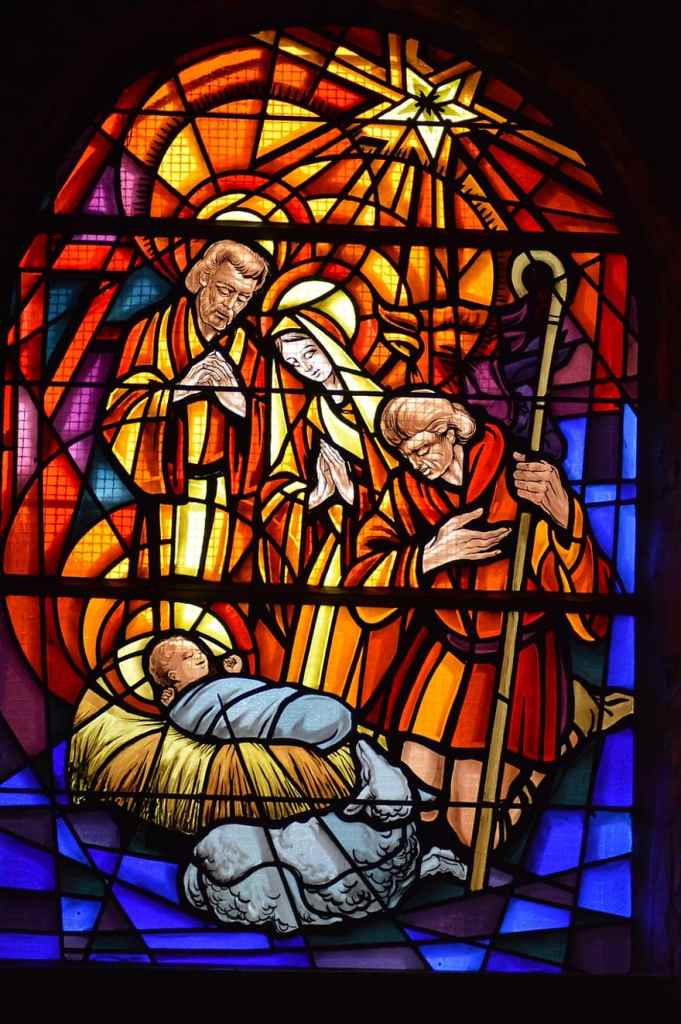
For Christmas to be more today than a nostalgic glance backward there must be a recovery of wonder. We cannot rejoice at Christmas unless we rejoice that this is a season where images of the nativity – in our homes and churches, on Christmas cards and wrapping paper – remind us that God comes to us in unexpected moments, in a surprising fashion, and always in a manner that is beyond our ability to understand. We live in a world that doesn’t know what to make of the love of God; a love that is free of ulterior motives. God baffles us and mystery and wonder permeate God’s presence and activity in the world, including the Christmas story. The Christian faith has never asked that we dismiss our questions. But its promises are realized only when we permit ourselves to experience expectant wonder once again.

Joy,

Categories
Religious

Disillusioned at Christmas

“They asked, ‘Where is the newborn king of the Jews? We’ve seen his star in the east, and we’ve come to honor him.’”

Matthew 2:2 (Common English Bible)

Speed bumps are intentional obstructions along routes traveled by motorized vehicles to slow drivers down. They indicate the need for caution, that something unusual is present and requires particular attention for safe navigation forward. Ignore the speed bump and the driver will experience a jolt and, perhaps, minor damage to their vehicle. Matthew’s Gospel has placed a speed bump into the Christmas narrative. If ignored – or not noticed – the reader will miss a greater truth that Matthew wishes to convey. Rather than hurrying to the end of the story, Matthew wants the reader to make a rich discovery as the story unfolds: The magi made much of their journey to Bethlehem without the light of the star.

Notice the speed bump: the magi enter the City of Jerusalem and make inquiry as to where the “newborn king of the Jews” is born. They began their journey to find the baby when they saw a star in the east but now the light of that star is unseen. Now they must ask directions. Consulting with the chief priests and legal experts, King Herod learns that the Christ was to be born in Bethlehem. Herod then sends the magi on their way in that direction. Only when they come to Bethlehem do they see the light of the star again. This is why the magi “were filled with joy”, Matthew tells us. They were on the right road and the promise of that star was about to be realized. Finding the child with Mary, his mother, the magi fell to their knees, honored him, and presented their gifts.

Matthew is writing to a particular people who are on the cusp of disillusionment and abandoning their faith. The decision to follow Christ has resulted in estrangement from those family members who don’t believe in Jesus. More, followers of Jesus are no longer welcomed in Jewish worship. Divided from their loved ones and unwelcomed in the faith community, it is easy to question if they are on the right road. The easy path would be to admit a mistake in following Jesus, abandon the Christian movement, and return to the embrace of family and cherished worship. The light that began their faith in Jesus has dimmed considerably and now they are traveling in the dark.

So it may be with our faith. Oftentimes we do not experience the power, the light, the vitality of the faith we once experienced. Difficulties overwhelm, the road becomes dark, and we are disillusioned.  The path that was once clear is now an unknown way. Matthew wants us to remain confident in the promise. Circumstances may require that we stop, reassess our route, and seek guidance as the magi did in Jerusalem. But then, start out once again. There is much in the world – and in our lives – that we cannot change. It’s not our task to repair the brokenness all around us. What we can and must do, says Matthew, is speak of the promise of “the newborn king” that comes in the midst of that brokenness, kneel before him in worship, present our gifts, and trust that it will be enough.

Joy,

Categories
Religious

Brokenness at Christmas

“Joseph her husband was a righteous man. Because he didn’t want to humiliate her, he decided to call off their engagement quietly.”

Matthew 1:19 (Common English Bible)

Thomas Long taught a three-week class, Preaching the Gospel of Matthew, during the summer of 1992. The first day we were assigned homework that seemed daunting – prepare for the next day a mini-biography of each name in Matthew’s genealogy, which begins his Gospel. Each student worked late into the night in the Princeton Seminary library, occasionally looking-up at one another to gauge one another’s reaction to the surprises we were uncovering. As we proceeded with name after name in the family tree of Jesus Christ, it seemed we were reading the scandal page of one of those sensationalist newspapers found in larger cities. Sprinkled throughout the bloodline of Jesus were checkered people: Rahab, the prostitute, Ruth, that brazen Moabite, and King David himself, father of a son with another man’s wife. Brokenness abounded!

If we are honest, many of our families are much like Jesus’ family. Sprinkled throughout our bloodline are scandals, betrayal, addictions, and moral failure. My paternal grandmother was an alcoholic, who lost her marriage due to her addiction, my father, as a teenager, attempted suicide as a result of a mother who couldn’t raise him and a stepmother, who wouldn’t, and, eventually, was raised by a grandmother. My mother’s father abandoned a wife and children to begin another family that she would become part of and mental health issues – including a struggle with depression – etched its mark upon both her and her brother. Most of my life I have struggled with depression. Brokenness is an unwelcomed guest that many of our families are familiar with. The common challenge is to overcome our embarrassment and to look for God’s wondrous power to transform each one of us.

Joseph struggled as we do. He is engaged to Mary and had reason to believe that the wedding would proceed according to the tradition and custom of his Jewish faith tradition. Then, Mary is pregnant with a child that is not his. Soon, Mary would be showing. Careful wedding plans have now gone awry. Joseph must have felt betrayal, embarrassment, and anger. What is he to do? On one hand, Joseph, being a righteous man, could not tolerate his fiancée’s apparent infidelity. The law and personal honor demanded that he break-off the engagement. There seemed to be no other option. On the other hand, Joseph loved Mary and could not imagine her suffering the indignity and ridicule that would be hers by a public separation on the charge of infidelity. So what does Joseph do? A quiet separation would protect both Mary’s welfare and Joseph’s honor.

Then, God gives Joseph a new commandment, “a new and higher law,” writes Thomas Long, that required “a new and higher righteousness”: “Joseph son of David, don’t be afraid to take Mary as your wife, because the child she carries was conceived by the Holy Spirit.”[i] Here was an invitation to shatter the confines of a law absent of grace and become a genuinely righteous man that moves toward others, including his fiancée, with embracing love. Rigid obedience to the law cannot and should not stand in the way of God’s mercy. In the chancel of First Presbyterian Church of Delray Beach is a beautiful stained-glass window. Someone in worship once commented to me that the beauty of that window provided comfort each week. Yet, one must not overlook that the beauty of that window is created from shards of broken glass painstakingly reassembled by the hand of a master artist.      

Joy,


[i] Matthew G. Long, Matthew, (Louisville, Kentucky: Westminster John Know Press, 1997) 13.

Categories
Religious

The Spirit of Christmas

“Glory to God in heaven, and on earth peace among those whom he favors.”

Luke 2:14 (Common English Bible)

There is a Christmas song that ponders in a rather wistful manner, why the world is unable to embrace the spirit of Christmas all year long. At Christmas, we crawl out from our hard shell of self-concern, our eyes sparkle with wonder, and we behave with an uncharacteristic charity toward all people. We slog through eleven months of drudging effort, eyes squarely focused upon survival in a competitive marketplace with little attention to others, and then Christmas comes. We throw off the heavy coat of selfishness for a time. Kindness permeates the places of our soul made callous by fear of scarcity and generosity flows from hidden springs in our heart. We play, we laugh, and we are amiable to the stranger and friend equally. That Christmas song is on to something. Why can’t we have the spirit of Christmas all year long?

Bethlehem is a divine interruption. The world today is little different from the world that welcomed the birth of Jesus. Enemies are everywhere and national security continues to be a pressing concern. Inequity of wealth among people of every nation conveniently ignores the apostle Paul’s call that those who have much shouldn’t have too much and those who have little shouldn’t have too little (2 Corinthians 8:13-15). But Bethlehem invites the world to a fresh imagination; to imagine a world where instruments of war are repurposed into farming instruments and people impulsively and joyfully share from their abundance so that others may simply have enough. Bethlehem asks that we look at the world differently, asks that we live differently.

The spirit of Christmas is a deep and persistent call to pay attention to God. It is a call to see and participate in the creation of a new world where peace and good will abounds. Bethlehem is not an occasional indulgence – an occasion where we lay aside for a moment careful attention to our health and consume copious quantities of Christmas cookies and eggnog. Bethlehem asks that we care about the world of which we are a part. Bethlehem invites us to join the angels in announcing that God has unleashed upon the world a new order where all people may find carefree rest in God. Bethlehem is not a charming dream. It is not an aspirational goal. Bethlehem is a confident and certain reality. God has come into this world and nothing is going to be the same.

Go to Bethlehem this year. Go and bow down before this magnificent birth of a new world order. Discover in Bethlehem God’s divine intention for each of us; discover that peace and good will is not for one month of the year but God’s gift to be embraced and shared all year. But if you go to Bethlehem, recognize that Bethlehem makes demands upon all who visit. Bethlehem asks that you dedicate your life to speeding up the tempo of good will in all your relationships. Bethlehem will ask you to guard your speech and exercise restraint in the use of acrimony, harsh, and mean criticism. Bethlehem will demand civility, humility, and respect of others, particularly of those you disagree with. And Bethlehem will ask of you uncommon generosity toward others. Bethlehem asks a good deal from all who visit. But Bethlehem gives in return God’s peace. That is the spirit of Christmas.

Joy,

Categories
Religious

Success in the Spiritual Life

“Train yourself for a holy life! While physical training has some value, training in holy living is useful for everything. It has promise for this life now and the life to come.”

1 Timothy 4:7b, 8 (Common English Bible)

Thoreau said, “If one advances confidently in the direction of his dreams…he will meet with a success unexpected in common hours.”i Advancement in a chosen direction is intentional movement, not simply a longing or a dream. One is aspirational; the other is a determined pursuit. One person may aspire to learn the Italian language; another enrolls in language class. Therefore, we need to ask ourselves, “Have I determined a pathway for realizing my dreams? Am I now pursuing that path?” Success, says Thoreau, belongs to those who begin to move in the direction that is right for them. That is when things start to go our way.

In this letter to Timothy, Paul uses an athletic metaphor to describe, “Advancing confidently in the direction of a holy life.” He urges the reader to “Train yourself,” that is, to advance intentionally and confidently in the direction for living as Christ. The Greek word Paul uses for “train” is the word from which we get “gymnasium.” It would be odd for anyone to go to a gym simply to watch others train. Gyms have value, not as “observation posts” for people who dream of better health, but as an “action center” for advancing toward better health. When Paul speaks about training in holy living, he is talking about activities that engage us – activities that make a demand upon us.

It is good for us to reassess our priorities from time to time. Often we speak of our aspirations: an aspiration to learn a musical instrument, an aspiration to travel, or an aspiration to return to school. Yet, without “advancing confidently in the direction of our dreams,” they remain aspirations. Absent is a commitment and plan to advance toward them. Someone once observed that our priorities are transparent for the world to see – they see our priorities in what we do each day. The mature person understands that what is important receives time, energy, and intentionality. If consistently arriving to work on time is important for job security, we arrive to work on time. 

Thomas Long writes that if the holy life is our aim, we go to the theological gym to do curls, crunches, and run laps to train, not to run a marathon but in order to be people of love.ii Naturally, observes Tom Long, it does not take much training to love the lovable. However, when Christ calls us to love those who are difficult to love – or to love our enemies – then, that takes practice. That takes time in the theological gym. “Train yourself for a holy life!” writes Paul. The great Swiss psychiatrist Carl Jung said that the supreme goal of men and women is to fulfil themselves – to honor their unique calling in life. The apostle Paul is asking that we now honor our baptismal vows – to become like Christ.

Joy,

____________________

i Henry David Thoreau, Walden (Norwalk, Connecticut: The Easton Press, 1981), 326.

ii Thomas G. Long, Belief: A Theological Commentary on the Bible, 1 & 2 Timothy and Titus (Louisville, Kentucky: Westminster John Knox Press, 2016), 131.

Categories
Religious

Throwing Away Self-Pity

“Awake, awake, put on your strength, Zion!”

Isaiah 52:1a (Common English Bible)

Captivity for Israel has ended. God has defeated the powers of Babylon and has authorized Israel to depart and head for home to Jerusalem. A new day, with a strong future, now rises for God’s people. “Awake, awake!” is God’s double imperative to Israel. “Put on your strength, Zion!” The call sounds strangely familiar. “Up and Adam! Let’s get going!” is the more common usage today. These, or similar, words have been uttered by most parents summoning their children awake from their sleep. The image of sleepy children, resisting the call to leave the comfort of a warm bed, is sharp and crisp. The parent can wake the child with a shout, can summon the child from the bed, but it must be the child’s own strength that moves them from slumber to a fresh engagement with a new day.

God’s present difficulty is that Israel doesn’t want to get out of bed. During their captivity in Babylon, Israel has become dulled, inattentive, hopeless, and grief-stricken.i Israel has been humiliated by Babylon and has spiraled into such despair and self-pity that they no longer want to live. No longer did life offer a driving purpose, only a memory of brighter days. Absent was a radiant hope, only a fading dream. A captivating vision has fled from their sight. What remained was a history. “Awake, awake!” is God’s response to Israel’s self-pity. “Put on your strength, Zion!” God is reminding Israel that there is still strength in the people and is here urging them to summon that strength and toss-off that negative attitude that has consumed them.

Psychotherapist and author, Amy Morin writes that feeling sorry for yourself is self-destructive.ii Though we all experience pain and sorrow in life, dwelling on your sorrow and misfortune can consume you until it eventually changes your thoughts and behaviors. Morin contends that any of us can choose to take control. “Even when you can’t alter your circumstances, you can alter your attitude.”iii This is the clear declaration of God to Israel; the clear call to shake off their indulgence in self-pity, claim the strength that remains in them, and move positively forward toward the future God has prepared for them. God’s strength comes alongside our own. It does not do for us what we can do for ourselves.

After Victor Hugo was exiled from his beloved France, he spent 18 years in the Channel Islands. Hugo once described this exile from the nation he loved as worse than death. Each afternoon, at sunset, Victor Hugo would climb to a cliff overlooking a small harbor and look longingly out over the water toward France. Legend tells us that each day, following his meditations, Hugo would pick up a pebble and throw it into the sea. One day the children who developed an affection for him asked why he threw a stone in the sea each day. “Not stones, children, not stones. I am throwing my self-pity into the sea.” Little wonder that during those 18 years of struggle, Victor Hugo gave the world his best and most profound work of literature.

Joy,

_________________________

i Walter Brueggemann, Isaiah 40-66. (Louisville, Kentucky: Westminster John Knox Press, 1998) 136.

ii Amy Morin, 13 Things Mentally Strong People Don’t Do. (New York: William Morrow, 2014) 20.

iii Morin, 18.

Categories
Religious

A Life Full of Meaning

“Come, follow me,” he said, “and I will show you how to fish for people.”

Mark 1:17 (Common English Bible)

Norman Vincent Peale said, “To find life full of meaning, live a bigger and better life.” Joseph R. Sizoo spoke of a man who said to him, “I am not interested in the endurance of life but in an enduring life.” Jim Rohn wrote, “Consider others’ interest as important as your own. Much of the world suffers simply because people consider only their own interest.” I like best the way Michael Brown expresses the route to a life full of meaning, “Find something bigger than you to live for. Be like Abraham who was so busy tending the needs of his children, Israel, that he just didn’t have time to fret much about his own needs.” Multiple voices that all, essentially, share the same wisdom. A life focused only on your own wants and desires is the shortest route to an empty life.

These few words in Mark’s Gospel offer tremendous guidance to a full and satisfying life. First is an invitation to “follow.” To the one who is experiencing emptiness in their life, tossed from here to there by unseen forces, without direction or purpose, Jesus asks that their eye be focused on him. As sailors once navigated the seas by the North Star, Jesus asks that we navigate the complexities and uncertainties of life by an eye that pays attention to Jesus. Time reading the Bible, learning the teachings of Jesus, is never wasted time. Nor is this an exercise for the margins of time that may remain after a day of work. Learning of Jesus continually resets those values and priorities that propel us forward. We discern with greater clarity the important stuff of life. 

Second is the invitation to “learn.” In Judaism, rabbis often shared their wisdom with their followers. Formation of others was accomplished by teaching, modeling life built upon the teaching, and asking followers to do the same under the supervision of the instructor. This method of learning is more effective than instruction alone. During a vacation in Mexico my wife and I enrolled in a cooking class. The chef introduced the ingredients required for a particular Mexican dish, the kitchen instruments that would be required in the preparation, and then prepared the dish under our watch. Then the chef turned to us and asked that we now repeat what we saw. What was most satisfying is that Grace and I then enjoyed a lunch that we had prepared. Jesus says right here in Mark’s Gospel, “I will show you how.”        

It is then that these words reveal their “strangest secret” – a phrase I have borrowed from Earl Nightingale. The cooking class Grace and I took in Mexico was, without apology, for us. After all, we were on vacation. Yet, here Jesus identifies that our instruction, our formation, is for one purpose: the welfare of other people: “I will show you how to fish for people.” I call this the “strangest secret” because what remains unnoticed by many is that discipleship isn’t really about us. It is about others. Jesus is asking us to join him on the great adventure of populating God’s Kingdom with people who have lost their way in life. The Old Testament prophet Jeremiah writes about God calling people to “catch” others in God’s net that they also may know God. A life lived for others is the secret of a life full of meaning.

Joy,

Categories
Religious

Happy People

“Therefore, get rid of all ill will and all deceit, pretense, envy, and slander. Instead, like a newborn baby, desire the pure milk of the word. Nourished by it, you will grow into salvation, since you have tasted that the Lord is good.”

1 Peter 2:1-3 (Common English Bible)

Happy People, penned by songwriters, Lori McKenna and Hailey Whitters and performed by Little Big Town, is a feel-good track that sparkles with uncommon wisdom about what it takes to be happy people: “Happy people don’t cheat. Happy people don’t lie. They don’t judge or hold a grudge. They don’t criticize. Happy people don’t hate. Happy people don’t steal.” These are the opening lyrics of a song that capture the sentiment of what’s going on in a world threatened with a deadly virus and torn by hurtful political rhetoric. As Fred Craddock, a widely popular preacher and thinker of the Christian faith, observes, “Christian growth involves, among other things, getting rid of those attitudes, ways of speaking, and behavior patterns that attack the central fabric of the community: mutual love.”[i]

As each one of us, approach a new day the one constant factor we all share is a decision: the feelings and attitudes that will shape our response to others. Implicit in these words from 1 Peter is an old life that was before knowing Christ and the new after our encounter with the Gospel. Whenever we face a situation, we now have a choice: the habitual response of ill will, deceit, pretense, envy, and slander that was the character of the old life or a response that is shaped by love. This moment of decision is one point of conflict we must negotiate between our old and our new life. A conscious decision is called for. Will we surrender to our old impulses, our normal response to other people, or will we choose the new way taught by, “the pure milk of the word”?

First Peter calls us to clean the slate of our lives – to face up to our old, destructive nature and wipe away specific attitudes and behavior that tear at the fabric of relationships with one another. Craddock wrote, “Malice, envy, and slander do not drop off like old clothes; these demons must be fought to the end.”[ii]  If they are not wiped away – by an intentional decision each day – these behaviors sour and spoil our lives and rob us of the happiness we desire. As Happy People reminds us in a lyric, “Cause all the hurt sure ain’t worth all the guilt they feel.” A rich and rewarding life is the promise of the Gospel, a salvation from the decay brought by destructive speech and behavior. In Jesus Christ, we have “tasted” the promise of that salvation and know that it is good.

The refrain of Happy People announces, “If you wanna know the secret (of happiness). Can’t buy it, gotta make it. You ain’t ever gonna be it. By takin’ someone else’s away.” An excellent place to begin this “new life in Christ” is with any animosity that we may hold toward another. Letting go of that anger and hatred is like removing a heavy backpack after a long hike up a mountain. The initial relief is immediate and grows, measure by measure, over time. In truth, we may cause little hurt to another by our anger but we do serious harm to ourselves. It shows in our life, in our speech and our behavior. People see it. More, we experience it. It is depilating, often resulting in physical ailments. The closing lyric of Happy People is especially poignant, “Well life is short. And love is rare. And we all deserve to be happy while we’re here.”

Joy,


[i] Fred B. Craddock, First and Second Peter and Jude: Westminster Bible Companion (Louisville, Kentucky: Westminster John Knox Press, 1995) 35.

[ii] Craddock, 35.

Categories
Religious

Holy Moments

“So then let’s also run the race that is laid out in front of us, since we have such a great cloud of witnesses surrounding us. Let’s throw off any extra baggage, get rid of the sin that trips us up, and fix our eyes on Jesus, faith’s pioneer and perfecter.”

Hebrews 12:1, 2 (Common English Bible)

Emerson wrote, “Our faith comes in moments; our vice is habitual. Yet there is depth in those brief moments which constrains us to ascribe more reality to them than to all other experiences.”[i] Moments that are holy, moments filled with richness, and depth, and mystery are rare for many of us. Yet, they do come, however fleeting they may be. They strike us as a welcomed breeze that brushes our face on an otherwise hot and still day. At one moment, it is felt, and appreciated. The next, it is gone. The difficulty that often challenges any of us is that we live largely in the ordinary. The exceptional holy moment is dismissed for practical matters of meeting the present struggle of simply getting through the day.

The author of Hebrews urges a redirection of our natural impulse to be carried by whatever distracts us from completing the race that Christ has set before us – the race to know God and live richly that life God desires for us. Here in the twelfth chapter of Hebrews we are reminded of, “a great cloud of witness surrounding us.” That is our encouragement when the race becomes difficult. If we are honest, all races become difficult. Any athlete will acknowledge the multiple forces that pull against a resolve to train – to remain with any athletic endeavor that, in one moment, inspires our best effort. When that resolve becomes weak, nothing holds our eyes on the goal quite as well as family and friends who cheer us forward.

I am a runner. The boldness to declare that comes from multiple books and magazines on running. When I look in the mirror, I see considerably more trunk fat than others who run. I see in others lean bodies covering vast distances. I still have weight to lose and I only run two miles, five mornings a week. Yet, the literature I read each evening declares that I am a runner. A runner is not determined by a measure of fitness or the speed of the run or the distance that is covered. A runner is simply someone who runs regularly. So, I am a runner. But I am a distracted runner. Each morning I walk out the door I am creatively engaged with reasons not to run. That is why I subscribe to Runner’s World magazine and read books on running. They are my “great cloud of witnesses” that keeps me in the race.

Hebrews encourages that we remain in the race that has been laid out in front of us – the race to know and live for God. And Hebrews urges that we reorganize our life, to throw off any “extra baggage” and “sin that trips us up” that hinders our run. Like an athlete, Hebrews ask that we get rid of all the extra weight of anything that creatively engages us not to spend time regularly with God – time alone in a quiet moment reading God’s word and listening. We begin by remembering – remembering a grandmother, or a father, or someone we deeply admire who ran the Christian race before us. They will be our cloud of witnesses that pushes us forward. Emerson said: “When a man lives with God, his voice shall be as sweet as the murmur of the brook and the rustle of the corn.”[ii]

Joy,


[i] Ralph Waldo Emerson, Essays & Lectures (New York, NY: Literary Classics of the United States, Inc., 1983), 385

[ii] Emerson, 309

Categories
Religious

Thanksgiving Day in Bonaire

“After giving thanks, he broke it and said, ‘This is my body, which is for you; do this to remember me.’”

1 Corinthians 11:24 (Common English Bible)

This year my wife, Grace, and I will celebrate Thanksgiving Day on the Caribbean Island of Bonaire. Our thirty-fourth Thanksgiving together, this one will be different. Most of our celebrations of this holiday have been with family – our children, our parents, or our siblings. Some years ago, our children and Grace’s mother celebrated Thanksgiving with us in New York City, kicking the day off with the Macy’s Thanksgiving Day Parade. During our twelve years in Bucks County, a number of celebrations we shared with another family in that church, each year alternating homes for the meal. Since moving to Florida, several celebrations were with a family of this congregation, breaking from meal preparation in the home to celebrate over a sumptuous buffet provided by the former Marriot of Delray Beach. Guests around the table may have varied through the years. However, there were always guests.

This year, neither of our children are able to make the trip to Florida. Our daughter, Rachael, has now made her home in Seattle, Washington and our son, Nathanael, will be preparing final papers for the fall semester at Princeton Theological Seminary. My brother, Wayne, and his wife, Nancy, have now retired from their ministry in Florida and have moved to Tennessee and Grace’s siblings will be out of the country. The church family we shared several meals with at Marriott have moved on and Grace and I have buried both of our parents. This year Grace and I will be alone for Thanksgiving Day. It is a familiar story. Each year brings change to every one of us – and our families. Since the beginning of this pandemic, it seems the speed of change has only accelerated. Disorientation is the result, often accompanied with some level of grief.

This year’s celebration with be a significant departure from our first thirty-three together – a holiday that always included either family or friends at the table. Therefore, Grace and I will celebrate Thanksgiving Day in Bonaire. It is a decision to embrace what is inevitable in all of our lives – change, and to make an imaginative use of that change. Most of us have little control over our future. Change is a reliable companion that shares life with all of us. What we do have is the ability take charge of that change, to make creative use of it in a manner that creates blessings. Without purposely choosing how we will adapt to change, the consequence that results may produce sadness and grief that is difficult to navigate. Inevitable change in the seasons of life may produce a deeper, richer experience than we ever thought possible or it can diminish life. The choice belongs to every one of us.

Therefore, this year, Grace and I are going to Bonaire. Moreover, I have purchased a fruitcake. Not any fruitcake. As many people, I usually do not care for fruitcake. However, for decades I have delighted in the fruitcake from Collin Street Bakery in Corsicana, Texas. It has become a Thanksgiving Day tradition and it is hard to imagine Thanksgiving without it. I will take this fruitcake to Bonaire and, only there, remove it from its packaging and enjoy it. This year, Thanksgiving Day will be a significant departure from previous celebrations. That is why this fruitcake is so important. In the midst of inevitable change, I need to remember – to remember the journey that now takes me to Bonaire. This fruitcake will connect me meaningfully to the richness of the past as I experience the present moment and anticipate the Thanksgivings that lie in the future. “After giving thanks, he broke it and said, ‘This is my body, which is for you; do this to remember me.’”

Joy,