Categories
Religious

Tears in a Bottle

“You yourself have kept track of my misery. Put my tears into your bottle—aren’t they on your scroll already?”

Psalm 56:8 (Common English Bible)

Many of us have a bucket list—a list of experiences we would cherish before death. They require no explanation to others, no defense. They are deeply personal. Further, an explanation may reduce the depth, color, and richness of personal meaning. Most people recognize that what is experienced deeply can rarely be expressed with words. Words are useful for the communication of thought. They are less useful for conveying deeply held emotions, feelings, and convictions. A strong writer can approach this depth of meaning better than most. But always, words have a reducing effect. Permit me to simply state that high on my bucket list are three experiences I would value: a cameo appearance in a stage production of the musical RENT, a balloon handler in the Macy’s Thanksgiving Day Parade, and sharing a cappuccino with David Hyde Pierce.

Some will remember that David Hyde Pierce played the character of Niles Crane on the popular television series, Frasier. On three occasions I have enjoyed David Hyde Pierce on a Broadway stage: Spamalot, Curtains, and Vanya and Sonia and Masha and Spike. If I were to have an occasion to have a private conversation with Pierce over coffee my first question to him would be, “What makes you cry?” An answer to that question often points to deeply held convictions; points to those values, struggles, and principles that grip our hearts. Again, words are limiting. But they can point another in the right direction. An answer to the question, “What makes you cry?” provides a window into the depths of another’s soul.

Naturally, tears come in a rich variety. A powerful conviction of truth draws tears to my eyes every time. I simply cannot read in Luke’s Gospel the story of Simeon taking the infant Jesus in his arms without my chest becoming heavy and tears forming in my eyes. Here, Simeon recognizes this child as God’s salvation. This is a story that reaches beyond the descriptive; it is evocative. In faith, Simeon sees God’s decisive hand in the unfolding drama of human history. Grief is another variety of tears. Old Testament teacher, Walter Brueggemann helps us with understanding this passage from the Psalms. Here is a confidence that God has kept, treasured, and preserved “my tears”; that is, all the pain and suffering that the psalmist has experienced. “God is the great rememberer who treasures pain so that the psalmist is free to move beyond that pain.”[1]

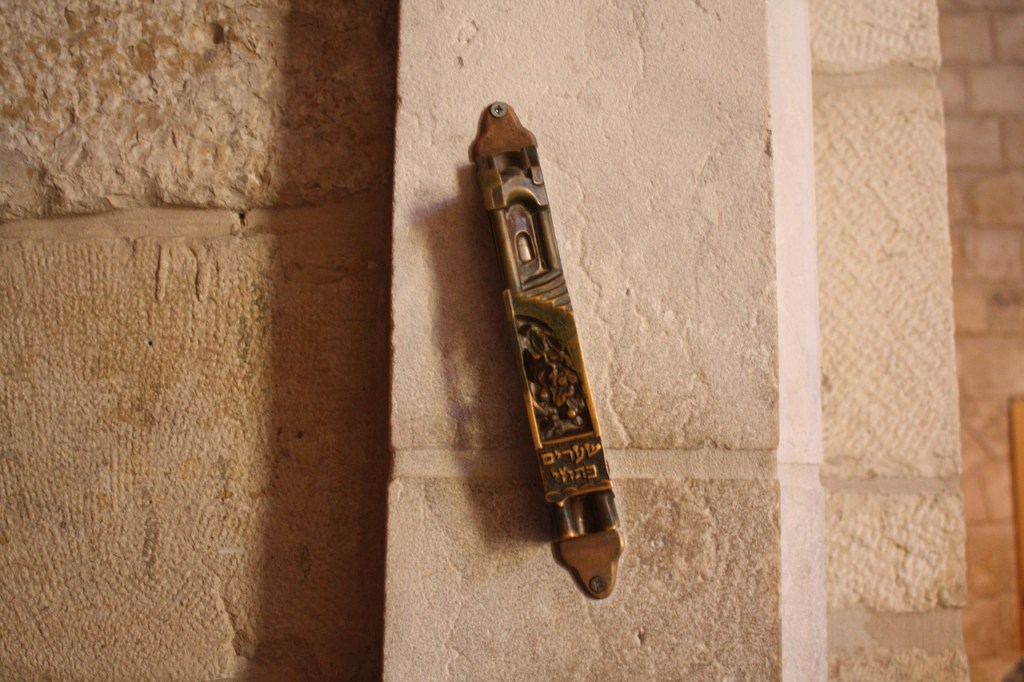
There is an ancient Jewish practice that provides care in times of misery and grief. A small bottle is provided to collect the tears of anguish and loss. The top of the bottle has a small hole in it that would allow those tears to evaporate over time. When the bottle is completely dry, the time for grieving is over. The Psalmist wants us to know that God has a bottle with our name on it. When tears of grief flow, God collects them in that bottle. This is how seriously God takes our grief; how God honors and shares in our loss. But there is a small hole in the top of that bottle. Over time the tears will evaporate. When the bottle is dry, and our eyes are clear, we see that God remains. And God redirects our eyes to tomorrow.

Joy,


[1] Brueggemann, Walter, and William H. Bellinger, Jr., Psalms: New Cambridge Bible Commentary, New York: Cambridge University Press, 2018, 254.

Categories
Religious

The Sound of God

“After the earthquake, there was a fire. But the Lord wasn’t in the fire. After the fire, there was a sound. Thin. Quiet.”

1 Kings 19:12 (Common English Bible)

My first trip to Washington D.C. was in 1988, attending the College of Preachers located in the National Cathedral. Driving into the city my eyes fell upon the Pentagon—something I had previously seen only in pictures. Looming large out the right side of my windshield, the impressive structure accomplished the intention of the architect—to communicate the presence of the most powerful military force in the world. Though I am proud to be a U.S. citizen, I am a Christian first. And this military center of our nation represented values contrary to the purposes of Christ. A chill gripped me and I was momentarily shaken. Not because our nation had a military force. Even Israel has such a force to protect its freedoms. I was shaken by the enormity of its power.

I prayed—eyes wide open, watching the highway that stretched out in front of me. My prayer wasn’t clear. My head wasn’t clear. I simply didn’t know how to process the unsettledness tumbling within. My father served proudly in the U.S. Navy, as did my father-in-law. Regularly I thank women and men who are in the military or who have served. I thank them for their sacrifice and their service. My prayers for our troops mark my daily prayers. Yet, I was shaken, uncomfortable with the large footprint of our nation’s military might. My prayer was not uncommon. Many times I have inquired of God about how to pray. I am troubled by this and that and simply do not know how to pray. “Lord, what do I do with this fear, this uneasiness within?”

I turned off of the highway and onto a surface street, navigating my way to the National Cathedral. My speed reduced along a beautifully landscaped avenue, I noticed a public park, also out the right side of my windshield. This pleasant, bucolic escape from my anxiety was welcomed. This park now occupied the space that was once filled with the enormity of the Pentagon building. The churning, troubled spirit within remained but no longer at the same intensity, no longer causing a death grip on the innocent steering wheel of my car. My prayer continued, thanking God for the change of view from the driver’s seat, thanking God that my unsettledness was easing, though only a little.

Traffic dropped my speed to a crawl. More time could safely be given to gazing at the park. Suddenly, God’s hand was on my shoulder. Located in the same trajectory as the Pentagon from my driver’s seat was a park bench. Seated on the bench was a young woman—approximately my age—in prayer. In her hand was a rosary—a helpful prayer tool used by Roman Catholics. At that moment I was calm, all unsettledness now dissipated. Of the two images—the Pentagon and the exercise of prayer—I was quite certain in which of the two real power dwelt. Each day you and I must choose between the clamor of human strength and power and the silent consecration to God in prayer, between the world’s display of self-assurance and the thin, quiet presence of God.

Joy,

Categories
Religious

Conditions of Answered Prayers

“If you remain in me and my words remain in you, ask for whatever you want, and it will be done for you.”

John 15:7 (Common English Bible)

Ernest Hemingway captures the deep disquiet among many who are faithful in the practice of prayer, Christians who go to their knees in prayer but quietly question just how much they can expect from God. Distressed by doubts, a lack of confidence in God’s ability—or desire—to respond to prayer plagues their practice of prayer. In his short story, The Gambler, The Nun, And The Radio, Sister Cecilia expresses her heartfelt desire to be a saint—a faithful, sincere desire that she has carried since she was a little girl. Sister Cecilia was absolutely convinced that if she renounced the world and went into the convent, she would become a saint. Now, years later, she still waits for her prayer to be fulfilled. Mr. Frazer, the protagonist of the story, responds to her that, “You’ll be one. Everybody gets what they want. That’s what they always tell me.” But Sister Cecilia expresses doubt, “Now it seems almost impossible.”i

The great nineteenth century preacher Phillips Brooks once addressed this common difficulty so many people have with prayer—explaining that the Gospel of John identifies two qualities shared by those who can hope to pray successfully. First, what does it mean to “remain in me.?”ii It is a phrase that is familiar in the New Testament. To offer clarity, Brooks asks that we think of a child in their earliest years. Those are the years children are so completely absorbed or “hidden” in their parent’s life that you do not look upon them as a separate individual. They are expressions of their parents’ nature. The child’s thoughts and speech are nearly echoes of the parent. In these earliest years we hear a child utter something and immediately we know what has been spoken by the parents in earshot of the child. The parent acts and thinks for the child; the child acts and thinks as the parent. Similarly, we “remain” in Christ as we grow closer to Christlikeness.

The second condition of successful prayer is in the words “and my words remain in you.” This is the continual and instinctive reference of the definite, explicit teachings and commands of Christ, asserts Brooks. This second condition is not separable from the first—the first is remaining in Christ. In Christ, it is impossible to do anything, say anything, or desire anything but just what is the Lord’s will. Yet, that is incomplete, imperfect, and unreliable without some positive and definite announcement of it in our own words. Returning to the image of the child, words spoken are but echoes of what is heard. To “remain” in Christ necessarily produces the thoughts and words of Christ—a striving to full obedience to the teachings of Christ. Brooks eloquently puts it this way: the soul’s remaining in Christ makes ready to accept Jesus’ words, and then the words lead into a deeper utterance of the desires of God’s heart.

Returning to Hemingway’s short story, Sister Cecilia’s prayer for much of her life was that she might become a saint. Discouraged that the prayer remains unanswered she concludes that it may be an impossible prayer. Readers of this short story identify with her—we also have prayers that seem to remain unanswered year after year. How do we reconcile unanswered prayer with the promise that whatever we ask will be done? Perhaps the difficulty is that we jumped with hearts so eager to receive that we fail to notice the prior conditions here in John’s Gospel. Ultimately prayer is about one thing – joining our lives so completely with Christ’s that Christ’s life and ministry continues through us. Prayer is a commitment to reverse the departure of our lives from the life and purposes of Jesus. As we strive to return our lives back to Christ and to “remain” there, and have Christ’s words remain in us, our prayers take on fresh power.

Joy,


i Ernest Hemingway, “The Gambler, The Nun, And The Radio”, The Snows of Kilimanjaro And Other Stories (New York, NY: Scribner Classics, 2009) 49.

ii Phillips Brooks, “Prayer”, The Battle of Life And Other Sermons (New York: E. P. Dutton & Company, 1893) 297.

Categories
Religious

Christmas Confidence

“But right now, we don’t see everything under their control yet. However, we do see the one who was made lower in order than the angels for a little while – it’s Jesus!”

Portions of Hebrews 2:8, 9 (Common English Bible)

This Christmas season finds us rather bewildered, facing confusion, uncertainty and fear. The world seems dangerously out of control and political leaders have failed to offer a neat formula that can solve our problems or allay our anxiety. We seem a long way from the promise of Isaiah that instruments of war will become farming equipment. But as Christmas draws near, Hebrews reminds us of a man who lived in a world not unlike our own, and yet, carried with him hope and confidence—Jesus Christ. Specifically, Hebrews tells us that we may not yet see everything “under control” but we do see Jesus!

Harry Emerson Fosdick once commented that in pointing to Jesus, Hebrews does not seek to distract us from realistic facts to a beautiful ideal; Hebrews is simply turning our attention from one set of facts to another fact. Jesus is a fact. He lived and his life left an indelible imprint upon the world. Some may question the nature of Jesus, may question the identity of Jesus as anything more than a mortal, but few question that Jesus lived. Yet, women and men of faith accept Jesus as more; accept, as fact, that Jesus is God’s decisive interruption in history to bring all things “under control”. Jesus is a towering, challenging, revealing fact that casts a whole new outlook on the present groaning of life today.

In this season of Advent—a season of anticipation—those faithful to the Lordship of Jesus see something tremendous occurring in the midst of the daily news: they see the emergence of a disruptive force that will overcome the wild, uncivilized and uncontrolled powers that tear at the world. In the birth of Jesus, God announces that the forces of darkness now have reason to tremble. No, we do not yet see all things “under control”—far from it—but we do see Jesus! And that means that God is on the move.

Our world today is one where fear seems to grow unchecked and uncertainty enlarges upon our consciousness. But God has come in Jesus to change the whole complexion of the world. What is required is that we open ourselves to Jesus in a manner that he can get at us and live in us so that he shapes our thoughts and behavior. One person of faith after another, opening their hearts and minds to receive the transforming power of God, makes all the difference in the world. That is our Christmas confidence.

Joy,

Categories
Religious

The Spirit of Christmas

“Glory to God in heaven, and on earth peace among those whom he favors.”

Luke 2:14

There is a Christmas song that ponders in a rather wistful manner, why the world is unable to embrace the spirit of Christmas all year long. At Christmas, we crawl out from our hard shell of self-concern, our eyes sparkle with wonder, and we behave with an uncharacteristic charity toward all people. We slog through eleven months of drudging effort, eyes squarely focused upon survival in a competitive marketplace with little attention to others, and then Christmas comes. We throw off the heavy coat of selfishness for a time. Kindness permeates the places of our souls made callous by fear of scarcity and generosity flows from hidden springs in our hearts. We play, we laugh, and we are amiable to strangers and friends equally. That Christmas song is on to something. Why can’t we have the spirit of Christmas all year long?

Bethlehem is a divine interruption. The world today is a little different from the world that welcomed the birth of Jesus. Enemies are everywhere and national security continues to be a pressing concern. The inequity of wealth among people of every nation conveniently ignores the apostle Paul’s call that those who have much shouldn’t have too much and those who have little shouldn’t have too little (2 Corinthians 8:13–15). But Bethlehem invites the world to a fresh imagination; to imagine a world where instruments of war are repurposed into farming instruments and people impulsively and joyfully share from their abundance so that others may simply have enough. Bethlehem asks that we look at the world differently, and asks that we live differently.

The spirit of Christmas is a deep and persistent call to pay attention to God. It is a call to see and participate in the creation of a new world where peace and goodwill abound. Bethlehem is not an occasional indulgence—an occasion where we lay aside for a moment careful attention to our health and consume copious quantities of Christmas cookies and eggnog. Bethlehem asks that we care about the world of which we are a part. Bethlehem invites us to join the angels in announcing that God has unleashed upon the world a new order where all people may find carefree rest in God. Bethlehem is not a charming dream. It is not an aspirational goal. Bethlehem is a confident and certain reality. God has come into this world and nothing is going to be the same.

Go to Bethlehem this year. Go and bow down before this magnificent birth of a new world order. Discover in Bethlehem God’s divine intention for each of us; discover that peace and goodwill are not for one month of the year but God’s gift to be embraced and shared all year. But if you go to Bethlehem, recognize that Bethlehem makes demands upon all who visit. Bethlehem asks that you dedicate your life to speeding up the tempo of goodwill in all your relationships. Bethlehem will ask you to guard your speech and exercise restraint in the use of acrimony, harsh, and mean criticism. Bethlehem will demand civility, humility, and respect for others, particularly for those you disagree with. And Bethlehem will ask of you uncommon generosity toward others. Bethlehem asks a good deal from all who visit. But Bethlehem gives in return God’s peace. That is the spirit of Christmas.

Joy,

Categories
Religious

The Inner Circle

“During that time, Jesus went to the mountain to pray, and he prayed to God all night long. At daybreak, he called together his disciples. He chose twelve of them whom he called apostles.”

Luke 6: 12, 13 (Common English Bible)

John C. Maxwell, internationally recognized leadership expert, speaker, and author, writes, “Nobody does anything great alone.”[1] Maxwell identifies this as The Law of the Inner Circle—the understanding that those closest to you determine your level of success. One of the earliest teachings in the pages of Genesis, the first book of the Bible, is that God intends that men and women live in a manner that includes God in their inner circle. Life isn’t to be a solo act, but one lived in the presence and guidance of our creator. Following this teaching, the Bible unfolds the narrative of lives that include God or those who chose to move forward without God. What comes into focus is that one choice results in life, the other death. A powerful plea is heard from the lips of God in the Book of Deuteronomy, “Choose life!” (Deut 30:19).

In this teaching from Luke’s Gospel, Jesus goes to a mountain to pray. Jesus prays to God all night long. Jesus is including God in his inner circle. The content of Jesus’ prayers is soon disclosed—Jesus is seeking guidance for the extension of his inner circle. At daybreak, Jesus identifies and calls together twelve who will be called apostles. There is a night of prayer, and then there is a great decision. Our great lesson here is that our Lord took time to pray before he decided. Life also presents each of us with choices, choices that are personal and choices that are professional. Choices that may seem of little consequence and choices of considerable weight. Prayer always surrounds the choices of our Lord, and if we are truly wise, we will acknowledge that we are the stronger when God is included in all our decisions, small and large.

What did God do for Jesus in prayer? Prayer gave magnitude to the decision that Jesus would make. The choice of Jesus’ inner circle, the choice of the twelve that Jesus would teach, mentor, and send into the world to share the Good News of God’s Kingdom, was a momentous decision. Prayer possessed Jesus’ mind of the gravity of this decision. Each of us is prone to live small lives with tiny purposes, lop-sided prejudices, and ambitions that rise no higher than a sunflower. As someone once said, the good is the enemy of the great. Without prayer, the gravity of decisions is reduced to little consequence. The natural result is a life that neither strives for something great nor achieves all God intends. Nothing kills the little things like our prayers.

Prayer also reaches beyond our own limited understanding of possibility. Someone once wisely commented that if we can ever grasp God and understand God’s mind, we must begin looking for another God. A God that we can comprehend is far too small to save us! Prayer to God, including God in our inner circle, is to draw upon insight and wisdom, and resources greater than what we possess. When we pray, we move into the realm of knowledge and possibility that we could never have imagined. Bigger ideas, bigger motives, and bigger sympathies take possession of us. Prayer opens the windows of the soul to grandeur vistas where rich discoveries are made, and the heart is stirred to wonderous activity not before realized. Here Jesus teaches that the biggest outlooks come to those on their knees.

Joy,


[1] Maxwell, John C., The 21 Irrefutable Laws of Leadership: Follow Them and People Will Follow You, 25th Anniversary Edition. Nashville: HarpersCollins Leadership, 2022. 135.


Read more meditations on prayer by Dr. Doug Hood in his new book, A Month of Prayer: Five Minute Meditations for a Deeper Experience of Prayer, available on Amazon.

Categories
Religious

Foundations

“The Lord your redeemer who formed you in the womb says: I am the Lord, the maker of all, who alone stretched out the heavens, who spread out the earth by myself.”

Isaiah 44:24 (Common English Bible)

Foundations are important. In the construction of a building, a strong and reliable foundation is a primary consideration. The function of the building, and location of the building, are important matters for determining the materials that are required for a foundation. Without attending to the matter of a proper foundation, further construction becomes a foolish—and risky—enterprise. Similarly, a meaningful and purposeful life requires a sturdy foundation. The materials of such a foundation include unconditional love, encouragement, and support. Other matters are important. They include education or vocational training, a safe environment for failure and learning from that failure, and career guidance or mentoring. Yet, the most important matter is knowledge of personal origin. Who are our parents? Were we adopted? What can we know of our heritage? Self-concept and identity are forged from this knowledge.

Here, in this passage from Isaiah, the people of Israel have lost their way. Their home, Jerusalem, has been destroyed, and they are a people in exile. Disorientation is a poor foundation for reclaiming and rebuilding a future as a nation. It is in this disorientation, this emotional and spiritual place of despair and hopelessness, that the prophet Isaiah speaks. The people hear that they were formed in the womb by God. This same God is the one who is the maker of all, who alone stretched out the heavens and spread out the earth. This demonstrated power of God will now reorder the world on behalf of Israel. Israel has not been left alone. More, as a people who were created, fashioned, and formed by God, they are a people who belong. A relationship is established once again with a powerful God—a relationship that continues even when we wonder about God’s presence or concern.

That we belong to God is to say God doesn’t belong to us. Allan Hugh Cole, Jr. shares a poignant metaphor he learned from Frederick W. Schmidt, “Acting as if God somehow belongs to us can have a direct effect on prayer and faith. For example, it can lead to our viewing God as a commodity that exists primarily to serve us and our self-interests, rather than leading us to serve God and God’s interest. Moreover, we can begin treating God as ‘a cosmic Coke machine,’ such that we merely need to offer God some sort of payment (i.e., good deeds, the right prayers, acts of kindness, various sacrifices), put in our requests, and expect to receive something in return from God immediately.”[i] This incorrect notion that God belongs to us is a poorly laid foundation that results in a faith that shifts in the difficulty, discouragements, and heartbreaks of life. Finally, it is a foundation that cannot sustain us.

A life of faith and practice of prayer that disappoints may be the product of a poorly laid foundation. Often, the poor foundation is a transactional relationship with God, as our above metaphor suggests. We barter with God—God, I will give you this if you give me that. Or the poor foundation of faith may be that we have cast God in our own image, rather than the other way around. We depict God as an extension of ourselves, our desires, our needs, and our political ideology. We want God to see the world as we see it; we want God to be a certain way. This is a foundation that negatively impacts our prayers and shakes our faith. God does not operate under our control. As the prophet Isaiah reminds us, we belong to God. The only foundation for a robust life of prayer and faith is one where we seek to know God, God’s dreams, and God’s aspirations. It is rebuilding a faith upon the foundation that we are created in God’s image.

Joy,


[i] Allan Hugh Cole, Jr., The Life of Prayer: Mind, Body, and Soul. (Louisville: Westminster John Knox Press,2009) 15.

Categories
Religious

Gratitude Begins with God

“Though the fig tree doesn’t bloom, and there’s no produce on the vine; though the olive crop withers, and the fields don’t provide food; though the sheep is cut off from the pen, and there is no cattle in the stalls; I will rejoice in the Lord. I will rejoice in the God of my deliverance.”

Habakkuk 3:17, 18 (Common English Bible)

In our nation’s ritual observance of Thanksgiving Day, we are summoned to express gratitude for what we have. We may have little when measured against our neighbor, but we are, nonetheless, called to acknowledge what we do have and express gratitude. We know the story, the origin of this national holiday well. English immigrants – later to be called Pilgrims – sailed by accident into Cape Cod harbor, staked their claim upon the land, and named it New Plymouth. These immigrants, these Pilgrims, labored hard working the land, fought disease, and defended themselves against every threat this strange new frontier presented. Life produced struggle upon struggle. But they persisted. Then, in 1621, the harvest exceeded every expectation. To celebrate their good fortune, a harvest festival was held to which they invited the native Americans who occupied the land first.

As a child, I would be reminded by my mother and father that Thanksgiving Day was an occasion to “count my blessings.” As I consider this instruction it seems to me that there is nothing wrong with a regular habit of doing so—counting my blessings. I have provided the same guidance to my children. Focusing on what I have versus what I don’t have is a mindset that must be intentional. For some reason, I find that many of us have a default setting to do just the opposite. Many days, I am caught up in complaints—usually in silence. I don’t have enough, whatever “enough” may be. If I dwell there long enough, I grow convinced that I have been cheated. If you have traveled this same route, you know it is an unpleasant journey. Then, I am reminded of the wisdom taught me so many years ago—count my blessings, regardless of how meager those blessings may be.

The difficulty with this scripture from the minor prophet, Habakkuk, is that it seems to invite us in the opposite direction. At first blush, this seems to be a well-rehearsed complaint: the fig tree doesn’t bloom, and there’s no produce on the vine, and on and on. Sounds familiar, like a child who is struggling through a difficult day. The only difference between the child and the adult is that many adults have learned restraint. We feel as strongly as the child about what we don’t have, but we have learned to keep our lips sealed. Our lips may conceal what is on our hearts, but rarely is it a secret to others. When our lips are sealed, our general continence betrays us. Others see our dissatisfaction, our annoyance, our general selfishness. Then, as we are reading the Bible, we stumble upon these words from Habakkuk. Permission granted for making our complaint! Or so it seems until we keep reading.

We are jolted by a speed bump in verse 18. After a considerable complaint, the prophet Habakkuk concludes with gratitude! A bleak and depressing picture is painted for us and is then completed with, “I will rejoice in the Lord. I will rejoice in the God of my deliverance.” It appears that someone has confused the lyrics of one song, a song of complaint, with the lyrics of another song, a song of gratitude. One doesn’t follow another, not smoothly anyway. Failure and loss move rather quickly to a celebration of hope and confidence. How does the prophet explain this disjointed movement? It may be that we have gratitude all wrong. Perhaps gratitude doesn’t begin with what we have. Perhaps gratitude doesn’t even begin with us. If we lean into the pages of this prophet, what we learn is that gratitude begins with God, with God’s fidelity, that we are included in God’s redemption. Gratitude begins when we realize we belong to God.

Joy,

Categories
Religious

Quiet, Lonely Places

The following meditation was written by Dr. Doug Hood’s son, Nathanael Cameron Hood, MA, New York University, MDiv, Princeton Theological Seminary

News of him spread even more and huge crowds gathered to listen and to be healed from their illnesses. But Jesus would withdraw to deserted places for prayer.

Luke 5:15, 16 (Common English Bible)

Scattered throughout every hospital, there are nooks and crannies, closets and pantries known only to those who work there: an empty room in an otherwise overcrowded wing; a secluded walk-in between units; a lonesome hallway tucked away in a corner few visit since the last round of renovations. In these places the hustle and bustle of medicine—the loud shrieking of machines, the pungent odors of sickness and bodily waste, the panicked cries for help—fade away until everything is still and quiet and peaceful. Look into any of them and you might find an exhausted nurse taking a cat-nap, a stressed doctor checking their phone, or a resident standing in the corner, eyes closed, brow furrowed, fists clenched as they collect themselves with deep, slow, steady breaths. And sometimes, if you’re lucky, you might find a hospital chaplain.

Having worked as a hospital chaplain for over a year now, I can confidently say that few hospital employees know these secret places better than we do. Unlike most doctors and nurses who largely stick to their assigned floors or units, we chaplains are expected to respond to crises and consultations throughout the entire building, and we do—I suspect only the security guards and custodians have the lay of the land quite like us. And considering the work we chaplains do, finding these hidden places where we can rest and recenter ourselves is nothing less than a matter of survival. More than once I’ve left the side of families grieving the unexpected loss of a parent or child after crying, praying, and sitting with them for hours only to glance at my phone and see my shift isn’t even a quarter over yet. I’ve worked overnights where I’ve been called to gunshot wounds and stabbings at two in the morning. And I’ve literally been bedside and watched patients die with my own two eyes while their loved ones wailed into my arms. Doctors, medics, and surgeons are able to emotionally distance themselves from these situations, but the opposite is expected of us chaplains—our domain is that of misery, pain, grief, and tragedy.

Some might be surprised to learn that our supervisors actually encourage us chaplains to take multiple breaks in these quiet areas throughout our work day. After all, we live in a culture that idolizes overwork and exhaustion. Too often we treat those who work 80+ hour weeks with admiration and not horror. Missing important life events—childbirths, birthdays, funerals, family gatherings—for the sake of our employers’ bottom lines isn’t just commonplace, it’s often expected. Ask any clergyperson and they’ll tell you some of the most frequent regrets shared by widows and widowers was that they worked too hard and didn’t take that vacation they’d always wanted, they kept putting off that special trip they’d planned together, they forgot to live with their partners while they still had life left to live with them.

In seeking these daily moments of solitude, we chaplains—at least those of us who identify as Christian—reflect none other than the life and ministry of Jesus himself. Again and again in the Gospels he’s hounded by boisterous crowds looking for healing and guidance. Remember, one time a crowd literally tore the roof off the house where Jesus was staying so he could heal someone! But over and over, the Gospels also show Jesus slipping away from the crowds to “deserted places” where he could be by himself and pray. Jesus understood that solitude with God wasn’t just important, it was necessary for him to do the work he needed to do. I wonder what our world would look like if more people prioritized solitude and silence in their private and spiritual lives. Perhaps we as a nation would be less stressed, less tired, less anxious. It’s worth a try. The wonderful thing about solitude with God is you can literally start practicing it at any time. All you need is the will to try and a quiet, lonely place that only you can find.

Joy,

Categories
Religious

God’s Apparent Inattention to Prayer

The critic, Guy Davenport, wrote that translation is a game of two languages, and that “the translator is in constant danger of inventing a third that lies between.” [i] The language of the Christian faith is often characterized as one where God is responsive to prayer. The language of lived experience suggests that, on occasion, God is inattentive to prayer. What is the translator to do—how does a person of faith translate a “responsive God” to the occasional experience of an “inattentive God?” Often, the translation—or explanation—is that the prayer lacked sufficient faith or that the prayer failed to follow some prescribed rubric or pattern. The tragic result is a third language, a God that is responsive only if the prayer has been constructed properly or is undergirded by an unwavering and sturdy faith. The third language is unrecognizable to the people of the Bible, particularly the psalmist. It is a language that suggests that effective prayer is dependent upon us, not God.

Psalm 13 is the shortest of the prayers that seek help from God in the Book of Psalms. At the beginning of this prayer is a rhetorical question, “How long?” The question is asked four times in the first two verses. Information isn’t sought. A response is sought from a God that seems unresponsive. The individual who makes this prayer is in distress. An urgent neediness is presented to God, and the expectation is that God will show up and answer, consistent with the understood character of God. Excuses for God’s inattentiveness are not offered; God is not let off the hook. This is a powerful witness of refusal to inventing a third language. God is known as a responsive God. So, where are you God? As James L. Mays makes clear, “God does not help; there is no evidence of God’s attention and care. Anxiety tortures the mind with painful questions.”[ii] The named experience resonates with our own when we are impatient and desperate. Our questions about God’s apparent inattention are not unfaithful.

It is important that the reader—the one who is eavesdropping on this urgent prayer—understand that the psalmist is not releasing their frustrations upon another. It isn’t unusual for the faithful to speak to another of their disappointment with God. Many times, that is the preferred approach—sharing with a friend, rather than directly to God, a disappointment or hurt with a God that seems inattentive. This seems safer, less dangerous, than a direct and frank conversation with God on such matters. What is suspended in such moments is the recognition that nothing can be kept from God. God is privileged to our conversations as well as our thoughts. Just as Adam and Eve sought to hide from God, we participate in the self-deception that we can vent our frustrations about God to another without God’s knowledge. Why risk stirring God’s anger with such a blunt approach? Here, the psalmist does. God has let them down, or so the psalmist believes. Why not an honest conversation with God?

This bold move, this courageous exercise of faith, in turning directly to a God who seems inattentive, grants permission to the reader to do the same. The psalmist’s unflinching honesty before God demonstrates a confidence in God’s love and care for the well-being of the faithful. This nervy move reminds the reader of another man of God named Job. Job never flinched before God in demanding an answer for his suffering. The answer never came to Job. Yet, in time, God does demonstrate faithfulness to Job with the return of good things. What we find in Job’s story is that the individuals who feared holding God accountable received God’s rebuke. The psalmist in this prayer doesn’t receive an answer either. What to do with God’s apparent inattentiveness? The psalmist chooses gratitude. “Yes, I will sing to the Lord because he has been good to me” (verse 6). Choosing to give up on God was not an option for this one who asks God, “How long?” Such a choice only results in a life of despair.    

Joy,      


[i] Graeme Wood, “The Iliad We’ve Lost.” The Atlantic, November 2023.

[ii] James L. Mays, Interpretation: A Bible Commentary for Teaching and Preaching, Psalms, (Louisville: John Knox Press, 1994) 78.


Read more meditations on prayer by Dr. Doug Hood in his new book, A Month of Prayer: Five Minute Meditations for a Deeper Experience of Prayer, available on Amazon.