Categories
Religious

Foundations

“The Lord your redeemer who formed you in the womb says: I am the Lord, the maker of all, who alone stretched out the heavens, who spread out the earth by myself.”

Isaiah 44:24 (Common English Bible)

Foundations are important. In the construction of a building, a strong and reliable foundation is a primary consideration. The function of the building, and location of the building, are important matters for determining the materials that are required for a foundation. Without attending to the matter of a proper foundation, further construction becomes a foolish—and risky—enterprise. Similarly, a meaningful and purposeful life requires a sturdy foundation. The materials of such a foundation include unconditional love, encouragement, and support. Other matters are important. They include education or vocational training, a safe environment for failure and learning from that failure, and career guidance or mentoring. Yet, the most important matter is knowledge of personal origin. Who are our parents? Were we adopted? What can we know of our heritage? Self-concept and identity are forged from this knowledge.

Here, in this passage from Isaiah, the people of Israel have lost their way. Their home, Jerusalem, has been destroyed, and they are a people in exile. Disorientation is a poor foundation for reclaiming and rebuilding a future as a nation. It is in this disorientation, this emotional and spiritual place of despair and hopelessness, that the prophet Isaiah speaks. The people hear that they were formed in the womb by God. This same God is the one who is the maker of all, who alone stretched out the heavens and spread out the earth. This demonstrated power of God will now reorder the world on behalf of Israel. Israel has not been left alone. More, as a people who were created, fashioned, and formed by God, they are a people who belong. A relationship is established once again with a powerful God—a relationship that continues even when we wonder about God’s presence or concern.

That we belong to God is to say God doesn’t belong to us. Allan Hugh Cole, Jr. shares a poignant metaphor he learned from Frederick W. Schmidt, “Acting as if God somehow belongs to us can have a direct effect on prayer and faith. For example, it can lead to our viewing God as a commodity that exists primarily to serve us and our self-interests, rather than leading us to serve God and God’s interest. Moreover, we can begin treating God as ‘a cosmic Coke machine,’ such that we merely need to offer God some sort of payment (i.e., good deeds, the right prayers, acts of kindness, various sacrifices), put in our requests, and expect to receive something in return from God immediately.”[i] This incorrect notion that God belongs to us is a poorly laid foundation that results in a faith that shifts in the difficulty, discouragements, and heartbreaks of life. Finally, it is a foundation that cannot sustain us.

A life of faith and practice of prayer that disappoints may be the product of a poorly laid foundation. Often, the poor foundation is a transactional relationship with God, as our above metaphor suggests. We barter with God—God, I will give you this if you give me that. Or the poor foundation of faith may be that we have cast God in our own image, rather than the other way around. We depict God as an extension of ourselves, our desires, our needs, and our political ideology. We want God to see the world as we see it; we want God to be a certain way. This is a foundation that negatively impacts our prayers and shakes our faith. God does not operate under our control. As the prophet Isaiah reminds us, we belong to God. The only foundation for a robust life of prayer and faith is one where we seek to know God, God’s dreams, and God’s aspirations. It is rebuilding a faith upon the foundation that we are created in God’s image.

Joy,


[i] Allan Hugh Cole, Jr., The Life of Prayer: Mind, Body, and Soul. (Louisville: Westminster John Knox Press,2009) 15.

Categories
Religious

Gratitude Begins with God

“Though the fig tree doesn’t bloom, and there’s no produce on the vine; though the olive crop withers, and the fields don’t provide food; though the sheep is cut off from the pen, and there is no cattle in the stalls; I will rejoice in the Lord. I will rejoice in the God of my deliverance.”

Habakkuk 3:17, 18 (Common English Bible)

In our nation’s ritual observance of Thanksgiving Day, we are summoned to express gratitude for what we have. We may have little when measured against our neighbor, but we are, nonetheless, called to acknowledge what we do have and express gratitude. We know the story, the origin of this national holiday well. English immigrants – later to be called Pilgrims – sailed by accident into Cape Cod harbor, staked their claim upon the land, and named it New Plymouth. These immigrants, these Pilgrims, labored hard working the land, fought disease, and defended themselves against every threat this strange new frontier presented. Life produced struggle upon struggle. But they persisted. Then, in 1621, the harvest exceeded every expectation. To celebrate their good fortune, a harvest festival was held to which they invited the native Americans who occupied the land first.

As a child, I would be reminded by my mother and father that Thanksgiving Day was an occasion to “count my blessings.” As I consider this instruction it seems to me that there is nothing wrong with a regular habit of doing so—counting my blessings. I have provided the same guidance to my children. Focusing on what I have versus what I don’t have is a mindset that must be intentional. For some reason, I find that many of us have a default setting to do just the opposite. Many days, I am caught up in complaints—usually in silence. I don’t have enough, whatever “enough” may be. If I dwell there long enough, I grow convinced that I have been cheated. If you have traveled this same route, you know it is an unpleasant journey. Then, I am reminded of the wisdom taught me so many years ago—count my blessings, regardless of how meager those blessings may be.

The difficulty with this scripture from the minor prophet, Habakkuk, is that it seems to invite us in the opposite direction. At first blush, this seems to be a well-rehearsed complaint: the fig tree doesn’t bloom, and there’s no produce on the vine, and on and on. Sounds familiar, like a child who is struggling through a difficult day. The only difference between the child and the adult is that many adults have learned restraint. We feel as strongly as the child about what we don’t have, but we have learned to keep our lips sealed. Our lips may conceal what is on our hearts, but rarely is it a secret to others. When our lips are sealed, our general continence betrays us. Others see our dissatisfaction, our annoyance, our general selfishness. Then, as we are reading the Bible, we stumble upon these words from Habakkuk. Permission granted for making our complaint! Or so it seems until we keep reading.

We are jolted by a speed bump in verse 18. After a considerable complaint, the prophet Habakkuk concludes with gratitude! A bleak and depressing picture is painted for us and is then completed with, “I will rejoice in the Lord. I will rejoice in the God of my deliverance.” It appears that someone has confused the lyrics of one song, a song of complaint, with the lyrics of another song, a song of gratitude. One doesn’t follow another, not smoothly anyway. Failure and loss move rather quickly to a celebration of hope and confidence. How does the prophet explain this disjointed movement? It may be that we have gratitude all wrong. Perhaps gratitude doesn’t begin with what we have. Perhaps gratitude doesn’t even begin with us. If we lean into the pages of this prophet, what we learn is that gratitude begins with God, with God’s fidelity, that we are included in God’s redemption. Gratitude begins when we realize we belong to God.

Joy,

Categories
Religious

Quiet, Lonely Places

The following meditation was written by Dr. Doug Hood’s son, Nathanael Cameron Hood, MA, New York University, MDiv, Princeton Theological Seminary

News of him spread even more and huge crowds gathered to listen and to be healed from their illnesses. But Jesus would withdraw to deserted places for prayer.

Luke 5:15, 16 (Common English Bible)

Scattered throughout every hospital, there are nooks and crannies, closets and pantries known only to those who work there: an empty room in an otherwise overcrowded wing; a secluded walk-in between units; a lonesome hallway tucked away in a corner few visit since the last round of renovations. In these places the hustle and bustle of medicine—the loud shrieking of machines, the pungent odors of sickness and bodily waste, the panicked cries for help—fade away until everything is still and quiet and peaceful. Look into any of them and you might find an exhausted nurse taking a cat-nap, a stressed doctor checking their phone, or a resident standing in the corner, eyes closed, brow furrowed, fists clenched as they collect themselves with deep, slow, steady breaths. And sometimes, if you’re lucky, you might find a hospital chaplain.

Having worked as a hospital chaplain for over a year now, I can confidently say that few hospital employees know these secret places better than we do. Unlike most doctors and nurses who largely stick to their assigned floors or units, we chaplains are expected to respond to crises and consultations throughout the entire building, and we do—I suspect only the security guards and custodians have the lay of the land quite like us. And considering the work we chaplains do, finding these hidden places where we can rest and recenter ourselves is nothing less than a matter of survival. More than once I’ve left the side of families grieving the unexpected loss of a parent or child after crying, praying, and sitting with them for hours only to glance at my phone and see my shift isn’t even a quarter over yet. I’ve worked overnights where I’ve been called to gunshot wounds and stabbings at two in the morning. And I’ve literally been bedside and watched patients die with my own two eyes while their loved ones wailed into my arms. Doctors, medics, and surgeons are able to emotionally distance themselves from these situations, but the opposite is expected of us chaplains—our domain is that of misery, pain, grief, and tragedy.

Some might be surprised to learn that our supervisors actually encourage us chaplains to take multiple breaks in these quiet areas throughout our work day. After all, we live in a culture that idolizes overwork and exhaustion. Too often we treat those who work 80+ hour weeks with admiration and not horror. Missing important life events—childbirths, birthdays, funerals, family gatherings—for the sake of our employers’ bottom lines isn’t just commonplace, it’s often expected. Ask any clergyperson and they’ll tell you some of the most frequent regrets shared by widows and widowers was that they worked too hard and didn’t take that vacation they’d always wanted, they kept putting off that special trip they’d planned together, they forgot to live with their partners while they still had life left to live with them.

In seeking these daily moments of solitude, we chaplains—at least those of us who identify as Christian—reflect none other than the life and ministry of Jesus himself. Again and again in the Gospels he’s hounded by boisterous crowds looking for healing and guidance. Remember, one time a crowd literally tore the roof off the house where Jesus was staying so he could heal someone! But over and over, the Gospels also show Jesus slipping away from the crowds to “deserted places” where he could be by himself and pray. Jesus understood that solitude with God wasn’t just important, it was necessary for him to do the work he needed to do. I wonder what our world would look like if more people prioritized solitude and silence in their private and spiritual lives. Perhaps we as a nation would be less stressed, less tired, less anxious. It’s worth a try. The wonderful thing about solitude with God is you can literally start practicing it at any time. All you need is the will to try and a quiet, lonely place that only you can find.

Joy,

Categories
Religious

God’s Apparent Inattention to Prayer

The critic, Guy Davenport, wrote that translation is a game of two languages, and that “the translator is in constant danger of inventing a third that lies between.” [i] The language of the Christian faith is often characterized as one where God is responsive to prayer. The language of lived experience suggests that, on occasion, God is inattentive to prayer. What is the translator to do—how does a person of faith translate a “responsive God” to the occasional experience of an “inattentive God?” Often, the translation—or explanation—is that the prayer lacked sufficient faith or that the prayer failed to follow some prescribed rubric or pattern. The tragic result is a third language, a God that is responsive only if the prayer has been constructed properly or is undergirded by an unwavering and sturdy faith. The third language is unrecognizable to the people of the Bible, particularly the psalmist. It is a language that suggests that effective prayer is dependent upon us, not God.

Psalm 13 is the shortest of the prayers that seek help from God in the Book of Psalms. At the beginning of this prayer is a rhetorical question, “How long?” The question is asked four times in the first two verses. Information isn’t sought. A response is sought from a God that seems unresponsive. The individual who makes this prayer is in distress. An urgent neediness is presented to God, and the expectation is that God will show up and answer, consistent with the understood character of God. Excuses for God’s inattentiveness are not offered; God is not let off the hook. This is a powerful witness of refusal to inventing a third language. God is known as a responsive God. So, where are you God? As James L. Mays makes clear, “God does not help; there is no evidence of God’s attention and care. Anxiety tortures the mind with painful questions.”[ii] The named experience resonates with our own when we are impatient and desperate. Our questions about God’s apparent inattention are not unfaithful.

It is important that the reader—the one who is eavesdropping on this urgent prayer—understand that the psalmist is not releasing their frustrations upon another. It isn’t unusual for the faithful to speak to another of their disappointment with God. Many times, that is the preferred approach—sharing with a friend, rather than directly to God, a disappointment or hurt with a God that seems inattentive. This seems safer, less dangerous, than a direct and frank conversation with God on such matters. What is suspended in such moments is the recognition that nothing can be kept from God. God is privileged to our conversations as well as our thoughts. Just as Adam and Eve sought to hide from God, we participate in the self-deception that we can vent our frustrations about God to another without God’s knowledge. Why risk stirring God’s anger with such a blunt approach? Here, the psalmist does. God has let them down, or so the psalmist believes. Why not an honest conversation with God?

This bold move, this courageous exercise of faith, in turning directly to a God who seems inattentive, grants permission to the reader to do the same. The psalmist’s unflinching honesty before God demonstrates a confidence in God’s love and care for the well-being of the faithful. This nervy move reminds the reader of another man of God named Job. Job never flinched before God in demanding an answer for his suffering. The answer never came to Job. Yet, in time, God does demonstrate faithfulness to Job with the return of good things. What we find in Job’s story is that the individuals who feared holding God accountable received God’s rebuke. The psalmist in this prayer doesn’t receive an answer either. What to do with God’s apparent inattentiveness? The psalmist chooses gratitude. “Yes, I will sing to the Lord because he has been good to me” (verse 6). Choosing to give up on God was not an option for this one who asks God, “How long?” Such a choice only results in a life of despair.    

Joy,      


[i] Graeme Wood, “The Iliad We’ve Lost.” The Atlantic, November 2023.

[ii] James L. Mays, Interpretation: A Bible Commentary for Teaching and Preaching, Psalms, (Louisville: John Knox Press, 1994) 78.


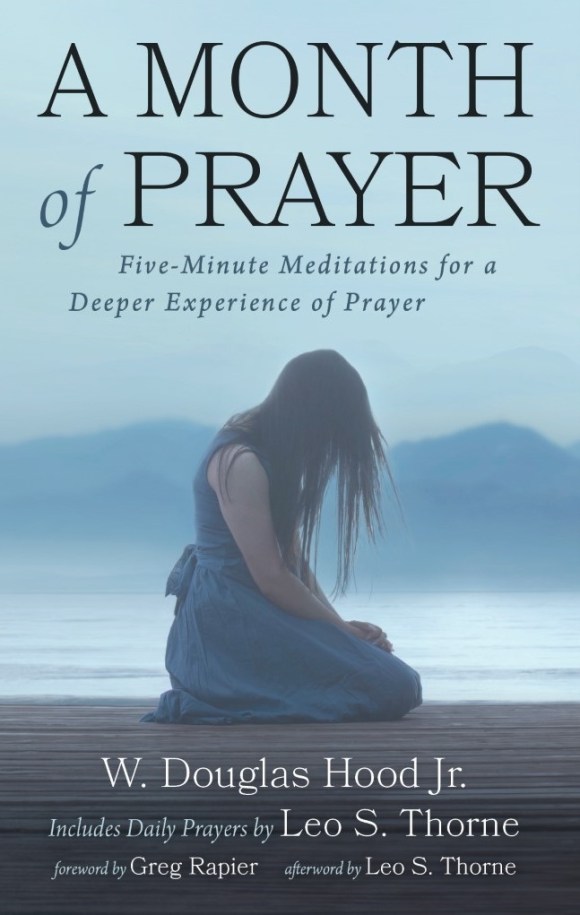
Read more meditations on prayer by Dr. Doug Hood in his new book, A Month of Prayer: Five Minute Meditations for a Deeper Experience of Prayer, available on Amazon.

Categories
Religious

Hesitant Believers

“At that the boy’s father cried out, ‘I have faith; help my lack of faith!’”

Mark 9:24 (Common English Bible)

The boy’s father cried out, “I have faith; help my lack of faith!” His cry is our cry. We live in an anxious time. Natural disasters, terrorist activity, and anger unleashed in the midst of shifting cultural values have brought uncertainty and fear. We may profess faith in God, but that faith is hesitant, uncertain, and unsatisfactory. The forces of evil, destruction, and pain can do that, diminishing a steady and certain faith in the presence and activity of a loving God. Faith may remain, but it isn’t the robust faith we desire. Mixed with our faith is a good measure of doubt: “help my lack of faith!”

This father’s son is possessed by a destructive spirit. From an early age, this spirit has thrown the boy into a fire and into bodies of water with one intention: to kill him. The Bible doesn’t tell us how many years this has been going on, but the Father has now exhausted all hope for his son. Hope extinguished is reflected in the Father’s question to Jesus: “If you can do anything.” (Mark 9:23). It is a frail request. It is what anyone who has nearly given up would ask. In modern parlance, it is a resignation to “What can it hurt to ask Jesus to help.” The Father has moved way past desperation.

It is then that the arch of the story shifts. Jesus confidently answers, “All things are possible for the one who has faith.” (Mark 9:23). The Father finds that he stands before a faith so glorious and strong, a faith that has sufficient resources to meet any need, that his prayer grows larger. Certainly, the Father’s desire for his son’s wholeness remains. But suddenly present is something more. The Father seeks to possess the faith he sees in Jesus, “help my lack of faith!” How many of us are represented by that Father’s plea?

Each of us has felt the desire to find within our faith the resources to counterbalance the tumult of the world. These are desperate days we are living through. And as one tragedy follows another, we grow weary. Jesus does heal the Father’s son. And when the disciples ask how, Jesus simply answers, “Throwing this kind of spirit out requires prayer.” Apparently, Jesus speaks of something more than perfunctory prayers offered before a meeting, a meal, or bedtime. If we wish to be glorious believers who call upon uncommon powers, we will fulfill the conditions of a more thoughtful, robust life of communion with God. This is a deeper prayer life than many of us have ever known.

Joy,


This meditation appears in Dr. Doug Hood’s new book A Month of Prayer: Five Minute Meditations for a Deeper Experience of Prayer, coming soon

Categories
Religious

Faith in Prayer

“Jesus was telling them a parable about their need to pray continuously and not to be discouraged.”

Luke 18:1 (Common English Bible)

I believe in prayer. I believe that prayer is the most important fact in the life of anyone who is determined to follow Jesus. The trouble with prayer is not belief in the practice—it is what is expected from it. For many, prayer is practiced as some sort of holy magic. Pray correctly and with enough faith, and the desired result arrives every time. Unanswered prayer is simply the result of praying incorrectly or with insufficient faith. This belief is troubling, if not downright harmful, to a person of faith. In this sentence from Luke’s Gospel, Jesus teaches that we are to “pray continuously.” Rather than suggesting yet another formula for prayer—pray continuously—I believe our Lord is inviting us to discover at least two ways that prayer is effective.

On one level, prayer opens the one who is praying to a relationship with God. Meaningful relationships are not built by one or two sentences that are shaped into a request, not with God or anyone else. “Continuous prayer” is the cultivation of a regular conversation with God. This is the kind of conversation between two people caring for one another. Whether we are angry or thankful, whether we are sharing from a broken heart or celebrating, we share continuously with those whom we love. Such conversations draw us closer to one another. It is that closeness with us that God desires.

A second level involves the one for whom we pray. By our prayers, that person is not alone. Continuous prayer keeps them in the fellowship of our thoughts and our hearts. A community of faith is created, which liberates them from walking a difficult path unaccompanied by someone who cares. Encouragement and strength bubble forth when we know that there is someone who is “pulling for us.” Creating community among people of faith is one result of continuous prayer.

Faith in prayer does not exclude expectations of the miraculous. God is still in the miracle business. But we are guilty of a grievous error when we reduce prayer to “getting what we want.” That makes God a dispenser of religious goods and services while we continue to build the life we want apart from God’s claim upon us. Christian prayer is always undergirded by a conviction that God is reconciling us to God’s self for the purpose of being used by God for God’s ongoing work in the world. “Continuous prayer” is an affirmation that our life is not ours to do as we wish. We belong to God, and it is for God that we live.

Joy,


This meditation is from Dr. Doug Hood’s new book, A Month of Prayer: Five-Minute Meditations for a Deeper Experience of Prayer, coming soon.

Categories
Religious

Summons to Gratitude

“Truly God is good to Israel, to those who are pure of heart.”

Psalm 73:1 (Common English Bible)

The creation story of Genesis summons God’s people to gratitude. The Lord took Adam, the first man of God’s creation, and placed him in the Garden of Eden to farm and take care of it. Additionally, Adam is invited to “Eat your fill from all of the garden’s trees.” (Genesis 2:16b). Yet God’s abundance did not end with an orchard. God realized that being well-fed isn’t enough. God declared it was not good for Adam to be alone. So, God fashioned a woman and brought the woman to Adam, who embraced her as his wife. Together, they would share in the goodness and abundance of God. For this, Adam and his wife were created. For this, Adam and his wife were summoned to gratitude, and in this gratitude, they would find their happiness. Gratitude is how we measure what is made available to us, however much or little it may be. It is a spirit that positively shapes us and folds us into a life of faith.

The Seventy-third Psalm celebrates this summons with a ringing declaration, “Truly God is good to Israel, to those who are pure in heart.” But as the psalmist continues to write, we discover that gratitude had nearly been lost for a moment. Immediately after the bold declaration of the first verse, there is a confession that the psalmist’s feet had almost stumbled. The cause is quickly identified: human eyes turned away from what God is providing to look upon the prosperity of another. Comparison is measured between what we have and what another enjoys. The result of this comparison is a perceived imbalance—the other has more! Jealously poisons the heart, and bitterness, or anger, or both, presses against a heart once pure. This sight of another’s prosperity created a sickness of heart and fueled a cynical spirit. And the psalmist’s feet nearly stumble beneath.

The antidote to this sickness, to this cynicism, is then announced: The psalmist went into the sanctuary of God. Eyes were directed away from another, and their prosperity to see God once again. In prayer, in reading the Bible, and in worship, we are reminded once again that we deserve nothing. Yet, in God’s grace, we have. We may have little or much, as the apostle Paul declares in one of his letters, but we have. Eyes directed back to God returns to us a true perspective—to view life, as it were, through the eyes of God. In the creation story of Genesis, Adam is placed in an orchard. Yet, careful attention to the story reveals that Adam is not to eat of one tree. Though this detail holds rich theological implications, let this one thing be understood: we were never created to have it all. Eyes turned away from God strive for much. But eyes turned toward God release gratitude for what we already have.

The Bible’s summons to gratitude does not minimize the pain of loss and disappointment. Each is experienced during life, though some may experience both in greater measure than others. There are people who have longed to marry and never do. Others have wrestled with the loss of marriage, either through divorce or the death of a spouse. Health challenges or the loss of a child challenge the maintenance of a robust faith. The apostle Paul speaks of an unnamed “thorn in the flesh” and asks God on three occasions that God remove this pain from him. God does not. What is important is that Paul turns his attention from his struggle to focus on something beyond himself—the building of the church. Paul demonstrates that experiencing gratitude is possible only when one can direct attention from what one lacks to the presence of God. And God promised Paul that God’s grace continued to abide.

Joy,

Categories
Religious

When Faith Is Difficult

“We can’t find goodness anywhere.”

Psalm 4:6 (Common English Bible)

If there remains anyone who argues that the Bible isn’t relevant for today, they have demonstrated that they haven’t paid attention to the Bible—not close attention, anyway. Is there anything more timeless than the agonizing cry, “We can’t find goodness anywhere?” Each morning our minds are disturbed by the growing threat of the militant Islamic group, ISIS, the conflict between Israel and Palestine, and the racial unrest in Ferguson, Missouri. Beneath these attention-getting headlines is the less-mentioned but the continuing concern of the growing wealth gap in our country and the millions in our nation who struggle daily to simply have enough. There are no snappy answers to the painful question of human struggle.

It is well that the Bible does not offer a quick and pre-fabricated answer to this despairing cry. And it is best for us to refrain from such a temptation. First, we are not free to indulge in cynical or dismissive attitudes such as, “Well, that’s life,” or “Bad things just happen.” As followers of Jesus, we are baptized into the common confession that our lives are in the hands of God and that this God is a God of love. Second, we don’t occupy some place between God and humanity’s struggle. Not one of us has some special insight into the mysterious work of God in the midst of our common difficulty. Each of us must sweat it out with everyone else.

What remains is a prayer: “Lord, show us once more the light of your face.” This is the prayer of the Psalmist, and nothing new can be added. The prayer is the same today as it was yesterday, fresh and urgent. It is as new as the earthquake that shook the San Francisco Bay Area a few days ago and the agony that kept someone awake last night. It is new when we utter it personally today. No devotional, not one inspirational book can answer the plea, the emotional depth of that prayer.

On our knees, we pray. If we listen in the silence between our words, the Holy Spirit reminds us that God was never absent in the horrors of human life in the Bible—nor will God be absent today. On the Via Dolorosa—the way of the cross—in Jerusalem, God was very present in the heart of human misery, giving, giving, and giving himself so that after this, there would be no fear, no despair, and no doubt of God’s love. The cry, “We can’t find goodness anywhere,” still sounds in the streets of our communities. We live with it, and we hear it echo in our souls. But the spirit helps us recall the suffering of Christ—a suffering accepted out of Christ’s love for us. It is a love that will work for the good of all those who love him.

Joy,


This meditation is from Dr. Doug Hood’s soon to be published book, “A Month of Prayer: Five Minute Meditations for a Deeper Experience of Prayer”.

Categories
Religious

When Our Hearts Are Anxious

“Don’t be anxious about anything; rather bring up all of your requests to God in your prayers and petitions, along with giving thanks.”

Philippians 4:6 (Common English Bible)

There seems to be no shortage of excruciating stresses, interpersonal struggles, and reasons to be anxious. Some are better than others at putting on a brave face, but their demeanor hides what we all know is a fact of life—life is difficult. And many days, we find it a struggle simply to push through ordinary chores and responsibilities. A heart heavy with anxiety is exhausting.

The careful reader of the Bible will notice that anxiety and worry are mentioned often. This is good news because it says that anxious hearts matter to God. Certainly, it is important to the Apostle Paul. He writes in this sentence of Scripture that we are not to be anxious about anything. The difficulty, of course, is that saying is one thing. Doing this is quite another matter.

Fortunately, Paul doesn’t simply slap us on the back, admonish us not to worry, and leave it at that. What Paul does is offer an antidote for anxious hearts: “rather bring up all of your requests to God in your prayers and petitions, along with giving thanks.” Paul is asking that we make God a partner with everything that weighs so heavily on us. Giving voice to those things that trouble us goes a long way in reducing their grip on our lives. Yet, Paul’s advice is more than simply talking about our problems. Paul tells us additionally to give thanks, to remember in the midst of our anxiety that God has been faithful in the past, and to realize that past performance does indicate the promise of continued faithfulness.

Some years ago, a pastor in New York City would conclude his prayers by saying, “Help us to lean back into the strong arms of Jesus Christ. Amen.” Paul is saying the same thing here. Paul is not denying the power of anxiety. There was no shortage of anxious moments in his ministry. What Paul is asking that we do is remember the faithfulness of God in our past and then lean into that same faithfulness now when our hearts become heavy. There is no promise that our problems will all go away. What Paul promises is God’s peace.

Joy,


This meditation is from Dr. Doug Hood’s soon to be published book, “A Month of Prayer: Five Minute Meditations for a Deeper Experience of Prayer”.

Categories
Religious

A Call to Prayer

“Early in the morning, well before sunrise, Jesus rose and went to a deserted place where he could be alone in prayer.”

Mark 1:35 (Common English Bible)

My grandmother kept a large, white, faux leather cover Bible prominently in her home—usually on a coffee table, though she would occasionally move it about her home as though it was a traveling exhibit. Embossed into the cover was a full-color picture of Jesus kneeling by a great rock in the wilderness. Each time my eyes fell upon that Bible, I felt as though it was a call to prayer. The face of Jesus was not anxious, not desperate as my own on those occasions I did pray. His face portrayed confidence; a radiance one has in the company of loved ones who care deeply about us. Absent was worry, doubt, or any trace of anxiety that threatened to consume. Yes, a call to prayer was evident in this picture of Jesus. However, that call made me uncomfortable—uncomfortable because I would experience a lack of spiritual power. With the disciples, I heard my own heart say, “Lord, teach us to pray like that.”

In this Scripture, Jesus had just finished a hard, demanding day. Another day of similar demands stretched before him. How could Jesus be ready for it? Mark’s Gospel gives us the answer and, with it, important insight into Jesus’ power, “Early in the morning, well before sunrise, Jesus rose and went to a deserted place where he could be alone in prayer.” Jesus was intentional with prayer. Jesus wove into the fabric of each day a time to be alone with God. Jesus regarded this time as a vital part of the human experience. Prayer was an opportunity to link his life with the purposes of God and cultivate a friendship with God. This friendship produced the confidence that Jesus would not face any of life’s demands alone. That would be the source of Jesus’ spiritual power.

My lack of spiritual power as a child was from an inadequate view of prayer. I had reduced prayer to those occasions when I would ask God for a favor or for help with a difficulty. Consequently, days without prayer would pass—I simply did not have any request to make of God. Yet, as I matured, I continued to pay attention to that picture on my grandmother’s Bible, that picture of Jesus at prayer. It grew upon my consciousness that prayer is the same as time spent with a friend or loved one. I may not have anything to ask of my friend, but I did enjoy their company. I felt valued by them, loved by them, and strengthened because of their friendship. The same happens with prayer—a strong hand on the shoulder and the confidence to face each day swelling within. Power comes as we find ourselves surrounded by God’s love, guidance, and strength.

With this refreshing surge of power that flows from regular time in prayer, it is very strange then that we should be content with so little prayer. The weakest, most fearful individual can experience greater strength through the regular rhythm of prayer each day. As this passage of Scripture demonstrates, prayer each day for Jesus was as ordinary as enjoying a meal. Jesus prayed often. Jesus prayed for himself and for others. Jesus prayed when he faced a crisis, and Jesus prayed simply to be alone with God. Jesus urged his disciples to pray, and Jesus taught prayer by example. What the disciples discovered is that regular prayer did not only sustain Jesus’ ministry; it gave direction. Immediately after Jesus rose from prayer this particular morning, Jesus knew what he must do that day. He was not to return to the previous day’s work. Jesus was to head in the other direction. God had new work for him there.

Joy,


This meditation is from Dr. Doug Hood’s soon to be published book, “A Month of Prayer: Five Minute Meditations for a Deeper Experience of Prayer”.