Categories
Religious

The Puzzle of Prayer

We always thank God for all of you when we mention you constantly in our prayers.”

1 Thessalonians 1:2 (Common English Bible)

It is not unusual for someone to ask me, “Please pray for me.” Often my response is an invitation to immediate prayer. My desire is to take the request for prayer seriously. By praying with the person immediately, I wish to say that I care deeply about them and that I appreciate their confidence in the power of prayer. Recently, however, I have begun to question, “Just what do they expect from this prayer?” “Do they really believe my prayer to do any good?”

Naturally, the Bible has much to say about prayer. What is often unrealized is just how frequently the mention of prayer in the Bible is one of complaint. The palmists, the prophets, Job, and the apostle Paul, often questioned the value of prayer, sometimes rather bluntly! Listen to a portion of Psalm 88, “But I cry out to you, Lord! My prayer meets you first thing in the morning! Why do you reject my very being, Lord? Why do you hide your face from me?” (Ps 13, 14) It is clear that today’s church is not the first to question the usefulness of prayer.

It is important—and helpful—to note, however, that in each complaint that is uttered, there is present a fervent belief that something can be expected from prayer. Prayer is never given up on in the Bible, never dismissed as not of any use. What makes each of those who wrestle with prayer people of amazing stature is their absolute confidence in the power of prayer—the power to disrupt at any moment the ordinary with the extraordinary. Without reserve or embarrassment, each character in the Bible shared the same compulsion to pray.

I will freely share that I have no idea how prayer works. The question itself may be foolish simply because it strives to understand God. And someone once wisely declared that if we can ever grasp God, then we must go looking for another God. Any God we can understand with our finite minds is simply too small to save us. What I am confident of is that God was very active in the drama recorded in the Bible and continues to be just as involved in the unfolding drama of life today. And God invites us, repeatedly, to seek the inflowing of God’s grace through regular prayer. Refusal to pray—even when prayer was questioned—simply was not an option for the people of faith in the Bible.

Joy,

~ ~ ~ ~ ~ ~ ~ ~ ~ ~

This mediation is from Dr. Doug Hood’s upcoming book, A Month of Prayer: Five-Minute Meditations for a Deeper Experience of Prayer, featuring prayers by Dr. Leo S. Thorne.

Categories
Religious

Which Voice Shall I Follow?

“Again the Lord called Samuel, so Samuel got up, went to Eli, and said, ‘I’m here. You called me?’”

1 Samuel 3:6 (Common English Bible)

Here is a startling story of a young boy named Samuel who had trouble sleeping one night because of a voice that spoke to him from the darkness. Most of us know that story—a voice that comes to us in the darkness at that moment when we want nothing more than to sleep. The volume of the voice is usually immense. It is a clamorous tongue that disturbs the mind and stirs physical restlessness as we lay upon the mattress. For some, the voice that speaks addresses our personal finances, most often when our financial resources are running low and our commitments are racing in the opposite direction. For others, the voice reminds us of estranged relationships but offers no solutions for healing. Other voices that bombard the mind’s ear simply wish to generate anger at this or that political party and the absolute stupidity—or cruelty—of this or that policy out of Washington. Solutions rarely show up in the darkness of the bedroom. Neither does sound sleep.

Here, young Samuel is lying down in the Lord’s temple. We know it is the night hour because fifteen verses later we are informed, “Samuel lay there until morning.” But Samuel will not sleep that night. Before his mind drifts off to restful sleep, Samuel hears a voice. It is the Lord’s voice but Samuel doesn’t know that—not in the beginning. He believes the voice belongs to his mentor, Eli. Three times Samuel hears the voice and three times Samuel disturbs Eli to inquire what it is Eli wants. It is the third time that Eli grows suspicious that this is more than Samuel’s imagination. Nor is Samuel simply hearing the whistle of the wind. Samuel is instructed to make an inquiry if he hears the voice again; to say, “Speak, Lord. Your servant is listening.” And the voice does return.

This is precisely the point that Samuel makes a rather dramatic shift from simply jumping from his bed at the sound of a voice to careful listening. Samuel restrains his natural impulse to a quick response and practices alert and intentional discernment of the content of the voice that speaks. There is much all of us can learn from this simple act—pausing long enough to sincerely listen to the voice we hear, particularly if that voice is unsettling to us. What would happen in our nation if Republicans and Democrats were to exercise restraint from the vitriolic impulse they have for one another? Imagine the surprise if Evangelicals and liberals in the Christian church ever truly listened to one another. What might any of us discover in the darkness of the night if we calmly listened to all that unsettles us—personal finances, relationship difficulties, or concern for the health of those we love—and then, rather uncommonly, invited another voice to the conversation, “Speak, Lord. Your servant is listening.”

At any moment of the day or night, there are voices that clamor for our attention. Some voices long for an impulsive response from us, usually a response that multiplies anger and hurt and fears among those we know and love. Perhaps a voice asks from us indignation and puerile criticism of another point of view. The only contribution that voice makes is increased brokenness in an already broken world. Do not trust these voices. But Samuel’s story shows us another way. Eli counsels Samuel to “listen” rather than “jump” at the sound of the voice. If we listen and listen with humility and civility and respect, what we will discover is that the voices that clamor for an impulsive response will scatter and one will remain. It will be the loveliest voice of all. It will be a voice that asks for patience and love. Trust that voice. Ponder it. Respond to it. It will be then that you have in your heart neither doubt nor fear.

Joy,

~~~~~~~~~~~~~~~~~~~~~~~~

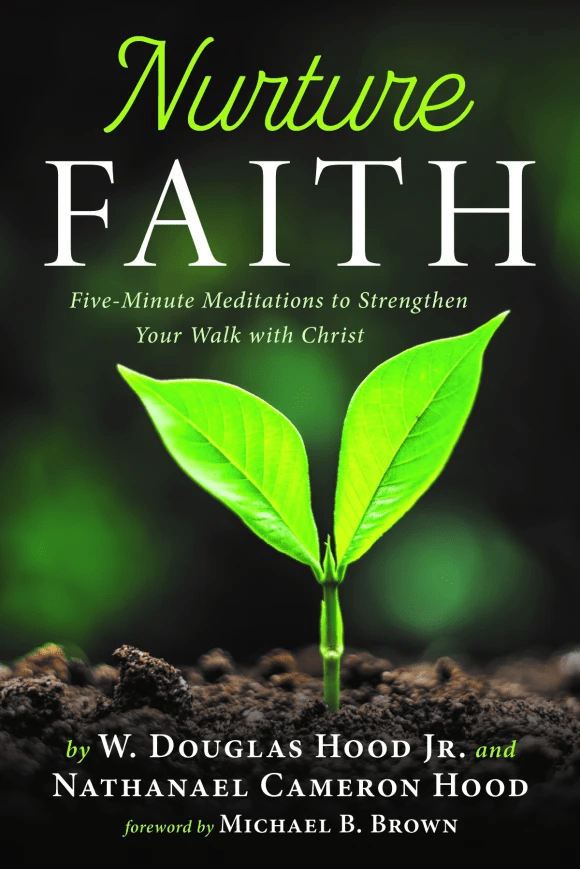
To read more meditations by Dr. Doug Hood and Nathanael Cameron Hood, you can purchase Nurture Faith: Five Minute Meditations to Strengthen Your Walk with Christ from your favorite book seller.
Any royalties received support the ministry and mission of First Presbyterian Church of Delray Beach.


Categories
Religious

Is Belief in a Personal God Possible?

For many, the most challenging part of faith is belief in a personal God. Membership in a local church usually requires “a profession of faith.” Often, this is little more than mental consent that there is a God. That same consent to God’s existence usually assumes that the individual intends to place themselves under God’s authority. Yet, what is often present in that “profession” is a sincere desire to know God personally, to experience a relationship with God in such a manner that in those hours of deepest need, we may personally address God and feel that we are heard and cared for. Harry Emerson Fosdick is helpful here, “No one achieves a vital, personal, Christian experience without a profound sense of need.”[1] But the question presses, is belief in a personal God possible?

One difficulty in experiencing a personal God today is the tendency of impersonal thinking and living. Anything sensory is found to be inferior to reason and intelligence. During my ministry in Texas a number of years ago, one individual criticized my preaching as too personal and too emotional. He was a medical doctor and sought sermons that would stretch his thinking, not move his heart. He was suspicious of preaching that stirred emotions. To think of God in personal terms, he argued, was unsophisticated. I suspect that the Sunday morning pews are filled with people who are in agreement.

But look at what Jesus does here for his disciples: Jesus takes the qualities of human parenting as a clue to understanding God; asks that we address God as Father. God is not an impersonal force that moves through the universe. God is a living being that knows us, loves us, and has a divine desire for our lives. Jesus draws from what is the best in our hearts to show us its higher ideal in God. Certainly, it is true that God has given us minds and expects that we should be growing in knowledge. But we cannot pursue God and fully know God without the heart. One of the basic convictions of our Christian faith is that a loving purpose directs the universe.

Moments confront each of us that demand more than a mere belief in the existence of God. They are moments of such great personal need that more study—more knowledge about God—fails to satisfy. A calm strength in the midst of life’s storms is possible only as God is known personally. The Christian lives not by a higher knowledge of God. The Christian lives by faith, prayer, love, and communion with God. When the soul cries out for a personal God, Jesus shows us the way. It is so simple we doubt its power. Get down on your knees, patiently silence all the voices in your mind, and then say, “Our Father, who is in Heaven.”

Joy,


[1] Harry Emerson Fosdick, Riverside Sermons, New York: Harper & Brothers, 1958, 168.

~~~~~~~~~~~~~~~~~~~~~~

This mediation is from Dr. Doug Hood’s upcoming book, A Month of Prayer: Five-Minute Meditations for a Deeper Experience of Prayer, featuring prayers by Dr. Leo S. Thorne.

Categories
Religious

Faithful Complaining

The following mediation was written by Nathanael Cameron Hood, MA, New York University; MDiv, Princeton Theological Seminary

“After the Lord had said these words to Job, he said to Eliphaz from Terman, ‘I am angry with you and your two friends because you haven’t spoken about me correctly as did my servant Job.’”

Job 42:7 (Common English Bible)

When I first went to grad school at New York University in the early 2010s, I became friends with an aspiring PhD student who didn’t have much regard for organized religion. He was a good man—a genius student and doting father with whom I could talk for hours about politics and art. But whenever the subject of faith arose, his entire mood would change. On good days he’d become tight-lipped and dismissive—on bad ones, he could become outright belligerent. Few such memories stick in my mind quite like one morning when he told me that he’d finished rereading the Book of Job and had decided that the God depicted within was one of the greatest villains in literary history. He snarled that he couldn’t believe anyone could worship a God who would inflict such suffering on such a good man, give him no satisfactory explanation why, and only restore his fortunes once he apologized for complaining.

Over a decade later, I still think about this conversation all the time—not because he offended me, but because I often find myself agreeing with him. The Book of Job is one of the most challenging texts in the entire Bible, inspiring passionate, puzzled, furious debate for literal millennia. Some scholars suggest it began life as an Israelite folk tale that tried to rationalize the existence of evil in God’s creation. As the centuries went by, bits and pieces were Frankensteined into the text until it resembled its current, seemingly chaotic form. One of their key bits of evidence is the book’s epilogue in the forty-second chapter where—after Job repents for rebuking God—God turns around and chastises Job’s assembled friends who’d spent dozens of chapters defending God’s goodness, declaring that Job was the only righteous one among them. The only way to explain such an abrupt 180° reversal, these scholars declare, was that different writers had meddled with the original story to help Job—and God—save face.

One would think my recent time in the scholarly trenches of seminary would see me agreeing with these arguments. But curiously, I’ve found the opposite to be true. I wonder if these researchers are missing the forest for the trees, failing to grasp that within the larger biblical story of God revealing Godself to humanity it really was Job who proved himself the most faithful because of his willingness to challenge God. Consider Job’s friends—the quick-witted Eliphaz, the accusatory Bildad, the cutting Zophar, the impetuous Elihu. In their rush to defend God from Job they ended up reducing God into a static set of rules to be blindly followed. Ah, but our God is much more than this! Though God desires our obedience, what God wants more than anything else is a personal relationship with each of us. This is why God came to earth as a human being—to live with us, to celebrate with us, to cry and suffer and ultimately die with us.

All throughout the Bible we see righteous men and women struggle with God, refusing to be silent in the face of perceived injustice and evil: Jeremiah cursing God for dooming Jerusalem, the Psalmist despairing of God’s absence, the writer of Ecclesiastes dismissing all creation as meaningless. Even Jesus challenged God at Gethsemane, begging his father to save him from the suffering that was to come on the cross. In a way, it takes more faith to assume that God will hear and respond to our complaints and petitions than to blindly accept our suffering and misfortunes as God’s will. To think otherwise would diminish God, just as Job’s friends did in the strange, infuriating, and ultimately beautiful Book of Job.

Joy,

~~~~~~~~~~~~~~~~~~~~~~

To read more meditations by Dr. Doug Hood and Nathanael Cameron Hood, you can purchase Nurture Faith: Five Minute Meditations to Strengthen Your Walk with Christ from your favorite book seller.

Any royalties received support the ministry and mission of First Presbyterian Church of Delray Beach.

Categories
Religious

Called by Name

The following mediation was written by Nathanael Cameron Hood, MA, New York University; MDiv, Princeton Theological Seminary

“But now, says the Lord—the one who created you, Jacob, the one who formed you, Israel: Don’t fear, for I have redeemed yo; I have called you by name; you are mine.”

Isaiah 43:1 (Common English Bible)

It was a hot summer day in July 2006 when U.S. Air Force military chaplain Lt. Col. Brian Bohlman first reported for duty at the Landstuhl Regional Medical Center (LRMC) in Germany. As the largest American hospital outside the United States, it became the epicenter for treating American, NATO, and other allied soldiers critically wounded during the War on Terror. Though tired and slightly jetlagged, Chaplain Bohlman was immediately thrown into the deep end of military chaplaincy when, during his initial tour of the hospital, he was alerted that a bus of wounded soldiers would be arriving at the ER in half an hour. Many were in critical condition after receiving catastrophic “blast and burn injuries” from IEDs. Indeed, Chaplain Bohlman recounts how some arrived attached to life-support equipment that literally weighed hundreds of pounds. Though separated by an ocean from active combat zones, right then, Chaplain Bohlman found himself face-to-face with the very worst realities of war.

Military chaplains have served as part of the United States Armed Forces since the Revolutionary War, and though their duties have evolved over the years, they’ve traditionally had certain privileges unique to them. It was on that hot day in July that Chaplain Bohlman discovered one such exception to standard military etiquette when he was informed by his superior that upon arrival, each patient would be introduced to him in turn not by their rank and last name, but by their first name—just their first name. He recalls meeting his first patient and being told by an attending sergeant that his name was John. Looking down on the stretcher, the scared, scarred soldier grabbed his hand and wouldn’t let go. “John, welcome to Germany,” Chaplain Bohlman soothed, “you’re safe now, and we’re here to take good care of you.” In that moment, the two were no longer chaplain and soldier—they were just Brian and John, two human beings under the care of God.[1]

There’s a simple power in names, one reflected all throughout the Bible. In the Ancient Near East where the Hebrew Bible was first written and compiled, names were more than just labels—they were “symbols, magical keys…to the nature and essence of the given being or thing.”[2] Put simply, your name wasn’t just what people called you—your name was who and what you were. Many of the most dramatic moments in Scripture are moments of naming and re-naming as they mark some of the most intimate encounters between humanity and the divine: Abram becoming Abraham, the father of nations; Saul becoming Paul, the great evangelist; the Annunciation when Gabriel told Mary that she would bear a son named Immanuel, meaning “God is with us.”

The forty-third chapter of Isaiah contains another such example of the power of names. Written during a time when Jerusalem had been destroyed, and its people carried off to exile in Babylon, many of the survivors were given new names by their conquerors. Ah! But in this first verse God strikes down these new names, reminding them who created and formed them, that “I have called you by name; you are mine!” I wonder how many people in our modern society in the millennia after Isaiah was written similarly labor under false names: immigrants forced to adopt easy-to-pronounce English names for fear of ostracization; workaholics who disappear into their jobs and job titles; persecuted minorities debased by racial and ethnic slurs. How wonderful, then, that ours is a God who sees through these things and calls us by our names. Our true names that reflect our true, inner selves. The ones given to us at our birth, the ones no foreign power like Babylon, the ones no military pretension or IEDs, can change or take from us. Praise be to our God and the names God has named us! Israel. Emmanuel. Brian. John.

Joy,


[1] Bohlman, Brian. “Voices from the Field: Ready on the Ground: A Military Chaplain’s Reflection on Wounded Warrior Ministry at Landstuhl Regional Medical Center, Germany.” Essay. In Chaplaincy and Spiritual Care in the Twenty-First Century: An Introduction, edited by Wendy Cadge and Shelly Rambo. Chapel Hill, NC: The University of North Carolina Press, 2022, 62-64.

[2] Speiser, E. A. The Anchor Bible – Genesis. Garden City, NY: Doubleday & Company, Inc., 1964, 16.

~~~~~~~~~~~~~~~~~~~~~~

To read more meditations by Dr. Doug Hood and Nathanael Cameron Hood, you can purchase Nurture Faith: Five Minute Meditations to Strengthen Your Walk with Christ from your favorite book seller.

Any royalties received support the ministry and mission of First Presbyterian Church of Delray Beach.

Categories
Religious

Happiness Begins Here

“Therefore, you should treat people in the same way that you want people to treat you; this is the Law and the Prophets.”

Matthew 7:12 (Common English Bible)

Recently I found something on Facebook that may interest you. “‘I suffered, therefore you must suffer, too’ is such an odd mindset to carry through life. I hear it all the time when people defend unpaid internships, awful entry-level jobs, student debt, etc. Whatever happened to wanting the next generation to have it better than you did?” I don’t recall the source of these words. I simply took a screenshot of them to share. What would be fascinating is to listen to how these words land upon the mind and hearts of others. My guess—and this is a guess—is that our response to these words will demonstrate whether we live by an ethic of fairness or an ethic of generosity. My contention is that those who live by an ethic of generosity are the happiest.

There is much that is unfair in life. It is unfair that an apple is a better diet choice than a blueberry muffin. It is unfair that some have a greater fluency with languages than others. More deeply, it is unfair that some children must struggle with cancer and other illness while—fortunately—a vast number of children will mature into adulthood with health. This week I read in the news about an airline employee who noticed a pregnant woman experiencing considerable discomfort while waiting to board her flight. The airline employee asked the person at the head of the line if he would graciously permit the pregnant women to board first. His response was, “Tell her to wait in line like everyone else!” Upon hearing this, another man near the front of the line invited the woman to take his place.

What is remarkable in this story is that the man who gave up his place in line walked to the rear. Apparently, he sought to avoid anyone else behind him making an argument of unfairness. Who does that? Perhaps he would answer that this decision—the decision to put others first—makes the world a little more pleasant, a little brighter, and increases his own happiness that he can make that happen. There is an incredible force that is unleashed in the world by such a generosity of spirit, a force of such immense warmth that it is life-giving to others. It reminds me of a professor in my graduate studies that said that when the people of God fear scarcity, fear that there is not enough “good stuff” to go around, we become mean people, struggling with others for our fair share.

There are destructive forces that are loose in the world, forces of anger, fear, resentment, and jealousy. Additionally, misfortune falls upon every one of us from time to time. Car accidents, natural disasters, and theft are ubiquitous. Amy Morin writes, “We all experience pain and sorrow in life. And although sadness is a normal, healthy emotion, dwelling on your sorrow and misfortune is self-destructive.”[1] Matthew’s Gospel offers an alternative. Focus less on yourself and focus more on adding value to others. Treat others, as you would like to be treated. Such daily deposits into the lives of other people, strengthening them and encouraging them is one of the world’s oldest and best rules. Practice this rule regularly in your life and you will discover that it is golden.

Joy,


[1] Morin, Amy, 13 Things Mentally Strong People Don’t Do, New York: Harper-Collins, 2014, 18.

~ ~ ~ ~ ~ ~ ~ ~ ~ ~ ~ ~ ~ ~ ~ ~ ~ ~ ~ ~

To read more meditations by Dr. Doug Hood, you can purchase

Nurture Faith: Five-Minute Meditations to Strengthen Your Walk with Christ

from Amazon or your favorite online retailer.

Any royalties received support the mission and ministry of

First Presbyterian Church of Delray Beach.

Categories
Religious

When the Door Remains Closed

“Meanwhile, Peter remained outside, knocking at the gate.”

Acts 12:16a Common English Bible

Here is a story for everyone; a story of someone who tried and failed, but refused to give up. Peter was one of Jesus’ disciples. At a critical hour, he failed Jesus by denying him three times. But Jesus never failed Peter. Following Jesus’ resurrection, his continued embrace and love for Peter launched Peter into a preaching ministry of considerable zeal and devotion. Up and down the countryside, Peter gave witness to the power of the risen Christ to change lives. Peter’s primary exhibit for his testimony was his own life. Soon he found himself enmeshed by hostile forces and, finally, preached himself into prison.

Prayers were made for Peter by the Christian communities that he started and were now growing, as a result of his preaching. One night an angel came to Peter, placed the prison guard into a deep sleep, released the chains from Peter’s hands, and opened the prison doors. An important detail of this miracle story is that the angel instructed Peter to place on his sandals. The angel was able to place the guard into a slumber, release Peter’s hands from the chains that held him, and open the prison doors. Yet, the angel holds Peter responsible for placing on his own shoes. Apparent in this small detail is that God will always do what we cannot do, but God will not do for us what we can do. Peter was capable of placing upon his feet his shoes.

Peter, now freed from prison, goes out into the dark, hiding in the thickness of the night from Roman soldiers, and makes his way to a home where he hoped to be received and cared for. When Peter knocked at the outer gate, a female servant went to answer. Recognizing Peter, and overcome with surprise and joy, the servant runs back into the house with the grand announcement of Peter’s release. Yet, in her amazement and delight, she forgets to open the gate and let Peter into the residence. “Meanwhile, Peter remained outside, knocking at the gate.”

Peter does not shrug his shoulders and walk back into the night, commenting, “It’s no use.” Peter continues to knock. Peter is resilient. He will not give in or give up. Through his persistence, Peter reveals the grandeur of his trust in God’s continuing presence and care. Many of us will stand—at some moment in our life—before a closed door. The closed-door may be a job opportunity that never materializes, a romantic relationship that is never found, or an illness that lingers—health seemly more and more elusive. Before that closed door, life asks, “Will you continue to trust God in the face of bitterness and disappointment?” Peter stands before a closed-door unafraid, determined to see it through. His strength is located in God’s fidelity, demonstrated in his past. That same strength is available to us when we stand before a door that is closed.

Joy,

~ ~ ~ ~ ~ ~ ~ ~ ~ ~ ~ ~ ~ ~ ~ ~ ~ ~ ~ ~

To read more meditations by Dr. Doug Hood, you can purchase

Nurture Faith: Five-Minute Meditations to Strengthen Your Walk with Christ

from Amazon or your favorite online retailer.

Any royalties received support the mission and ministry of

First Presbyterian Church of Delray Beach.

Categories
Religious

Speaking Wisely

“Do you love life; do you relish the chance to enjoy good things? Then you must keep your tongue from evil and keep your lips from speaking lies!”

Psalm 34:12, 13 (Common English Bible)

It is a rhetorical question, of course. Who doesn’t want to be thoroughly alive, enjoying all the good things that life has to offer, to be lifted above the plane of mere existence? To live a large life, a life of spacious activities and with a grand purpose captures our imaginations. This is a life of abounding energy and possesses a deep awareness of the things that bless—both personally and those around us.

The Psalms offer treasured insight for such a life, insight for embracing a spacious life of blessedness, of extracting the secret flavors and essences of things as we live into each day. Very specifically, we are instructed in the wisdom of many who have traveled before us; we are told to exercise wise government over our tongues. Relationships with one another rise to unimaginable heights as the tongue is disciplined and directed to build, edify and, exalt those who hear us. It is as though life receives its nutriments from careful and blessed speech.

Our speech is too often destructive. Poison-soaked speech first poisons the speaker. “Every word we speak recoils upon the speaker’s heart, leaves its influence, either in grace or disfigurement,” writes that wonderful preacher, J.H. Jowett.[1] Where the tongue is untrue the heart is afraid of exposure. Life is diminished. One may also argue that such speech is lazy speech. Where there is no exercise of restraint or government of the tongue; it is free to roam at will. Therefore, urges the Psalms, to keep your tongue from evil and speaking lies. The tongue that is held in severe restriction, the tongue that only shapes words that are good and encouraging to others results in quiet and fruitful happiness.

Undisciplined tongues seem to flourish today. And the world is the poorer for it. Yet, our own lives may move to a higher plane simply by a personal revolt from the disorderly conduct of tongues. The best way to affect a departure from the guile and venom that flows freely around us is to exercise one’s self in active good, of words spoken kindly, with pleasantness and grace. The fragrance of our speech will tickle the hearts of others. It may invite them to share in the same wisdom of the Psalms, an invitation to experience a blessed life, full, safe, and abounding in good things.

Joy,


[1] Jowett, Thirsting for the Springs, 188.

Categories
Religious

Difficulties With Prayer

“In the same way, the Spirit comes to help our weakness. We don’t know what we should pray, but the Spirit himself pleads our case with unexpressed groans.”

Romans 8:26 (Common English Bible)

A parishioner in a former congregation talks about her struggle with prayer this way, “I have absolutely no idea what I am doing!” It is a common refrain I have heard in my thirty-six years of ministry. What I once assumed would be one of the most accessible practices of the Christian faith is, in fact, among the most difficult. Those who are honest, those who are unafraid to express the vulnerabilities of their faith, speak to me of their difficulties with prayer. I always begin by affirming how delighted I am to hear that! If anyone is experiencing difficulties with prayer, what they are telling me is that they are wrestling with it rather than abandoning prayer to the professional clergy. There are three difficulties that are spoken of most, and identifying them helps in understanding this teaching from Romans.

The first difficulty that is mentioned is, perhaps, the one that requires the most courage to confess: the absence of appetite! Simply, there are people who have no driving hunger for going to their knees or closing their eyes to speak to God. We understand them when we contrast this lack of appetite with the strength of other appetites, such as that for good food, or the enjoyment of rare and expensive beverages, or the pursuit of some interest, such as golf. A genuine appetite has about it a mighty dynamic that requires little discipline. When they turn to pray, it is often out of a perceived compulsion; a requirement to be a “good” Christian. More time is spent in guilt for the lack of enthusiasm for prayer than the practice. The duty of prayer becomes oppressive.

A second difficulty that is heard is a weakness of faith. Questions fill the mind and heart about the effectiveness of prayer. This is particularly true after prayer has been reduced to “asking” God for something. Though Jesus does encourage us to ask for anything that we might need, Jesus also demonstrates in his own life a richer dynamic of prayer—simply enjoying a relationship with God. That relationship is identical to one we may have with a spouse or a friend. We gather simply to enjoy one another, to share joys and struggles with each other. When prayer is limited to requests, it is easy to dismiss prayer when there isn’t a pressing need. God is dispensable. Absent is any notion that we are turning to God in the quiet assurance that we are drawing near to one who cares for us deeply.

Finally, the difficulty of knowing what to pray for generates hesitancy. Many days present problems and challenges to which we see no solution. In a critical moment, we are unable to discern which direction to take or course of action to pursue. We are stumped and are unable to fashion a reasonable request before God. It is here that we require wisdom that is from another source—a power beyond our capacity. These three difficulties open us to hear the gracious promise presented here in Romans: “the Spirit comes to help our weakness.” The Holy Spirit clarifies and strengthens our prayers. Additionally, prayers that may be short-sighted or are made without an understanding of God’s work are corrected. The Holy Spirit intercedes for us, and feeble efforts to pray become sufficient before God.

Joy,

~ ~ ~ ~ ~ ~ ~ ~ ~ ~ ~ ~ ~ ~ ~ ~ ~ ~ ~ ~

To read more meditations by Dr. Doug Hood, you can purchase

Nurture Faith: Five-Minute Meditations to Strengthen Your Walk with Christ

from Amazon or your favorite online retailer.

Any royalties received support the mission and ministry of

First Presbyterian Church of Delray Beach.

Categories
Religious

Destructive Regrets

“Martha said to Jesus, ‘Lord, if you had been here, my brother wouldn’t have died.”

John 11:21 (Common English Bible)

Here is an example of the destructive nature of regret. Martha has lost her brother, Lazarus. Rather than accepting that death is inevitable for each of us, that Lazarus’ death was not the result of an unfortunate accident or tragedy, Martha begins to question what could have been done; what might have been executed differently that would have prevented this loss. Martha has engaged in the most common form of grief, the “If only…” cycle of questioning that impedes healing. We are familiar with this form of grief; “If only you had been here, my brother wouldn’t have died.” “If only I had arranged things differently.” “If only I had made a different choice, taken another turn.” We recognize Martha’s sentiment as our own. It is a response that flows from unnecessary and harmful personal responsibility.

This appearance of grief is usually born on the morning after a loss or crisis. And it sometimes continues until we draw our final breath—holding us in an unwarranted prison of self-blame. It is a sorrow that drains away vital strength, a grief that consumes our life. The crippling result is the loss of an inward peace and the capacity to meaningfully to live for others. Others who love us, who look to us for encouragement, strength, and direction are deprived of our friendship. We are simply crushed under needless regret. “If only I had called the doctor earlier.” “If only I had noticed the signs, had paid more attention.” One devastating loss now precipitates another. We may still have breath in our lungs but no longer do we bring value to our homes, our communities, or to our network of relationships.

Suppose for a moment that there was something we could have done. Suppose that we could have made a different choice or might have taken another course of action. What then? The question that presses from this passage of scripture is, who is our God? Martha identifies Jesus as, “Lord.” What does the lordship of Jesus mean for us. Martha’s profession of faith, of her belief in Jesus’ capacity as Lord startles. It is a faith in a lord that has limited ability. She confesses—though unintentionally—a belief that Jesus’ redemptive power is only available while Lazarus remained alive, “Lord, if you had been here, my brother wouldn’t have died.” But her brother has died. Hope in anything more is abandoned. Nothing more can be done, apparently even by Jesus. Jesus didn’t arrive in time.

The Bible tells us that Jesus wept at the tomb of Lazarus. There has been considerable conjecture as to why Jesus wept. The Bible remains silent on this question. Some have suggested that Jesus simply gave expression to the natural human response to the loss of a dear friend. Others have offered the suggestion that Lazarus’ death provided an entrance into paradise, to everlasting life with God and now, Jesus was about to take that away by bringing Lazarus back to life. Each of these suggestions completely ignore what Jesus heard from the lips of Martha, “if you had been here.” Jesus heard an incomplete faith, “if only.” The very gospel of Jesus’ power is that things that are broken are repaired. If unintentionally we have gone astray, Jesus is the one who makes the crooked straight and gives life where the world only sees death.

Joy,