Categories
Religious

Voices

“Am I trying to win over human beings or God? Or am I trying to please people? If I were still trying to please people, I wouldn’t be Christ’s slave.”

Galatians 1:10 (Common English Bible)

My son, Nathanael, once asked me why I enjoyed Country music. “The stories,” I answered, “the stories that often come from lived experience – stories that rub up against our own stories. Stories that articulate what we may have struggled to express. Stories that occasionally point us to a resolution from hurt, pain, or loss that once seemed elusive. Voices, written by Sara Brice and performed by Jana Kramer sparkles with insight on mastering your self-image, particularly one that has been poisoned from negative “voices” in your head. No stranger to pain, Kramer credits Voices as her saving grace, granting her permission to shut out the negative voices that, over time and a failed marriage, took-up residence in her head. “I’m fighting voices in my head. Voices in my head telling me that I’m not enough. I’m not pretty and I’m broken. I’m not worthy of love.”

Kramer shares that the song’s lyrics were exactly what she needed to hear, giving her permission to grieve the loss of a marriage and returning strength to move past a negative narrative that placed all the blame on her. In an interview with HollywoodMask.com, Kramer recalled listening to the demo Brice gave her on repeat for hours. The song got her so emotional that she would end up on the floor bawling and singing the song until she believed in it. Kramer recorded the song hoping that the song would provide comfort, hope, and healing for others just as it had for her. The resolution of the song occurs just as Kramer reaches exhaustion from the “voices” in her head that are defeating her: “Stop it, I can’t take another minute. I’m going crazy with these voices that are spinning in my head. Tell my head to listen to my heart. And my heart says, I’m done with voices in my head.”

Here in his letter to the churches in Galatia, Paul has become exhausted with the voices in his head, voices that question his authority to teach and preach, voices that confront him with falling approval polls for not holding a rigorous grasp upon sound Jewish ideology, voices that question Paul’s integrity – “Before God, I’m not lying about the things that I’m writing to you!” (Verse 20). In another letter, Paul confronts being bullied about poor oratory ability – “I know what some people are saying: ‘His letters are severe and powerful, but in person he is weak and his speech is worth nothing.’”[i] Tension builds between pleasing people and seeking God’s approval. The heaviness of Paul’s heart is on display in his failure to offer an expression of thanksgiving to the churches in Galatia so often found in his other letters. Paul’s heart now tells his head, “I’m done with voices in my head.”

Our thoughts, habits, and perception of ourselves must be informed by God’s claim upon us as God’s precious child, one for whom “nothing can separate us from God’s love in Christ Jesus our Lord.” (Romans 8:38). Kramer identifies the moment she takes hold of the narrative that dominates her life: “Stop it, I can’t take another minute. I’m going crazy with these voices that are spinning my head. Tell my head to listen to my heart. And my heart says, I’m done with voices in my head.” It’s all inside each one of us – the capacity to take control of the driving narrative of our life. The image we carry around inside is the most important tool for self-esteem or defeat. Paul asks, in Galatians, a rhetorical question contrasting God’s approval with human approval. We must make the choice. Kramer concludes the song with her choice, “I am strong, I am beautiful.”

Joy,


[i] 2 Corinthians 10:10 (Common English Bible)

Categories
Religious

How To Be Miserable

“Love is patient, love is kind, it isn’t jealous, it doesn’t brag, it isn’t arrogant, it isn’t rude, it doesn’t seek its own advantage, it isn’t irritable, it doesn’t keep a record of complaints, it isn’t happy with injustice, but it is happy with the truth. Love puts up with all things, trust in all things, hopes for all things, endures all things.”

1 Corinthians 13:4-7 (Common English Bible)

The other day I came across a piece written by Earl Nightingale that he titled, How to Be Miserable. He provided remarkable clarity about some of the things I have been wrestling with recently, clarity about self-inflicted misery. Nightingale writes, “The first step to real, professional-type, solid, unremitting misery is to get all wrapped up in yourself and your problems – real or imagined. Become a kind of island, surrounded on every side by yourself. By turning all of your thoughts inward upon yourself, naturally you cannot spend much or any time thinking about others and other things. And so, finally, the outside world – the real world – will disappear into a kind of Hitchcock-type fog.”i

Nightingale continues with a stinging observation that the type of person who chooses misery, who turns inward upon himself or herself doesn’t have much in the wisdom department. Otherwise, they simply wouldn’t do it. With the absence of wisdom, they turn inward and discover that there is not much there. There is a kind of vacuum, and they have to embellish perceived, or real, hurts and slights from others or invent things entirely. Negative – and harmful – behavior is then directed outward toward those who have caused them harm. This behavior may simply be for punishment, to cause pain equal to what they are experiencing, or to manipulate others to meet some relational expectation.

Where Nightingale provides an unpleasant portrait of a miserable person, the apostle Paul provides divine knowledge – or wisdom – for fleeing from misery: love others, particularly when that love is difficult. Paul beautifully expresses the very nature of love by its positive attributes – “love is patient, love is kind.” Paul provides additional wisdom by sharing what love isn’t and doesn’t do – “it isn’t jealous, it doesn’t brag, it isn’t arrogant, it isn’t rude, it doesn’t seek its own advantage, it isn’t irritable, it doesn’t keep a record of complaints.” What Paul provides is a different portrait from Nightingale, a portrait of a person who actively participates in the unity and well-being of relationships with another.

It is widely embraced that the Christian faith is less to do with right beliefs and more to do with right behavior. A person may have a grasp of the Holy Scriptures that is unparalleled, able to articulate a particular theological position with uncommon clarity and yet remain untouched by God’s transforming power – the transformation that deepens love for God and love for others. Such a faith is a lazy faith because it requires no effort. Love requires effort. Love demands that we struggle against an impulse to turn inward and compile a record of complaints against another. Such love “puts up with all things, trust in all things, hopes for all things, endures all things.” It is a love that knows no misery.

Joy,

____________________

i Earl Nightingale, “How to Be Miserable”, Your Success Starts Here: Purpose and Personal Initiative (Shappensburg, PA: Sound Wisdom, 2019) 104.

Categories
Religious

Living In the Present Tense

“Therefore, stop worrying about tomorrow, because tomorrow will worry about itself. Each day has enough trouble of its own.”

Matthew 6:34 (Common English Bible)

It is the practice of the Eskimos never to carry the day’s evil experiences, its troubles and its quarrels, over into the next day. Two Eskimo hunters might become engaged in a violent dispute over the division of the game which they had taken, and heated words might even bring them to blows, but once the sun had set and they had retired to sleep, all memory of the quarrel would be erased from their spirits, and the next day they would greet each other as brothers. If you were to exclaim in surprise: “But I thought you were enemies. You were fighting yesterday!” they would answer: “Ah, but that was yesterday and we live only today.”i That is living in the present tense!

Mark Twain, with his characteristic humor, once commented that he has suffered many things most of which never happened. Doctors tell us that much of our anxiety, which often results in physical, emotional, and spiritual unease, is located in tomorrow, a preoccupation with fears of the future. Consequently, our fears of tomorrow rob us of the opportunity to live fully and abundantly today. Naturally, wise and reasonable decisions and personal behavior must shepherd us in the present day. Careless spending today will result in debt tomorrow. A word carelessly spoken or a relationship betrayed may negatively impact all of our tomorrows. Not all of us have been nurtured in the Eskimo culture!

Jesus’ invitation in this teaching is to locate our hearts in God. Worry and anxiety is all about trying to avoid something, about trying to get away from something. The strain of worry is indicative that we don’t trust the future. Jesus asks that we approach life from another perspective. Rather than fleeing what we fear most, Jesus asks that we run toward God. As Augustine once said, “Our hearts are restless until they rest in Thee.”i Jesus asks that we live in the present tense, free from the regrets of yesterday and the fears of tomorrow. That is possible after we have accepted God’s forgiveness for the past and trust in God’s care for the future.

Thomas Long writes that there is a kind of worry about the coming day that is normal, even healthy. “Tomorrow’s chemistry test or job interview is bound to provide concern, and this command ‘stop worrying about tomorrow’ is not an invitation to finesse the exam or to waltz into the interview unprepared. Rather, it speaks to the deeper, more basic fear that something is out there in the future that can destroy our basic worth as a human being, something finally stronger than God’s care, some silent killer shark swimming toward us from the future.”iii Jesus asks that we cling to God in such a manner that we can affirm that whatever tomorrow brings, it also brings God.

Joy,

_____________________

i Clayton E. Williams, “Living Today Forever,” Best Sermons: 1955 Edition, edited by G. Paul Butler (New York, London & Toronto: McGraw-Hill Book Company, Inc., 1955) 106.

ii Thomas G. Long, Matthew (Louisville & London: Westminster John Know Press, 1997) 76.

iii Long, 76.

Categories
Religious

Getting Started With Jesus

“Everybody who hears these words of mine and puts them into practice is like a wise builder who built a house on bedrock.”

Matthew 7:24 (Common English Bible)

How does a person start to be a Christian? For many in the church, it is a startling question. It is startling because so little thought has been given to the question. Christianity has been reduced to joining a church, worshipping on Sunday morning when convenient, faithfully completing a financial pledge card once a year, and an occasional appearance at a congregational dinner. The notion that there is anything more escapes them. What also escapes such people is any vital relationship with Jesus Christ. And  a vital relationship with Jesus will remain absent until behind every conventional practice of faith a person goes directly to Jesus, listens to the teachings of Jesus, and puts those teachings into practice in their own life. A person gets started with being a Christian by endeavoring to live as Christ lived.

Simply, being a Christian is something to be done. Christianity is not consent to a particular theological creed, belonging to a church that self-identifies as Christian, or practicing a set of rituals. Christianity is doing what Christ does. In every account of Jesus calling particular men to be his disciples something is absent; what is absent is a requirement of a theological education, or a seminar on the basics of the faith, or a new member class. The only thing that Jesus asks is, “Will you follow me?” We will never understand everything that the church teaches. And there may be some teachings that we understand but we simply cannot believe. Jesus doesn’t ask for either. Yesterday, and today, Jesus asks one thing: “Will you follow me?”

In the second place, though we begin where we are – with little understanding of Jesus or no understanding of Jesus – we do not remain where we are. Following Jesus is a continuous journey of listening to all that Jesus teaches and appropriating what is understood into the daily practice of life. As this is done, each week, each month, and each year brings clearer insight and a deeper assurance of Christ’s presence and strength for our lives. Faith matures as the season changes from spring, to summer, to fall, to winter, and finally back to spring with all the new growth each new spring brings. As we pay increasing attention to Jesus, learn more from him, and think harder how to walk as Jesus walked, we make progress toward a more confident faith.

See the source image

Getting started with Jesus is not difficult. Remaining on the walk will be one of the most difficult challenges of life. That is because of all the distractions and temptations to walk a different path, a path that promises quicker satisfactions and pleasures. But what God already knows – and what many of us discover by our own experience – is that every other path ends with disappointment and loss. But strength is available to those who wish to remain on the path of Jesus. That strength is found in the daily reading of the Bible, regular prayer, and the use of helpful devotional material prepared by trusted followers of Jesus Christ. By these resources our confidence in God, in Jesus Christ, and the available help of the Holy Spirit grows upon us.

Joy,

Categories
Religious

After the Flood …

After the Flood…

The following meditation is written by Dr. Doug Hood’s son, Nathanael Hood, a student at Princeton Theological Seminary.

“Noah, a farmer, made a new start and planted a vineyard. He drank some of the wine, became drunk, and took off his clothes in his tent. Ham, Canaan’s father, saw his father naked and told his two brothers who were outside. Shem and Japheth took a robe, threw it over their shoulders, walked backward, and covered their naked father without looking at him because they turned away. When Noah woke up from his wine, he discovered what his youngest son had done to him. He said, “Cursed be Canaan: the lowest servant he will be for his brothers.”

Genesis 9:20-25 (Common English Bible)

Does anyone else think it odd that the story of Noah and the Flood is one of the first Bible stories we tend to teach our children? Far from the stories of Jesus healing the sick, Moses leading the Hebrews out of Egypt, or Jonah sitting in the belly of a whale, the story of the Flood is one of apocalypse—the world ends! Countless men, women, children, and animals drown! Yet Noah is a mainstay of Sunday Schools everywhere. On a certain level, it’s understandable why: in addition to being one of the most dramatic and suspenseful stories in the Old Testament, it’s a useful tool for teaching the importance of living kind, righteous lives like Noah and trusting in God the way his family did while on the Ark. The story of the Flood is also an easy way to teach children how God always keeps God’s promises—you can point to a rainbow as proof! So we clean up the story, sidestepping the human suffering and focusing on the happy ending.

But there’s another part of the Noah story that nobody really tries to sanitize because nobody really tries to discuss it anymore: the Curse of Ham. After the Flood, after the world has dried up and the animals have returned to the earth, Noah and his family begin building a new home. Noah abandons his previous responsibilities as shipbuilder and sea captain and becomes a farmer, a toiler of the land. One of the first things he does as an ex-sailor is plant a vineyard, make wine from the grapes, and get blackout drunk. So drunk, in fact, that he ends history’s first bender passed out and naked. When his son Ham finds him, he tells his other two brothers about their father’s sorry state. These two brothers then take a garment, hold it between them, and walk backwards into their father’s tent to clothe his nakedness without seeing it. After waking and learning what his sons did, Noah curses Ham. Or more specifically, Ham’s son—Noah’s own grandson— Canaan. Turning then to the two sons who covered his nakedness, he praised them and doomed his grandson Canaan to their perpetual slavery. The story of Noah then ends.

How to support a loved one who has survived a traumatic event | LLUH News

What exactly did Ham do to justify this perpetual slavery of his ancestors? The answer is…we’re not sure. There’s a long history of Jewish and Christian scholars trying to reverse engineer Ham’s supposed transgression, some saying it was sinful in Biblical times for sons to see their fathers naked, others identifying absent details and suggesting he castrated his father. But personally, I don’t think there was a rational reason for Noah’s curse, because I don’t think Noah was acting rationally. I think Noah was traumatized, and in his trauma lashed out at Ham over a trifling matter in a way that would hurt him the most, by hurting his son. Think back to the realities of the flood—the suffering, the death—and consider that Noah witnessed it all firsthand. Do you think he ever looked out on the flooded world and trembled at the thought of the waters never receding? Do you think he ever wondered if he deserved to survive at all?

I’ve been thinking about Noah, trauma, and survivor’s guilt a lot lately. In a way, we’ve all lived through our own Flood recently in the shape of COVID-19. What was Noah’s family living on the Ark but a literal quarantine? COVID might not be flooding cities, but millions have died from it. In its own way, the resulting societal trauma has been just as devastating. I’ve seen friends and loved ones—good, kind, generous people—transform into hungover Noah’s, desperate to relieve their trauma by ripping and tearing into bystanders and fellow congregants over things as simple as mask mandates. By the grace of God, this pandemic will blow over one day. And once these floodwaters recede, what next? Will we try to reconcile with those we’ve hurt? Will we try to repair our broken communities, re-knit our divided congregations, revive our lost friendships? The stakes are too high not to try, lest we—just like Noah—doom ourselves and our loved ones to a perpetual slavery of hate and resentment.

Joy,

Categories
Religious

How to Live by Faith

“Faith is the reality of what we hope for, the proof of what we don’t see.”

Hebrews 11:1 (Common English Bible)

Harold Blake Walker writes, “We live by faith or we do not live at all.  Either we venture or we vegetate. If we venture, we do so by faith, simply because we cannot know the end of anything at its beginning.”i Walker applies this principal to marriage, the pursuit of a career, and the challenge of overcoming any of life’s difficulties. There is little certainty in life. Either we risk obtaining what we desire or we remain single, fail to realize what our potential may be, and are stopped by any resistance that places itself between us and what we want. Once we accept the veracity of Walker’s premise, the question becomes, “How do we proceed with an act of imaginative faith?

We begin by paying attention – paying attention to the object of our desire. I first noticed the woman that I would eventually marry in Hebrew Language Class. She was attractive, clearly intelligent, and was engaging with other students. As many men have said before me, any notion of a romantic relationship with her would be a reach. Yet, I refused to simply dismiss the possibility. I paid attention to her. I looked for opportunities to engage in conversation with her. Then I looked for clues that she may be responsive to a friendship, moving to a deeper engagement and finally, the most terrifying risk of all, asking her out on a date. She could have politely refused. Clearly admired by both students and faculty, this was a risk.

This same dynamic is at play in any arena of life. If we desire anything, we begin by paying attention to the small things, gathering clues here and there for the next step that we will take. We make a mental picture of taking possession of what we want and strive forward toward it. That is what this passage from Hebrews means by “Faith is the reality of what we hope for” – we strive forward as though what we desire is now a reality – that we have already taken possession of it. Yes, moving forward may meet with failure. That woman in Hebrew Class may have said “no” to my request for a shared dinner. But the answer was located on the other side of faith – on the other side of taking the risk to ask.

The Book of Hebrews does not minimize the difficulty of faith. An easy faith is a contradiction of terms. Faith, as we have acknowledged, carries an element of risk. And great faith has always had to reckon with great doubt. We possess faith only as we fight for it each day – keeping our eye on the object of desire and recapturing its allure each day. Then we must doubt our doubts and move steadily forward in the direction we wish to go. Yes, the burden of doubt occasionally presents struggle and strain. All great ventures of our lives require struggle and strain. But triumphs are not won without an unquenchable belief that we can achieve what we desire. It all begins with one step forward. That is living by faith

Joy,

____________________

Earl Nightingale, Transformational Living: Positivity, Mindset, and Persistence.  (Shippensburg, PA: Sound Wisdom, 2019) 77.

Categories
Religious

Prayer and Responsibility

“Hezekiah turned his face to the wall and prayed to the Lord. Then Isaiah said, ‘Prepare a bandage made of figs.’ They did so and put it on the swelling, at which point Hezekiah started getting better.”

2 Kings 20:2, 7 (Common English Bible)

Theodore Roosevelt, our nation’s 26th president, was born a frail, sickly child with debilitating asthma. At seventeen, Roosevelt was as tall as he would grow, five feet eight inches, and was just shy of 125 pounds. His health, a continual concern of his parents, prompted Theodore Senior to decide that the time had come to “present a major challenge to his son.”i At the age of twelve, Theodore – nicknamed, Teedie – was told by his father that he had a great mind, but not the body. Without the help of the body, the mind could not go as far as it should. “You must make your body. It is hard drudgery to make one’s body, but I know you will do it.”ii Teedie made the commitment to his father that he would do so. The promise was adhered to with bulldog tenacity. The young Theodore Roosevelt took personal responsibility for his physical health and development.

Hezekiah, king of Judah, became a very sick man during his leadership. He had a wound that had become so serious that his spiritual counselor, a prophet named Isaiah, informed him that he should put his affairs in order because he was dying. That diagnosis came like a bolt of lightning to Hezekiah. In desperation, Hezekiah “turned his face to the wall and prayed to the Lord.” He pled with the Lord to reward his faithfulness as a man of God and to spare his life. Then, the scriptures tell us, Hezekiah cried and cried. Before Isaiah had left the courtyard of the king’s residence, God sent him back to Hezekiah with another and more hopeful message: “I have heard your prayers and have seen your tears. So now I’m going to heal you. I will add fifteen years to your life.”iii Then follows something that is most curious: Isaiah orders a bandage made of figs be placed on the swelling. Hezekiah prayed and Isaiah prepared a bandage: prayer and responsibility.

With powerful clarity, this passage of scripture teaches us that two things were responsible for Hezekiah’s rapid recovery: prayer and a bandage, faith and personal responsibility. If the king was to recover his health, both were required. The Bible refuses to indicate which of the two was the more important. We cannot know which was the most effectual. The message is that without either of them Hezekiah would have died in the prime of his life and at a time when his country most needed his leadership. The power of the Assyrian king, and his armies, threaten the peace Judah. The death of Hezekiah would have made Judah most vulnerable to their enemies. With his health restored, Hezekiah was able to defend his nation from the Assyrian threat. This story provides an important lesson for God’s people: While prayer is essential it must never be made a substitute for personal responsibility.

There are people who make the mistake of choosing between the two, prayer and responsibility. We have seen in the news recently where parents of a particular Christian sect refused medical treatment for their young son because they chose the avenue of prayer alone. A choice between faith and medicine is simply not supported by this Bible lesson. Each is a gift of God and each has its own power. Faith and medicine are both means of healing. They belong together. Both are agents of a compassionate God. Prayer and personal responsibility cooperate closely in effecting the highest well-being of those who struggle with illness. This story from 2 Kings reminds us not to neglect either. The second century French physician, Paré, reminds us of this truth when he wrote, “I dressed the wound and God healed it.”

Joy,

________________________

i Edmund Morris, The Rise of Theodore Roosevelt (New York: Random House, 1979), 32.

ii Morris, 32.

iii Portions of 2 Kings 20:5,6.

Categories
Religious

Fruitful Disappointments

“I’ll visit you when I go to Spain. I hope to see you while I’m passing through. And I hope you will send me on my way there, after I have first been reenergized by some time in your company.”

Romans 15:24 (Common English Bible)

I once knew a woman whose romance had gone on the rocks. She made a grand announcement to her work colleagues that she was never going to permit herself to fall in love again. “You only get hurt,” she said. I was a young graduate student struggling in the romance department myself so I remained silent. Fortunately, an older and wiser woman who was our supervisor made the observation, “If you deal with each disappointment that way, you don’t live.” I don’t recall how many work associates where present at that moment but each of us became silent as those few words sunk deeply into our hearts. The supervisor continued, “Reassess that relationship. Take something useful from it. Make it fruitful for the next.”

The Apostle Paul wanted to go to Spain. He had his heart set on it. Paul’s zeal for preaching the Gospel of Jesus Christ compelled him to reach the outermost rim of the world. What Paul got was a prison cell in Rome. Like my work colleague, Paul was disappointed. Life’s unexpected turns and twist never permitted Paul to take that journey to Spain. That one historical fact dispels the notion that those who follow Christ are never disappointed, never experience disruptions in their own life journey. Paul wanted Spain. Paul got a prison cell. How Paul responded is instructive for us. Paul used that time in prison to reassess God’s claim upon him, Paul wrestled something useful from his disappointment. Imprisonment provided quiet time to penetrate deeply into the mysteries of Christ.

Psychologists tell us that suicide, addictions, and some forms of nervous breakdowns is evidence that people are ill equipped to manage disappointment. Loss and disappointment, regardless of the magnitude, deprive us of our ability to think and act beyond ourselves. Our focus on the disappointment becomes so sharp that we are unable to see what remains that is positive in our lives. Consequently, loss and disappointment shrinks our life to the exact size of our desire that is unmet. Popular speaker and author, John Maxwell, encourages us along a different path – encourages us to embrace failure and disappointments, extracting from them lessons that results in us “failing forward.” It is then that mistakes, failures, and disappointments become stepping-stones to something so much more.

Few people have the opportunity to live life on the basis of their first choice – whether that be a choice in career, a spouse that “checks all the boxes,” or some other longing. Paul wanted to go to Spain. He got a prison cell. A large majority of us will find that life moves in directions not of our choosing. That is precisely when the Christian faith tells us that we should get something out of every experience, every new direction, even out of disappointment. The bulk of the New Testament is letters written by Paul – many of them written while in prison! After twenty-some years as an iterant preacher, Paul gets a prison cell. At last, Paul found the quiet time to think deeply about what he had learned of Jesus Christ and pour those thoughts out in written form that would be Paul’s greatest contribution to the Christian Church.

Joy,

Categories
Religious

A Multitude of Anna’s

The following was written by Dr. Doug Hood’s son, Nathanael Hood, a second year student at Princeton Theological Seminary.

“There was also a prophet, Anna the daughter of Phanuel, who belonged to the tribe of Asher. She was very old. After she married, she lived with her husband for seven years. She was now an eighty-four-year-old widow. She never left the temple area but worshipped God with fasting and prayer night and day. She approached at that very moment and began to praise God and to speak about Jesus to everyone who was looking forward to the redemption of Jerusalem.”

Luke 2:36-38 (Common English Bible)

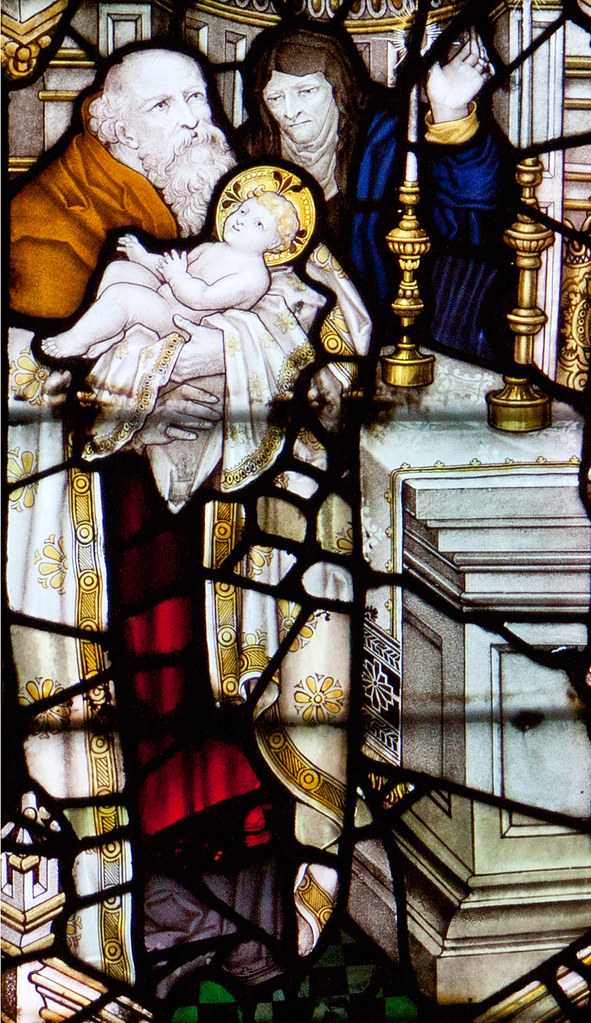
Of all the things in the Bible that puzzle and frustrate historians and theologians, perhaps the greatest is the nearly thirty-year gap in the story of Jesus’ life between his birth and the start of his ministry. What happened during these lost years? The Bible only gives us a few details. One of the most significant happens in the second chapter of Luke when Mary and Joseph take the infant Jesus to the Temple in Jerusalem for the first time. During this presentation, the Holy Family meets a man named Simeon. The text doesn’t tell us much about Simeon—all we know for certain is that he was a “righteous and devout” man who had received a promise from the Holy Spirit that he would not die before he laid eyes on the Messiah. And indeed, on that day, that promise was fulfilled. The text tells us that the Holy Spirit itself came to Simeon and guided him to the Temple whereupon he took the infant Jesus in his arms and praised God, proclaiming him a revelation to the Gentiles and a glory for Israel.

Although he may have fallen a little out of importance in our Protestant tradition, Simeon is a very important figure in both Catholic and Orthodox Christianity. In addition to being canonized as a saint in both traditions with multiple feast days, he is also venerated as a prophet. He has been immortalized in paintings, stained glass, and altarpieces all over Christendom, and he has been the subject of music from some of the greatest composers in history, such as Johann Sebastian Bach. Not just that, but the aforementioned blessing Simeon gave while holding the Infant Jesus—known as the Nunc Dimittis—has been used by the Catholic Church as a prayer since the fourth century. Truly, Simeon is a model for steadfast faith being richly rewarded.

But I suspect Simeon’s story provides small comfort for most people looking for evidence of God’s presence in the world. Most of us will never witness a miracle like Simeon. Most of us will live lives like Anna. For you see, Simeon wasn’t the only one who recognized the infant Jesus when he was first brought to the Temple. There was another—there was an old woman named Anna who lived in the Temple courtyard. She was unique in her familiarity with loss and heartbreak. According to the text, she was widowed only seven years after getting married. According to Luke, she never remarried, and depending on how you translate the original text, she spent either the next sixty-odd or eighty-four years living in the temple courtyard without means or family which, in the time of ancient Israel, made her a non-person. She was a prophet, yes, but a prophet on the margins, well familiar with all the pains, and disappointments, and injustices of life.

And yet! Anna recognized the Messiah. Unlike Simeon, Anna recognized the Christ all by herself. Then she did something even more extraordinary: she spread the Word! Shortly after his blessings, Simeon disappears from the biblical record. But not Anna. She stayed. She witnessed. Indeed, most of us will not live lives like Simeon. Most of us will live quiet, unseen, under-appreciated lives. Most of us will wonder if the world ever will get any better, if our prayers truly mean anything, if our lives are being used by God at all. One can’t help but wonder if Anna, in her loneliness, ever felt the same. But again, it was Anna who recognized the Messiah and witnessed to the world. Perhaps it was because of her difficult life, not despite it, that she was so capable. We cannot all be Simeon. But we can all strive to be Anna. And in that striving, by touching others with our quiet Christian compassion and love, we can create a chain of healing greater than anything any of us will ever be able to comprehend. It takes a Simeon to shock the world. But only a multitude of Anna’s can save it.

Joy,

Categories
Religious

A Year of Faith and Hope

“So what are we going to say about these things? If God is for us, who is against us?

Romans 8:31 (Common English Bible)

It is always possible to dwell on the bright as well as the dark side of life. Yet, for many people, they are inclined to direct their attention to what may go wrong, to anticipate the bitter rather than the sweet, the tears rather than the smiles, and the difficulties rather than the opportunities that may lie in the New Year that stretches out before them. This way of looking at things is probably nothing more than a carryover from how their parents approached life from year to year. Perhaps this is a view fashioned by disappointments and struggles over many years. But it remains a choice that anyone can make – quieting the voice of negativity and grasping the promise of faith that God is for us as we cross from one year to the next.

This is not to be blindly idealistic. People of faith know as much about real trouble as any non-believer, perhaps much more, in fact. Those who don’t have faith often need a distraction to push through each day, some measure of artificial stimulation. Having no faith or hope they look to escape from the real challenges that confront every one of us. Alcohol, recreational drugs, or acquiring things of luxury and comfort divert attention from life’s challenges and disappointments. Conversely, people of faith are genuine realists. They acknowledge and face real misfortune and then look right through the trouble to something beyond – they see hope in the promises of their faith. That is the real difference.

It should be clear that the Bible never asks that we turn away from the facts, that we deceive ourselves in order to be a people of faith. As Christians we are aware of our own capacity for greed, and cruelty, and selfishness. We know that those who would trample over us care little about our faith and that disillusionment lurks around every moment of every day. Such has always been the case and always will be. Emerson said: “He has not learned the lesson of life who does not every day surmount a fear.” But, in faith, we can look into the dense fog of the New Year without too much uneasiness because God moves forward alongside us, a God that is always struggling with us, always bringing good out of evil.

Life can be a struggle. Not every cloud will have a silver lining and not every wrong will be righted in this life. Ambitions may continue to remain unfulfilled and broken relationships may never be repaired. But that does not diminish the promise of faith that God is for us. Whoever believed that every round of disappointment, and meanness, and heartbreak is the whole story? Life also consists of laughter, moments of happiness, and serendipitous occasions of surprise and delight. Each struggle to be experienced above the loud clamor of negativity. Our own free agency allows us to choose the tone that we attach our lives to. Perhaps all we need in the New Year is to be reminded that if God is for us, who is against us?

Joy,