Categories
Religious

Conditions of Answered Prayers

If you remain in me and my words remain in you, ask for whatever you want and it will be done for you.”

John 15:7 (Common English Bible)

Ernest Hemingway captures the deep disquiet among many who are faithful in the practice of prayer, Christians who go to their knees in prayer but quietly question just how much they can expect from God. Distressed by doubts, a lack of confidence in God’s ability—or desire—to respond to prayer plagues their practice of prayer. In his short story, The Gambler, the Nun, and the Radio, Sister Cecilia expresses her heartfelt desire to be a saint—a faithful, sincere desire that she has carried since she was a little girl. Sister Cecilia was absolutely convinced that if she renounced the world and went into the convent, she would become a saint. Now, years later, she still waits for her prayer to be fulfilled. Mr. Frazer, the protagonist of the story, responds to her, “You’ll be one. Everybody gets what they want. That’s what they always tell me.” But Sister Cecilia expresses doubt, “Now it seems almost impossible.”[1]

The great nineteenth-century preacher Phillips Brooks once addressed this common difficulty so many people have with prayer—explaining that the Gospel of John identifies two qualities shared by those who can hope to pray successfully. First, what does it mean to “remain in me.”?[2] It is a phrase that is familiar in the New Testament. To offer clarity, Brooks asks that we think of a child in their earliest years. Those are the years children are so completely absorbed or “hidden” in their parent’s life that you do not look upon them as a separate individual. They are expressions of their parent’s nature. The child’s thoughts and speech are nearly echoes of the parent. In these earliest years, we hear a child utter something, and immediately we know what has been spoken by the parents in earshot of the child. The parent acts and thinks for the child; the child acts and thinks as the parent. Similarly, we “remain” in Christ as we grow closer to Christlikeness.

The second condition of successful prayer is in the words “and my words remain in you.” This is the continual and instinctive reference of the definite, explicit teachings and commands of Christ, asserts Brooks. This second condition is not separable from the first—the first is remaining in Christ. In Christ, it is impossible to do anything, say anything, or desire anything but just what is the Lord’s will. Yet, that is incomplete, imperfect, and unreliable without some positive and definite announcement of it in our own words. Returning to the image of the child, words spoken are but echoes of what is heard. To “remain” in Christ necessarily produces the thoughts and words of Christ—a striving to full obedience to the teachings of Christ. Brooks eloquently puts it this way: the soul’s remaining in Christ makes ready to accept Jesus’ words, and then the words lead into a deeper utterance of the desires of God’s heart.

Returning to Hemingway’s short story, Sister Cecilia’s prayer for much of her life was that she might become a saint. Discouraged that the prayer remains unanswered she concludes that it may be an impossible prayer. Readers of this short story identify with her—we also have prayers that seem to remain unanswered year after year. How do we reconcile unanswered prayer with the promise that whatever we ask will be done? Perhaps the difficulty is that we jumped with hearts so eager to receive that we fail to notice the prior conditions here in John’s Gospel. Ultimately, prayer is about one thing—joining our lives so completely with Christ’s that Christ’s life and ministry continue through us. Prayer is a commitment to reverse the departure of our lives from the life and purposes of Jesus. As we strive to return our lives back to Christ and to “remain” there and have Christ’s words remain in us, our prayers take on fresh power.

Joy,


[1] Hemingway, Ernest. “The Gambler, The Nun, and The Radio,” The Snows of Kilimanjaro and Other Stories. New York: Scribner Classics, 2009, 49.

[2] Brooks, Phillips. “Prayer,” The Battle of Life and Other Sermons. New York: E.P. Dutton, 1893, 297.


Categories
Religious

Praying New York Style

The following meditation is by Dr. Bruce Main, Founder & Executive Director of Urban Promise. It will appear in Dr. Doug Hood’s forthcoming book, A Month of Prayer & Gratitude: Five-Minute Meditations for a Deeper Experience of Gratitude.

“Stay alert and pray….”

Matthew 26:41 (Common English Bible)

I remember a story about one of Pastor Hood’s mentors and role models—the Reverend Bryant M. Kirkland, who pastored the acclaimed Fifth Ave Presbyterian Church in New York City from 1962 to 1987. 

One September day, a Princeton Seminary student boarded the commuter train at Princeton Junction, New Jersey, to downtown Manhattan. This Master of Divinity student was to attend a lunch meeting with Reverend Kirkland at the New York Athletic Club to discuss his ministry field placement. Awed by the marble floors and stately columns of the eating establishment, the student nervously navigated his way past the receptionist to find pastor Kirkland sitting at a white-clothed table adorned with silver utensils and glass goblets—a vivid contrast to the rather austere seminary cafeteria. 

“Have you ever prayed New York style?” stated Kirkland as the lunch arrived. Perplexed and bewildered, the student cast his eyes downward and sheepishly whispered, “No sir.” 

“In New York, we pray with our eyes wide open,” began Kirkland, scanning the large dining room fully attentively. “Dear Lord, we pray for the waitress serving us today, lift the burden she seems to be carrying. And for the businessmen at the back table, we pray the decisions they make will be just and fair for their employees. For the couple to our left who seem tense and at odds, we pray for their marriage.” Then Kirkland paused, looked at the young seminarian in the eyes: “And God, thanks for my new friend. May our friendship be as delicious as the food we’re about to receive. Bless him. Guide his steps as he studies to be the preacher and pastor you have called him to be.”

Prayer is not simply closing our eyes and reciting our wish list to God. Prayer is opening our eyes to what God needs us to see now and respond with grace, empathy, and love. That’s New York-style prayer. That’s praying with our eyes wide open. 

Joy,

Categories
Religious

The Sound of God

“After the earthquake, there was a fire. But the Lord wasn’t in the fire. After the fire, there was a sound. Thin. Quiet.”

1 Kings 19:12 (Common English Bible)

My first trip to Washington D.C. was in 1988, attending the College of Preachers located in the National Cathedral. Driving into the city my eyes fell upon the Pentagon—something I had previously seen only in pictures. Looming large out the right side of my windshield, the impressive structure accomplished the intention of the architect—to communicate the presence of the most powerful military force in the world. Though I am proud to be a U.S. citizen, I am a Christian first. And this military center of our nation represented values contrary to the purposes of Christ. A chill gripped me and I was momentarily shaken. Not because our nation had a military force. Even Israel has such a force to protect its freedoms. I was shaken by the enormity of its power.

I prayed—eyes wide open, watching the highway that stretched out in front of me. My prayer wasn’t clear. My head wasn’t clear. I simply didn’t know how to process the unsettledness tumbling within. My father served proudly in the U.S. Navy, as did my father-in-law. Regularly I thank women and men who are in the military or who have served. I thank them for their sacrifice and their service. My prayers for our troops mark my daily prayers. Yet, I was shaken, uncomfortable with the large footprint of our nation’s military might. My prayer was not uncommon. Many times I have inquired of God about how to pray. I am troubled by this and that and simply do not know how to pray. “Lord, what do I do with this fear, this uneasiness within?”

I turned off of the highway and onto a surface street, navigating my way to the National Cathedral. My speed reduced along a beautifully landscaped avenue, I noticed a public park, also out the right side of my windshield. This pleasant, bucolic escape from my anxiety was welcomed. This park now occupied the space that was once filled with the enormity of the Pentagon building. The churning, troubled spirit within remained but no longer at the same intensity, no longer causing a death grip on the innocent steering wheel of my car. My prayer continued, thanking God for the change of view from the driver’s seat, thanking God that my unsettledness was easing, though only a little.

Traffic dropped my speed to a crawl. More time could safely be given to gazing at the park. Suddenly, God’s hand was on my shoulder. Located in the same trajectory as the Pentagon from my driver’s seat was a park bench. Seated on the bench was a young woman—approximately my age—in prayer. In her hand was a rosary—a helpful prayer tool used by Roman Catholics. At that moment I was calm, all unsettledness now dissipated. Of the two images—the Pentagon and the exercise of prayer—I was quite certain in which of the two real power dwelt. Each day you and I must choose between the clamor of human strength and power and the silent consecration to God in prayer, between the world’s display of self-assurance and the thin, quiet presence of God.

Joy,

Categories
Religious

Conditions of Answered Prayers

“If you remain in me and my words remain in you, ask for whatever you want, and it will be done for you.”

John 15:7 (Common English Bible)

Ernest Hemingway captures the deep disquiet among many who are faithful in the practice of prayer, Christians who go to their knees in prayer but quietly question just how much they can expect from God. Distressed by doubts, a lack of confidence in God’s ability—or desire—to respond to prayer plagues their practice of prayer. In his short story, The Gambler, The Nun, And The Radio, Sister Cecilia expresses her heartfelt desire to be a saint—a faithful, sincere desire that she has carried since she was a little girl. Sister Cecilia was absolutely convinced that if she renounced the world and went into the convent, she would become a saint. Now, years later, she still waits for her prayer to be fulfilled. Mr. Frazer, the protagonist of the story, responds to her that, “You’ll be one. Everybody gets what they want. That’s what they always tell me.” But Sister Cecilia expresses doubt, “Now it seems almost impossible.”i

The great nineteenth century preacher Phillips Brooks once addressed this common difficulty so many people have with prayer—explaining that the Gospel of John identifies two qualities shared by those who can hope to pray successfully. First, what does it mean to “remain in me.?”ii It is a phrase that is familiar in the New Testament. To offer clarity, Brooks asks that we think of a child in their earliest years. Those are the years children are so completely absorbed or “hidden” in their parent’s life that you do not look upon them as a separate individual. They are expressions of their parents’ nature. The child’s thoughts and speech are nearly echoes of the parent. In these earliest years we hear a child utter something and immediately we know what has been spoken by the parents in earshot of the child. The parent acts and thinks for the child; the child acts and thinks as the parent. Similarly, we “remain” in Christ as we grow closer to Christlikeness.

The second condition of successful prayer is in the words “and my words remain in you.” This is the continual and instinctive reference of the definite, explicit teachings and commands of Christ, asserts Brooks. This second condition is not separable from the first—the first is remaining in Christ. In Christ, it is impossible to do anything, say anything, or desire anything but just what is the Lord’s will. Yet, that is incomplete, imperfect, and unreliable without some positive and definite announcement of it in our own words. Returning to the image of the child, words spoken are but echoes of what is heard. To “remain” in Christ necessarily produces the thoughts and words of Christ—a striving to full obedience to the teachings of Christ. Brooks eloquently puts it this way: the soul’s remaining in Christ makes ready to accept Jesus’ words, and then the words lead into a deeper utterance of the desires of God’s heart.

Returning to Hemingway’s short story, Sister Cecilia’s prayer for much of her life was that she might become a saint. Discouraged that the prayer remains unanswered she concludes that it may be an impossible prayer. Readers of this short story identify with her—we also have prayers that seem to remain unanswered year after year. How do we reconcile unanswered prayer with the promise that whatever we ask will be done? Perhaps the difficulty is that we jumped with hearts so eager to receive that we fail to notice the prior conditions here in John’s Gospel. Ultimately prayer is about one thing – joining our lives so completely with Christ’s that Christ’s life and ministry continues through us. Prayer is a commitment to reverse the departure of our lives from the life and purposes of Jesus. As we strive to return our lives back to Christ and to “remain” there, and have Christ’s words remain in us, our prayers take on fresh power.

Joy,


i Ernest Hemingway, “The Gambler, The Nun, And The Radio”, The Snows of Kilimanjaro And Other Stories (New York, NY: Scribner Classics, 2009) 49.

ii Phillips Brooks, “Prayer”, The Battle of Life And Other Sermons (New York: E. P. Dutton & Company, 1893) 297.

Categories
Religious

God’s Apparent Inattention to Prayer

The critic, Guy Davenport, wrote that translation is a game of two languages, and that “the translator is in constant danger of inventing a third that lies between.” [i] The language of the Christian faith is often characterized as one where God is responsive to prayer. The language of lived experience suggests that, on occasion, God is inattentive to prayer. What is the translator to do—how does a person of faith translate a “responsive God” to the occasional experience of an “inattentive God?” Often, the translation—or explanation—is that the prayer lacked sufficient faith or that the prayer failed to follow some prescribed rubric or pattern. The tragic result is a third language, a God that is responsive only if the prayer has been constructed properly or is undergirded by an unwavering and sturdy faith. The third language is unrecognizable to the people of the Bible, particularly the psalmist. It is a language that suggests that effective prayer is dependent upon us, not God.

Psalm 13 is the shortest of the prayers that seek help from God in the Book of Psalms. At the beginning of this prayer is a rhetorical question, “How long?” The question is asked four times in the first two verses. Information isn’t sought. A response is sought from a God that seems unresponsive. The individual who makes this prayer is in distress. An urgent neediness is presented to God, and the expectation is that God will show up and answer, consistent with the understood character of God. Excuses for God’s inattentiveness are not offered; God is not let off the hook. This is a powerful witness of refusal to inventing a third language. God is known as a responsive God. So, where are you God? As James L. Mays makes clear, “God does not help; there is no evidence of God’s attention and care. Anxiety tortures the mind with painful questions.”[ii] The named experience resonates with our own when we are impatient and desperate. Our questions about God’s apparent inattention are not unfaithful.

It is important that the reader—the one who is eavesdropping on this urgent prayer—understand that the psalmist is not releasing their frustrations upon another. It isn’t unusual for the faithful to speak to another of their disappointment with God. Many times, that is the preferred approach—sharing with a friend, rather than directly to God, a disappointment or hurt with a God that seems inattentive. This seems safer, less dangerous, than a direct and frank conversation with God on such matters. What is suspended in such moments is the recognition that nothing can be kept from God. God is privileged to our conversations as well as our thoughts. Just as Adam and Eve sought to hide from God, we participate in the self-deception that we can vent our frustrations about God to another without God’s knowledge. Why risk stirring God’s anger with such a blunt approach? Here, the psalmist does. God has let them down, or so the psalmist believes. Why not an honest conversation with God?

This bold move, this courageous exercise of faith, in turning directly to a God who seems inattentive, grants permission to the reader to do the same. The psalmist’s unflinching honesty before God demonstrates a confidence in God’s love and care for the well-being of the faithful. This nervy move reminds the reader of another man of God named Job. Job never flinched before God in demanding an answer for his suffering. The answer never came to Job. Yet, in time, God does demonstrate faithfulness to Job with the return of good things. What we find in Job’s story is that the individuals who feared holding God accountable received God’s rebuke. The psalmist in this prayer doesn’t receive an answer either. What to do with God’s apparent inattentiveness? The psalmist chooses gratitude. “Yes, I will sing to the Lord because he has been good to me” (verse 6). Choosing to give up on God was not an option for this one who asks God, “How long?” Such a choice only results in a life of despair.    

Joy,      


[i] Graeme Wood, “The Iliad We’ve Lost.” The Atlantic, November 2023.

[ii] James L. Mays, Interpretation: A Bible Commentary for Teaching and Preaching, Psalms, (Louisville: John Knox Press, 1994) 78.


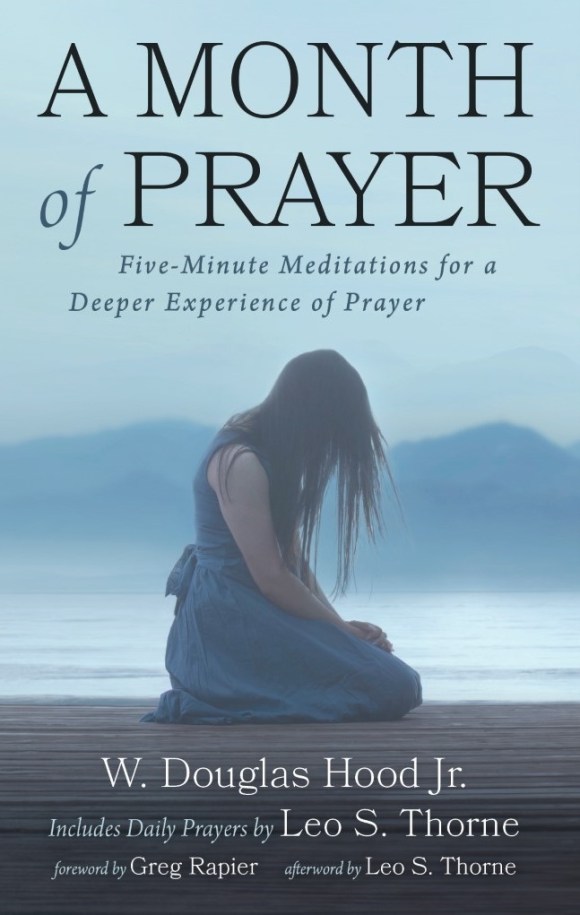
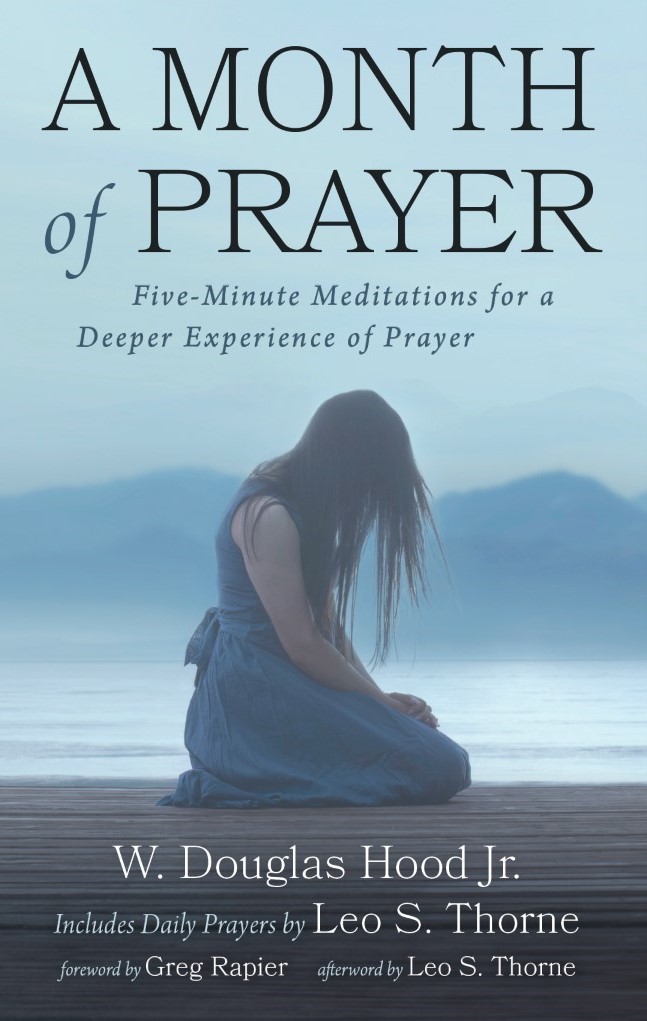
Read more meditations on prayer by Dr. Doug Hood in his new book, A Month of Prayer: Five Minute Meditations for a Deeper Experience of Prayer, available on Amazon.

Categories
Religious

Faith in Prayer

“Jesus was telling them a parable about their need to pray continuously and not to be discouraged.”

Luke 18:1 (Common English Bible)

I believe in prayer. I believe that prayer is the most important fact in the life of anyone who is determined to follow Jesus. The trouble with prayer is not belief in the practice—it is what is expected from it. For many, prayer is practiced as some sort of holy magic. Pray correctly and with enough faith, and the desired result arrives every time. Unanswered prayer is simply the result of praying incorrectly or with insufficient faith. This belief is troubling, if not downright harmful, to a person of faith. In this sentence from Luke’s Gospel, Jesus teaches that we are to “pray continuously.” Rather than suggesting yet another formula for prayer—pray continuously—I believe our Lord is inviting us to discover at least two ways that prayer is effective.

On one level, prayer opens the one who is praying to a relationship with God. Meaningful relationships are not built by one or two sentences that are shaped into a request, not with God or anyone else. “Continuous prayer” is the cultivation of a regular conversation with God. This is the kind of conversation between two people caring for one another. Whether we are angry or thankful, whether we are sharing from a broken heart or celebrating, we share continuously with those whom we love. Such conversations draw us closer to one another. It is that closeness with us that God desires.

A second level involves the one for whom we pray. By our prayers, that person is not alone. Continuous prayer keeps them in the fellowship of our thoughts and our hearts. A community of faith is created, which liberates them from walking a difficult path unaccompanied by someone who cares. Encouragement and strength bubble forth when we know that there is someone who is “pulling for us.” Creating community among people of faith is one result of continuous prayer.

Faith in prayer does not exclude expectations of the miraculous. God is still in the miracle business. But we are guilty of a grievous error when we reduce prayer to “getting what we want.” That makes God a dispenser of religious goods and services while we continue to build the life we want apart from God’s claim upon us. Christian prayer is always undergirded by a conviction that God is reconciling us to God’s self for the purpose of being used by God for God’s ongoing work in the world. “Continuous prayer” is an affirmation that our life is not ours to do as we wish. We belong to God, and it is for God that we live.

Joy,


This meditation is from Dr. Doug Hood’s new book, A Month of Prayer: Five-Minute Meditations for a Deeper Experience of Prayer, coming soon.

Categories
Religious

When Faith Is Difficult

“We can’t find goodness anywhere.”

Psalm 4:6 (Common English Bible)

If there remains anyone who argues that the Bible isn’t relevant for today, they have demonstrated that they haven’t paid attention to the Bible—not close attention, anyway. Is there anything more timeless than the agonizing cry, “We can’t find goodness anywhere?” Each morning our minds are disturbed by the growing threat of the militant Islamic group, ISIS, the conflict between Israel and Palestine, and the racial unrest in Ferguson, Missouri. Beneath these attention-getting headlines is the less-mentioned but the continuing concern of the growing wealth gap in our country and the millions in our nation who struggle daily to simply have enough. There are no snappy answers to the painful question of human struggle.

It is well that the Bible does not offer a quick and pre-fabricated answer to this despairing cry. And it is best for us to refrain from such a temptation. First, we are not free to indulge in cynical or dismissive attitudes such as, “Well, that’s life,” or “Bad things just happen.” As followers of Jesus, we are baptized into the common confession that our lives are in the hands of God and that this God is a God of love. Second, we don’t occupy some place between God and humanity’s struggle. Not one of us has some special insight into the mysterious work of God in the midst of our common difficulty. Each of us must sweat it out with everyone else.

What remains is a prayer: “Lord, show us once more the light of your face.” This is the prayer of the Psalmist, and nothing new can be added. The prayer is the same today as it was yesterday, fresh and urgent. It is as new as the earthquake that shook the San Francisco Bay Area a few days ago and the agony that kept someone awake last night. It is new when we utter it personally today. No devotional, not one inspirational book can answer the plea, the emotional depth of that prayer.

On our knees, we pray. If we listen in the silence between our words, the Holy Spirit reminds us that God was never absent in the horrors of human life in the Bible—nor will God be absent today. On the Via Dolorosa—the way of the cross—in Jerusalem, God was very present in the heart of human misery, giving, giving, and giving himself so that after this, there would be no fear, no despair, and no doubt of God’s love. The cry, “We can’t find goodness anywhere,” still sounds in the streets of our communities. We live with it, and we hear it echo in our souls. But the spirit helps us recall the suffering of Christ—a suffering accepted out of Christ’s love for us. It is a love that will work for the good of all those who love him.

Joy,


This meditation is from Dr. Doug Hood’s soon to be published book, “A Month of Prayer: Five Minute Meditations for a Deeper Experience of Prayer”.

Categories
Religious

The Great Wisdom of Prayer

“Early in the morning, well before sunrise, Jesus rose and went to a deserted place where he could be alone in prayer.”

Mark 1:35 (Common English Bible)

It was said of the disciples long ago that people held them in wonder and awe that they had been with Jesus. To be with one of the disciples was to experience one degree of separation from our Lord. That close proximity to Christ resulted in an experience of spiritual vitality and power. God’s love, wisdom, and strength were no longer limited to one’s imagination as stories of Jesus’ life and ministry were shared. In the company of a disciple—or disciples—God’s presence seemed to come near. The vision of God’s glory grew more expansive in the heart as a result of being in the presence of one of the disciples. Perhaps that same fascination is what drives each of us to be photographed with those we admire. There is an unmistakable attraction and thrill to standing in the presence of those who have acquired a larger-than-life persona.

In this passage from Mark’s Gospel, Jesus had just finished a hard, grueling day. A similar day would follow. How could he be ready for it? What would be the spring of fresh physical, emotional, and spiritual strength from which he would drink? Mark gives us the answer and with it the key to Jesus’ vitality and stamina, “Early in the morning, well before sunrise, Jesus rose and went to a deserted place where he could be alone in prayer.” This one verse suggests the great wisdom of prayer: Every morning, draw from the inexhaustible power of God by drawing near to God’s presence. That is done in prayer. Once when a man was asked what he was doing each day sitting alone in a church, gazing upon a picture of Jesus, he answered, “I am simply looking at him and he is looking at me.” Prayer is time with God.

The weakest, humblest life can be made stronger when placed before God. As we pray, the Bible promises that God will be there. There will be days when God seems absent. The Psalms tell us this. Pray anyway. Know that God is present. Day after day the eyes of the soul become more sensitive to God, the heart more aware of God’s still small voice speaking. Eventually, prayer becomes that daily practice by which the individual soul becomes intertwined with the presence and strength of God. The fact of intimate communion with God is the great reality of true, regular prayer. In prayer, we come to see ourselves surrounded by God’s love and concern for us as we begin each new day.

How strange, how foolish it must seem to God that we should be content with so little prayer. This particular occasion, mentioned in this one verse of Scripture from Mark’s Gospel, was no unusual occurrence for Jesus. Jesus prayed often; Jesus prayed for himself and for others. Jesus took time for prayer before each day and before every difficult challenge that drew near to him. Jesus teaches prayer to us by example, for he knew from his own experience that prayer was a vital part of navigating the inevitable difficulties that each one of us must face. Today, many Christians are troubled by weakness, doubt, and fear, largely because they miss the help that prayer might provide. The greater wisdom of prayer is simply discovering—and experiencing—that we never have to face a day alone.

Joy,

Categories
Religious

A Life Trained by Christ

Train yourself for a holy life!”

1 Timothy 4:7b

A physician once taught me an important lesson about spiritual growth—there is simply no substitute for regularly paying attention to God. He shared this story with me. In the midst of a successful practice as a doctor, he had little time for his wife, and for his children. Seventy and eighty-hour workweeks were customary. He loved his patients. He loved his work. Time at home was for rest and renewal for the next day. Dinners with his family were rare. Hard work seemed to pay dividends. His salary rose steadily each year. Admiration for him and his exceptional work held a privileged position in the community. Everything seemed right until it did not. Both his wife and his children had found a way to get on in life without him. “The day I realized that was the most painful day of my life,” the doctor said.

The doctor held a stethoscope in his hand. “Perhaps, this is the most important tool for a physician’s work,” he shared. Doctors study and train to know how to listen to a patient with this tool. What is supremely important is to know what “regular” sounds like when we hold the stethoscope to a patient’s chest or back. If the doctor does not know what “regular” sounds like, then the doctor simply does not know what they are listening to with a patient seated in front of them. Doctors must learn well what “regular” sounds like so when using a stethoscope, they can recognize immediately what sounds “irregular.” Once an “irregular” comes through the stethoscope, a decision, with the patient, is required. This one part of practicing medicine is all about listening carefully, listening correctly.

“I was failing at listening carefully to my life, to my family,” said the doctor. “Then, I almost lost them.” “That terrified me.” The difficulty was that I did not know what “regular” was, or what “regular” sounded like as a part of a family. Here is a man who is an excellent doctor but is a poor husband and father. Training was required. Good training is about consistent, regular effort over time. Good training demands the proper tools. “I went back to school,” said the doctor. The textbook was the Bible. The classroom was a chair in his backyard for one hour at the close of every day. Reading the Bible every evening, the doctor learned what “regular” sounded like. Then he listened carefully to his own life, his daily practices, and his priorities. What the doctor heard was irregular.

It is remarkable what listening to God will do for a life. A “regular” life, a healthy life, is a lived experience of faith in God. Practices change, and as practices change, a reshaping occurs. Each life that listens carefully to God, in regular time reading the Bible and prayer, redevelops from the inside out. Such a life embodies more and more the way of Jesus. Trust in God increases, persistent hope in the coming of God’s reign expands, and love overcomes hatred and selfishness. Life moves from unhealthy “instinctual reactions” to learned behaviors—behaviors that enter the heart from habitual practice in the way of Christ. This is a trained life. A life trained by Christ.

Joy,

Categories
Religious

The Fear of Insignificance

“Jesus told them, ‘When you pray, say:

“Father, uphold the holiness of your name. Bring in your kingdom.”’”

Luke 11:2 (Common English Bible)

Whether anything happens in prayer largely depends upon what kind of person we are. Many of us want to live a life of significance – a life that impacts our world in a large or small way. Such a life is rarely achieved without preparation, hard work, and the perseverance to move forward in the midst of challenges and difficulties. The road to significance is often hard. Yet, to recall a well-spoken line of wisdom from a movie some years ago, A League of Their Own, “It’s the hard that makes it great!” The question is one of orientation. Some seek to define for themselves what significance looks like and then to move toward that vision. Others seek to know God’s will and then move toward that.

Regardless of our beginning place – fashioning our own desired future or seeking God’s future for us – we want to take full advantage of the years we are given on this earth. Robert Cohn, a character in Ernest Hemingway’s novel, The Sun Also Rises, comments to his friend, “ ‘Listen Jake,’ he leaned forward on the bar. ‘Don’t you ever get the feeling that all your life is going by and you’re not taking advantage of it? Do you realize you’ve lived nearly half the time you have to live already?’”[1] Urgency has grasped Robert Cohn. Urgency grasps us. Looking back we make a judgment, an evaluation of where we have come. Life is going by and the question presses, “Are we taking full advantage of it? Are we making a difference?”

If we are the kind of person that lives as we please, as we have fashioned our future, our aspirations, our will, the prayers we make will lack power. Prayers are rarely made unless our plans get into a snarl. That is the occasion we pray. We ask God to get us out of it, God reduced to our celestial office assistant. Then we move forward with our own small plans. We remain unchanged. Ignoring God for a long time until our plans become jammed-up is little different from a grasping child. The child asks the parent for unreasonable and selfish things. The parent may give what the child asks on occasion when it seems there is no other way to communicate love. But, as the child matures, parents help the child to think reasonably.

Those who seek to find God’s mind and will experience greater power in prayer. Principally, such persons pray because they love God and God’s will. Prayer is a communion between two who seek increasingly to know the other, to please the other. We pay close attention to a spouse or a dear friend to learn of them, to know what they like and dislike. Then we turn the orientation of our life over to causing the other joy. Loving and caring for the other is not separated from life. It becomes our way of life. In the final analysis, prayer implies a conversion, a new orientation to live not solely for oneself but for the other. It is a decision to turn our wills over to the will of God. There, our lives find their significance.

Joy,


[1] Ernest Hemingway, The Sun Also Rises (New York, NY: Scribner Classics, 1954) 18.