Categories
Religious

When the Door Remains Closed

“Meanwhile, Peter remained outside, knocking at the gate.”

Acts 12:16a Common English Bible

Here is a story for everyone; a story of someone who tried and failed, but refused to give up. Peter was one of Jesus’ disciples. At a critical hour, he failed Jesus by denying him three times. But Jesus never failed Peter. Following Jesus’ resurrection, his continued embrace and love for Peter launched Peter into a preaching ministry of considerable zeal and devotion. Up and down the countryside, Peter gave witness to the power of the risen Christ to change lives. Peter’s primary exhibit for his testimony was his own life. Soon he found himself enmeshed by hostile forces and, finally, preached himself into prison.

Prayers were made for Peter by the Christian communities that he started and were now growing, as a result of his preaching. One night an angel came to Peter, placed the prison guard into a deep sleep, released the chains from Peter’s hands, and opened the prison doors. An important detail of this miracle story is that the angel instructed Peter to place on his sandals. The angel was able to place the guard into a slumber, release Peter’s hands from the chains that held him, and open the prison doors. Yet, the angel holds Peter responsible for placing on his own shoes. Apparent in this small detail is that God will always do what we cannot do, but God will not do for us what we can do. Peter was capable of placing upon his feet his shoes.

Peter, now freed from prison, goes out into the dark, hiding in the thickness of the night from Roman soldiers, and makes his way to a home where he hoped to be received and cared for. When Peter knocked at the outer gate, a female servant went to answer. Recognizing Peter, and overcome with surprise and joy, the servant runs back into the house with the grand announcement of Peter’s release. Yet, in her amazement and delight, she forgets to open the gate and let Peter into the residence. “Meanwhile, Peter remained outside, knocking at the gate.”

Peter does not shrug his shoulders and walk back into the night, commenting, “It’s no use.” Peter continues to knock. Peter is resilient. He will not give in or give up. Through his persistence, Peter reveals the grandeur of his trust in God’s continuing presence and care. Many of us will stand—at some moment in our life—before a closed door. The closed-door may be a job opportunity that never materializes, a romantic relationship that is never found, or an illness that lingers—health seemly more and more elusive. Before that closed door, life asks, “Will you continue to trust God in the face of bitterness and disappointment?” Peter stands before a closed-door unafraid, determined to see it through. His strength is located in God’s fidelity, demonstrated in his past. That same strength is available to us when we stand before a door that is closed.

Joy,

Categories
Religious

Where Could I Go?

The following meditation was written by Dr. Michael B. Brown.

“’Come to me, all you who are struggling hard and carrying heavy loads, and I will give you rest.’” Matthew 11:28 (Common English Bible)

“Living below in this old sinful world, Hardly a comfort can afford;

(One Lord, One Faith, One Baptism: an African American ecumenical hymnal, Chicago: GIA Publications, 2018, #543)

That old hymn offers a prescription for peace in a world where peace is sometimes seriously difficult to find. And on those occasions when we do find it, it’s rarely because of anything external or anything we managed to accomplish on our own. In fact, it defies rational explanation. Paul called it a peace that “exceeds all understanding.” (Philippians 4:7 CEB)

Robert Duvall is almost universally acclaimed as one of the greatest actors in movie history. To me, for all his outstanding body of work, he was never better than in his fascinating movie The Apostle. The close of that movie finds him dressed in the striped prison uniform of days gone by, doing hard labor in a field under a hot summer sun, smiling and quoting words of faith and praise. (Hollywood, California: Butcher Run Films, 1997) The circumstances of his life were demoralizing, but his inner spirit refused to be defeated by outer circumstances. He possessed a peace that exceeded rational understanding. Just a movie? No. Instead, it is the testimony of centuries of faithful people who survived hardships and heartaches not because they were necessarily strong, but rather because they knew Someone who was … Someone they could lean on when otherwise they would fall … Someone who invited them to “Come unto me, all you who are struggling hard and carrying heavy loads, and I will give you rest.” 

As I write this meditation, I have no idea who will read it. But I do know that whoever reads it will be carrying some heavy load in his or her life. They will be bearing up under some burden, perhaps unseen by any human eye. If you are that person, then hang onto this promise. There is Someone who does see and who knows and cares about what you are going through. He clearly stated that he does not desire for you to bear your burden alone. There is a source of strength beyond our strength, a source of hope beyond our means to make lemonade out of lemons. He is leaning forward now to hear the prayer you whisper. And he is saying, “Come unto me, all you who are struggling hard and carrying heavy loads, and I will give you rest.” Just say the word, and his hand will take your own providing peace that exceeds understanding.

Where could I go? O, where could I go, Seeking a refuge for my soul?

Needing a friend to save me in the end, Where could I go but to the Lord?

Joy,

Categories
Religious

The Christian Way of Life

“Rejoice always. Pray continually. Give thanks in every situation because this is God’s will for you in Christ Jesus.” 1 Thessalonians 5:16–18 (Common English Bible)

CliffsNotes is a series of study guides in pamphlet form. Great works of literature and other works are redacted—or condensed—to present a larger work in a more accessible form for a quick perusal of the material. Some use CliffsNotes to determine if a large work is something they want to invest the time in savoring the entire volume. Others, usually students preparing for an exam, simply want the facts. In these three brief verses from Paul’s letter to the Thessalonians, Paul provides the CliffsNotes to the Christian way of life. In three rapid movements, God’s will for us is presented: we are to be a people who rejoice always, who pray continually, and who give thanks in every situation. Paul met with this young congregation only a few times before writing this letter, yet he has developed a deep affection for them—“like a nursing mother caring for her own children” (1 Thessalonians 2:7b)—and longs that they grow strong in these three common shared experiences.

What does it mean to “rejoice always?” When my son, Nathanael, turned five years old, his mother and I threw him a birthday party. Half a dozen of his friends were invited and, as traditional birthdays go, birthday presents were presented and opened before cutting the birthday cake. Opening one gift, Nathanael’s eyes grew wide with joy, and, looking intently at the toy, exclaimed with delight, “It’s what I have always wanted! What is it?” Knowing what the gift is or the function of the gift was not important. Something greater was going on. Nathanael was surrounded by people who loved him, who cared to show up for his birthday, and even now were celebrating him. There was a party going on, and Nathanael was at the center of it all! Paul’s entire ministry is an announcement that God has shown up for us and is active in all things. Though there will be much in life we don’t understand, God stands with us in all life’s circumstances. That is an occasion for rejoicing always!

To pray continually is not every moment but constantly, repeatedly, as an acknowledgment that God is standing right with us. Richard Rohr tells us that St. Francis used to spend whole nights praying the same prayer: “Who are you, O God, and who am I?” Rohr asks that we notice that St. Francis is not stating anything, is not sure of anything, but is just asking open-ended questions.[1] This is the prayer that Paul speaks of when he instructs us to pray continually. The continual notice that God is God, whatever that may mean, and that we are not, is humbling. Such prayer—a constant awareness of a God of infinite mystery—diminishes any notion that we are large enough or strong enough to face life on our own. There is tremendous freedom in that! We are not alone in this journey we call life. Whatever may come in our future is not solely dependent upon us. The great object of prayer is to get home to God even when we fail to receive from God compliance for what we ask.

Paul concludes his summary of the Christian life asking that we give thanks in every situation. The careful eye will distinguish between “give thanks in every situation” and “give thanks for every situation.” Even the smallest child has experienced enough to realize that life throws some things at us that one cannot reasonably be thankful for. What Paul is asking us is that a life that has mastered rejoicing always and praying continually is a life that knows there is more to come—that any hardship, any loss, or any suffering fails to have the last word. God is present in each moment of our life and continually seeks our good. God has determined in the resurrection of Jesus Christ to have the last word for us. It is a word of life abundant with God for eternity. William James writes, “The greatest discovery of my generation is that people can alter their lives by altering their attitudes of mind.”[2] Paul asks that we alter our lives simply by relinquishing control over our outcomes in life and approach all situations with a grateful heart that God moves us forward—even through the darkest shadows. Here, writes Paul, is the sum of the Christian life.

Joy,


[1] Rohr, Richard. Yes, And . . . Daily Meditations. Cincinnati: Franciscan Media, 1997, 102.

[2] Nightingale, Earl. Successful Living in a Changing World, Shippensberg: Sound Wisdom, 2021, 174.

Categories
Religious

Be Strong, Love Deeply

“Don’t fear, because I am with you; don’t be afraid, for I am your God. I will strengthen you, I will surely help you; I will hold you with my righteous strong hand.”

Isaiah 41:10 (Common English Bible)

We live our lives with a sense of the gravity of our times. The Bible speaks of war, and the rumor of war, and there is an unsettling awareness that these words are timeless, words that are as true today as they were when they were written. Politicians rise to power, as they have since the days of scripture, and, on occasion, some generate hatred and fear rather than a leadership of wisdom and courage for meeting the challenges of the day. Health can be fleeting. Just last week, a sixty-four-year-old man—a professional trainer in peek physical shape—fell down a flight of stairs; his head impacted a marble floor and slipped away. His wife speaks to the hospital chaplain about her anticipated retirement without a husband and now questions what is ahead for her. Uncertainty and fear are never very far from any one of us. Though both are part of the human experience and cannot be avoided, we can be paralyzed. Taken from us is the capacity to manage and master fear. The result is that we are wrecked by it.

These words from Isaiah shape a holy discourse from God to a people who are fearful. Paralysis has seized them. Such fear has overshadowed life with the result that all hope vanishes. It is a fear that robs the people of memory—a memory that they belong to a God that has been faithful in the past and remains faithful now. This discourse, this address to Israel follows a full and reassuring reminder of a past that included God. God established a peculiar relation with Israel that is governed, writes Walter Brueggemann, by the positive “chosen” and the negative “not cast off.” “The entire memory of Israel is mobilized in this moment in order to assure the exiles that this guaranteed relationship still operates and is decisive for the present and for the future.”[i] This address provides the basis for a movement beyond fear to trust. God asserts, “I am with you, I am your God, I will strengthen you, I will surely help you, I will hold you.” Israel is not alone in a world that rumors of war, evil politicians, and fleeting health.

These decisive words of God are a clarion call for the church to speak; to speak in a climate of fear and a sense of abandonment. If the church fails to speak at such a time of crisis, the church is an empty and hollow thing. The words suggested by God’s purposeful, strong verbs are “Be Strong, Love Deeply!” They capture the strength of God’s massive intervention in our lives that dissolves fear and replaces it with love. As we experience the unseen arms of God’s strength, we are then able to love others who are fearful, to give release to God’s love as it flows through us to others. Strength upon strength is released into the world as the subject of our fears dissolve and become as nothing. Brueggemann shares, “History is everywhere filled with examples of powers that evaporate when they run amuck of Yahweh’s (God) intention for well-being in the world.”[ii] Many crave to live in a world of certainty, free of fear. That is not the world we have been given, nor would such a world require a God. Ours is a world that asks that we rely upon God alone.

How might fear be managed and mastered? Three possibilities are suggested by this speech from God. First, acknowledge that many of our fears may be traced directly to self-interest. Fear is putting ourselves first. Discomfort is unpleasant, and we seek a remedy, an antidote, or a solution that drives the cause of fear away. We are much too wrapped up in ourselves. But God never promised many of the things we seek, such as our own comfort and material security. What is promised is that God accompanies us in life. We are not alone. Jesus taught that we are to deny ourselves first. It is only then that we can follow where God wants to take us. God first, others second, ourselves last. Second, spread out your fears before God in prayer. This example was provided by Jesus on the night he was betrayed. Following that prayer, Jesus was strengthened. Third, school ourselves that we are in God’s hands, “I will hold you with my righteous strong hand.” Anxiety will then diminish, and our life will become a comfort and strength to others who are fearful.


[i] Walter Brueggemann, Westminster Bible Companion: Isaiah 40-66 (Louisville, Kentucky: Westminster John Knox Press, 1998) 33.

[ii] IBID, 34.

Categories
Religious

To Those Defeated

“After his deep anguish he will see light, and he will be satisfied.”

Isaiah 53:11 (Common English Bible)

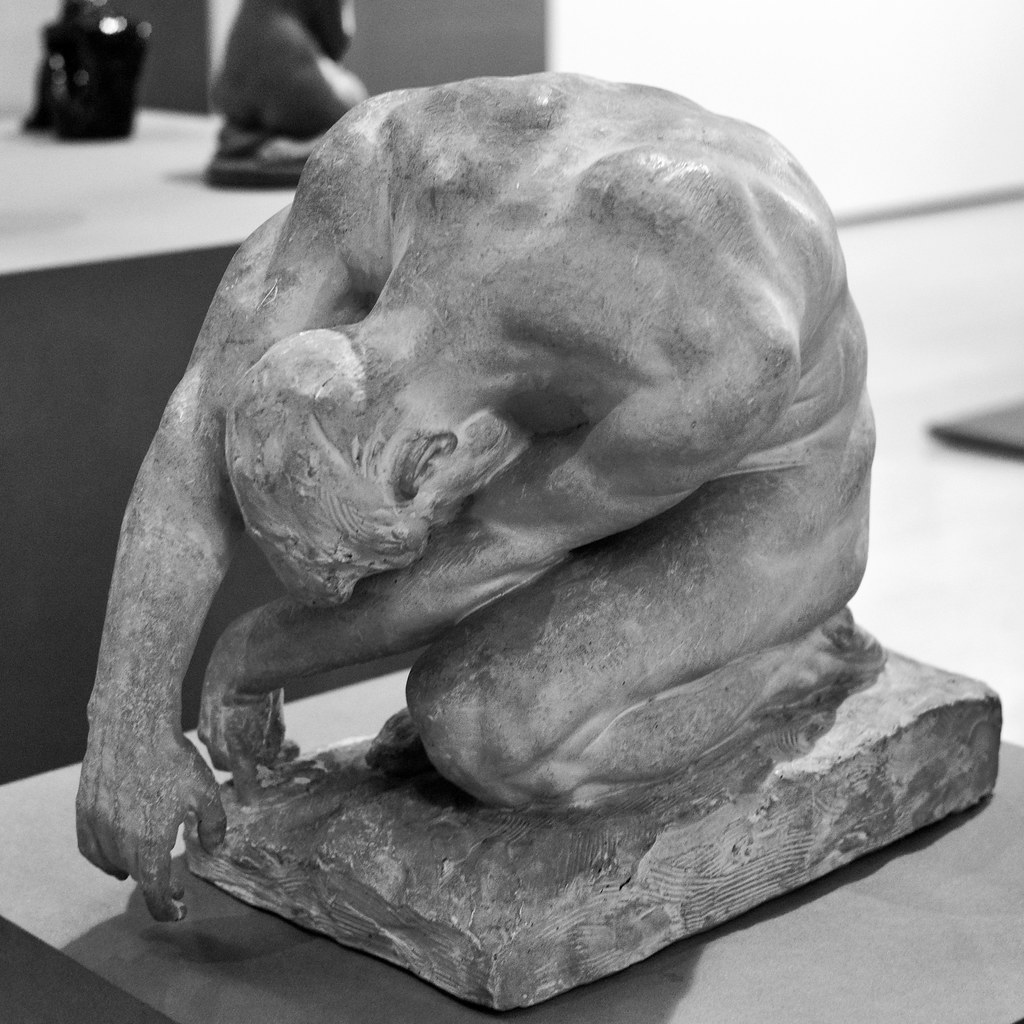
These words are spoken by God. They are spoken of someone who has hit a brick wall. Someone who is defeated. Like many of us, there exists a pervasive sense that if they failed once, they most certainly would fail again. They are not alone. It is likely many of us have experienced defeat following a failure—a defeat that whispers in our ear that we are not enough, that the failure is an assessment of our worthiness. Fear takes up residence inside of us and results in a lack of willingness to try something again. Such a position of the heart, a will to surrender when things get hard and avoid at all costs further failure results in a defeated life. Right here in Isaiah, God promises that the deep anguish of failure may seem like the end, but it is not. When life appears to have reached its end, we are not abandoned. God’s will for each of us is that we prosper. “He will see light, and he will be satisfied.”

Robert T. Kiyosaki writes, “Failure is part of the process of success. People who avoid failure also avoid success.”[i] This is one of the great lessons of history. In science, we think of Thomas Edison, who, following failure after failure, did succeed in inventing the light bulb. In politics, we think of Abraham Lincoln, who met multiple failures, and lost election upon election, before being elected to the United States Presidency. Professional sports are replete with stories of athletes who refused to give up, and because of their refusal to be defined by failure, embraced victory. Each one was driven by failure to continually improve, to do better the next time, until success was theirs. They are unconcerned with impressing anyone, do not worry about being perceived as a failure by other people. One person matters, and only one. That is themselves. Failure is not the end but the beginning. The journey may be long, but they refuse to accept anything but success.

Naturally, refusal to accept defeat demands personal responsibility. Deliberate attention to the particulars of any failure provides guidance on what to change, a recalibration of approach, an expansion of methods, and further development of skill. We may not initially understand the reason for our defeats, but we are responsible for the way we carry our defeats. God promises here in Isaiah that we will be satisfied. But we must be a participant; we must play our part. God holds us responsible for cooperating with God’s work in our lives. Membership in a gym and securing a personal trainer have no power to transform us physically without our participation. Nor is God a genie that grants our wishes apart from our engagement, our struggle, and our consent to join in God’s activity in our lives. Nothing tests us more than our response to failure. The way we take failure is a test of life. It is nothing to fail. It is tragic to surrender to it.

Defeated by Life (1922)
by Leopoldo de Almeida (1898-1974)

Finally, the promise of satisfaction is much richer than grasping victory, of realizing success in our endeavor. The biblical story of God’s engagement with God’s people bears witness to the truth that defeat increases the value of life. Moses’ forty years in the wilderness was not easy. Moses experiences defeat in his leadership with God’s people. Recall the people who chose to worship a golden calf during the long absence of Moses. The people of Israel experienced defeat. Remember the loss of hope in God’s future for them and a desire to return to Egypt. Every struggle, every disappointment, every defeat was matched by a fresh encounter of God’s grace, God’s patience, and God’s power. Each developed in Moses and the people a stronger relationship with God. In defeat, values were deepened, a nation was made braver, and a relationship with God was taken to a new level. As Israel entered the promised land, satisfaction was theirs.

Joy,


[i] Amy Morin, 13 Things Mentally Strong People Don’t Do. (New York, NY, William Morrow: An Imprint of HarperCollins Publishers, 2017)180.

Categories
Religious

Conditions of Answered Prayers

If you remain in me and my words remain in you, ask for whatever you want and it will be done for you.”

John 15:7 (Common English Bible)

Ernest Hemingway captures the deep disquiet among many who are faithful in the practice of prayer, Christians who go to their knees in prayer but quietly question just how much they can expect from God. Distressed by doubts, a lack of confidence in God’s ability—or desire—to respond to prayer plagues their practice of prayer. In his short story, The Gambler, the Nun, and the Radio, Sister Cecilia expresses her heartfelt desire to be a saint—a faithful, sincere desire that she has carried since she was a little girl. Sister Cecilia was absolutely convinced that if she renounced the world and went into the convent, she would become a saint. Now, years later, she still waits for her prayer to be fulfilled. Mr. Frazer, the protagonist of the story, responds to her, “You’ll be one. Everybody gets what they want. That’s what they always tell me.” But Sister Cecilia expresses doubt, “Now it seems almost impossible.”[1]

The great nineteenth-century preacher Phillips Brooks once addressed this common difficulty so many people have with prayer—explaining that the Gospel of John identifies two qualities shared by those who can hope to pray successfully. First, what does it mean to “remain in me.”?[2] It is a phrase that is familiar in the New Testament. To offer clarity, Brooks asks that we think of a child in their earliest years. Those are the years children are so completely absorbed or “hidden” in their parent’s life that you do not look upon them as a separate individual. They are expressions of their parent’s nature. The child’s thoughts and speech are nearly echoes of the parent. In these earliest years, we hear a child utter something, and immediately we know what has been spoken by the parents in earshot of the child. The parent acts and thinks for the child; the child acts and thinks as the parent. Similarly, we “remain” in Christ as we grow closer to Christlikeness.

The second condition of successful prayer is in the words “and my words remain in you.” This is the continual and instinctive reference of the definite, explicit teachings and commands of Christ, asserts Brooks. This second condition is not separable from the first—the first is remaining in Christ. In Christ, it is impossible to do anything, say anything, or desire anything but just what is the Lord’s will. Yet, that is incomplete, imperfect, and unreliable without some positive and definite announcement of it in our own words. Returning to the image of the child, words spoken are but echoes of what is heard. To “remain” in Christ necessarily produces the thoughts and words of Christ—a striving to full obedience to the teachings of Christ. Brooks eloquently puts it this way: the soul’s remaining in Christ makes ready to accept Jesus’ words, and then the words lead into a deeper utterance of the desires of God’s heart.

Returning to Hemingway’s short story, Sister Cecilia’s prayer for much of her life was that she might become a saint. Discouraged that the prayer remains unanswered she concludes that it may be an impossible prayer. Readers of this short story identify with her—we also have prayers that seem to remain unanswered year after year. How do we reconcile unanswered prayer with the promise that whatever we ask will be done? Perhaps the difficulty is that we jumped with hearts so eager to receive that we fail to notice the prior conditions here in John’s Gospel. Ultimately, prayer is about one thing—joining our lives so completely with Christ’s that Christ’s life and ministry continue through us. Prayer is a commitment to reverse the departure of our lives from the life and purposes of Jesus. As we strive to return our lives back to Christ and to “remain” there and have Christ’s words remain in us, our prayers take on fresh power.

Joy,


[1] Hemingway, Ernest. “The Gambler, The Nun, and The Radio,” The Snows of Kilimanjaro and Other Stories. New York: Scribner Classics, 2009, 49.

[2] Brooks, Phillips. “Prayer,” The Battle of Life and Other Sermons. New York: E.P. Dutton, 1893, 297.

Categories
Religious

Letting Go of Anger

“Let go of anger and leave rage behind! Don’t get upset—it will only lead to evil.”

Psalm 37:8 (Common English Bible)

“No man can think clearly when his fists are clenched,” writes George Jean Nathan.[i] We need to reach no further than personal experience to accept the truth of those words. Anger destabilizes and diminishes our capacity to make sound judgments. Chances are strong that many of the worst choices you’ve ever made occurred in moments of anger. Family disagreements result in family estrangements. Differences in political ideology result in poorly spoken words that magnify simple differences into vitriol—even cruelty toward another. Bad behavior flows from hearts that we once never imagined had such capacity. Anger becomes a palatable emotion that gathers strength unto itself as a tropical storm organizes into the destructive force of a hurricane. The teacher of the Psalms is correct—anger that isn’t released in a healthy manner leads to evil.

Here in Psalm 37, the people of God are angry. The source of the anger are people experiencing success though they do not honor God; do not follow the way of the Lord. It is a spiritual predicament very present today. When keeping the faith becomes difficult and honoring God requires a level of discipline and restraint and personal sacrifice, others ignore God and advance, even prosper in all their endeavors. Fairness seems absent. The result is a stumbling into frustration and destructive anger. We are bewildered by the incongruence of the equation of life: the faithful struggle and the faithless thrive. Mark Twain’s words are instructive, “Anger is an acid that can do more harm to the vessel in which it is stored than to anything on which it is poured.”[ii] What is unfortunate, argues Travis Bradberry, is that this knowledge is rarely enough to help people keep their anger in check.[iii]

The teacher in this Psalm is asking God’s people to place their frustration and anger into God’s hands. After all, God’s hands have been shown again and again to be really good hands. These are the hands that separated the sea for Israel to pass through when they were pursued by the armies of Egypt. These are the hands that fed Israel for forty years in the wilderness. These are the hands that continue to direct the people in the way of faith and obedience.  Our hands are insufficient, certainly not sufficient for such a range of volatile emotions. Such provocation results in a mood that is unpleasant, uncertain, and destructive. The teacher knows that. So, the teacher urges that we do not allow anger to overtake us but to wait for what the Lord will finally do. Here is a lesson that Israel will learn again and again.

Psalm 37 invites the people of God to another way. It is finally the way of trust in God. Then, we are persuaded to hold to this other way—to clench this other way rather than to clench anger. Certainly, there will be moments when we will seek to take back into our own hands the anger stirred by injustice and hatred in this broken world. These will be moments when we fool ourselves into believing we would be better stewards of what is just and right than God. God’s hands are even large enough for such foolishness. And they are patient hands. Waiting for us to discover again that such anger in our hands become an irritant to our own sense of well-being. It is then that the great teacher asks us once again to hand the anger back to God. Once we are clear that this is where it belongs, we become less worrisome and more expectant of the wonder that God will reveal.

Joy,


[i] Mark Goulston and Philip Goldberg, Get Out of Your Own Way: Practical Lessons for Conquering Procrastination, Fear, Envy, Neediness, Guilt, and More. (A TarcherPerigee Book: New York, New York, 1996) 25.

[ii] Travis Bradberry, Emotional Intelligence Habits: Change Your Habits, Change Your Life. (TalentSmartEQ: San Diego, 2023) 157.

[iii] IBID, 157.

Categories
Religious

Borrowing Time for Prayer

The following is from Dr. Doug Hood’s upcoming book, “A Month of Prayer & Gratitude: Five-Minute Meditations for a Deeper Experience of Gratitude.”

“Jesus was telling them a parable about their need to pray continuously and not to be discouraged.”

Luke 18:1(Common English Bible)

Near the beginning of my present ministry, I placed a brass plaque on the pulpit, positioned just above the Bible. It reads, “The pulpit must be the grave of all human words” by Edward Thurneysen. We don’t come to worship for human advice. If we did, a church service would be no different than a TED Talk. I need to be reminded each week that people come not for an expression of my opinion; they come for the Word of God. Here in this teaching from Luke’s Gospel, Jesus is telling a parable about an opportunity to pray continuously. Jesus believed in prayer. Jesus prayed often. Jesus now wants us to know that prayer is nothing less than approaching the presence of an infinitely holy God. It is an invitation received from God. We must sense the gravity of that invitation and not be relaxed about prayer. Thought, preparation, and intentionality are a more responsible response to God’s invitation to prayer.

A shared difficulty with this approach to prayer is sheer busyness. A man I admire in my present congregation once told me that Jesus’ invitation for regular, daily prayer was a “tall ask.” He owned a business with nearly nine hundred employees. Regular demands upon him rarely left time for reading the Bible, a helpful daily meditation, and prayer. I sympathized and tried to understand. Yet, I also hear that God’s claim upon us—God’s claim upon the life of my friend—isn’t negotiable. Jesus asks that we pray continuously. That isn’t advice from the pastor. It isn’t the opinion of a human. It is all Jesus. A hit-or-miss casualness toward prayer is simply unacceptable. Close attention to Jesus’ life discloses that Jesus remained busy healing, teaching, and proclaiming God’s Kingdom. It would be an interesting debate between my friend and Jesus, which one of them worked harder.

What my friend failed to grasp is that the time borrowed for reading Scripture, a brief meditation, and prayer will not be lost from his work. The poise, steadiness, and increased wisdom granted from time with God each morning will be recompensed to him many times over. That great leader of the early church, Martin Luther, understood this. “Luther habitually prayed for three hours each day.”[1] There is simply no substitute for the value added to each day after being steadied and strengthened by God. Bruce Larson, a Presbyterian pastor of another generation, once spoke at a conference I attended on the value of prayer in his life. He said that if he missed a day of prayer, he noticed the difference. If he missed several days of prayer, his family noticed the difference. If he missed three days, his friends noticed the difference. If he missed for a week, his congregation noticed a difference. Bryant Kirkland shared in a sermon before the faculty and students of Princeton Theological Seminary something he once found on the wall of an army chapel. It said, “Nothing happens here unless you want it to.”[2] Naturally, the question for each of us is, what do we want to happen by prayer? What Jesus found in prayer was less a power to effect miracles and more a presence—God’s presence—that brought in generous measures of strength in weakness, encouragement in discouragement, and inspiration to reach for greater heights. More, Jesus found someone who would never abandon him. Anne Frank wrote that she was prompted to keep a diary simply because, “I don’t have a friend.”[3] Jesus doesn’t want that to be our story. Rather, Jesus desires to introduce to us, through prayer, a God who not only desires to draw close to us but will create in us a transformative story. Confidently, Jesus asks, “Pray continuously and not be discouraged.”

Joy,


[1] Buttrick, George A. Prayer, New York: Cokesbury, 1942, 265.

[2] Kirkland, Bryant, God’s Gifts, the Princeton Seminary Bulletin, Volume VII, Number 3, 1986, 268.

[3] Frank, Anne. Anne Frank: The Diary of a Young Girl, New York: Anchor, 2001, 6.

Categories
Religious

Mark Twain’s Favorite Word

Dr. Thomas K. Tewell wrote the following meditation to be featured in Dr. Doug Hood’s upcoming book, A Month of Prayer and Gratitude: Five-Minute Meditations for a Deeper Experience of Gratitude.

“Rejoice always. Pray continually. Give thanks in every situation because this is God’s will for you in Christ Jesus.”

1 Thessalonians 5:16–18 (Common English Bible)

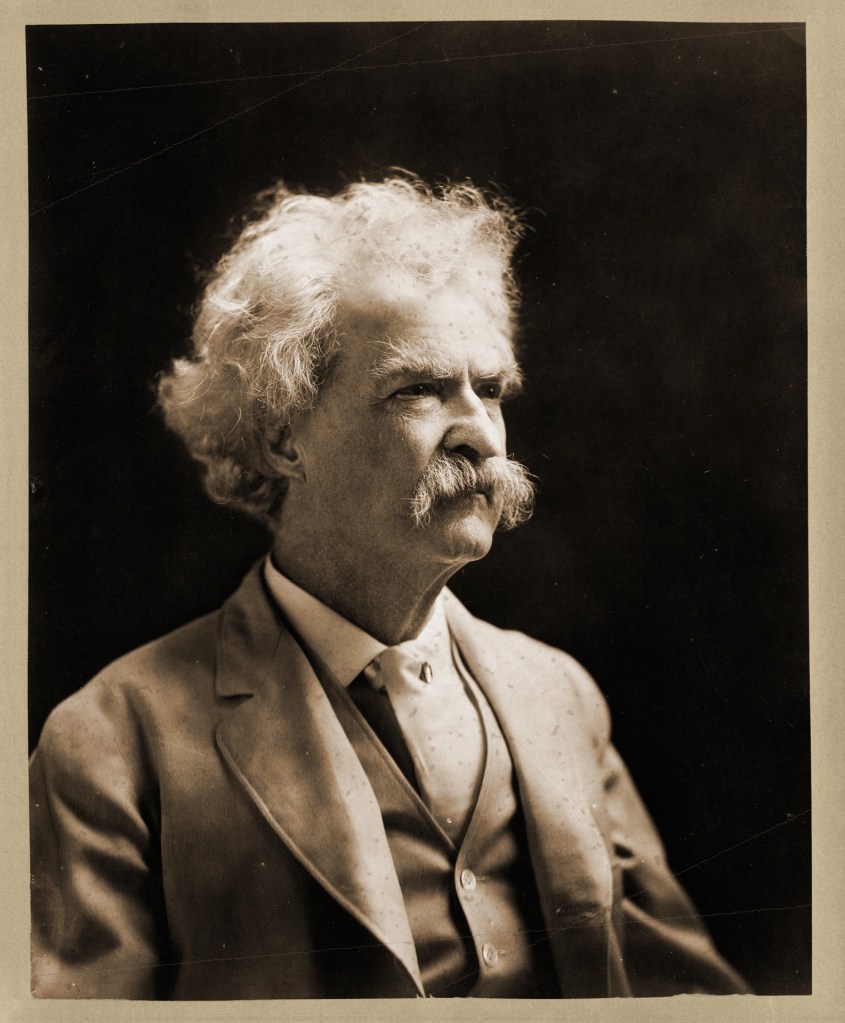
When Mark Twain was the most well-known and respected writer in the United States, he was paid $5 for every word he wrote. Someone sent him a note that said, “Dear Mr. Twain, please send me your best word,” and enclosed a $5 bill in the envelope. Mark Twain sent back a one-word response . . . “Thanks!”

Thanks really was Mark Twain’s favorite word!

In the passage from 1 Thessalonians 5, the Apostle Paul encourages us to give thanks in all circumstances. Notice that Paul didn’t say, “Give thanks for all circumstances!” The reason we give thanks is that God is with us in all circumstances! We give thanks that the same God who raised Jesus from the dead, and who guided us in the past, will guide us in the future. We give thanks that we are not alone as we face challenging situations . . . God is with us! Even when we feel that God has abandoned us, and we think that God has forgotten about us . . . God is with us! It is important to open our eyes and focus on God and not on the circumstances! This is especially true when the circumstances seem overwhelming!

This was the case in the 1630s in Germany when the Thirty Years’s War was raging throughout Europe. The walled city of Eilenberg, Germany, was so overrun with refugees, wounded soldiers, and unsanitary conditions that infection and pestilence broke out in waves and spread uncontrollably. In the year 1636, the Plague hit! That was when a thirty-one-year-old minister and a native of Eilenberg, Rev Martin Rinkart was assigned by the Lutheran Bishop to serve the Lutheran parish in his hometown. He was the only minister who survived the Plague! So, he served the parish churches throughout the city as a solo ministry! Imagine the load that he carried in those years! And as one who grew up there, Martin knew most of the citizens of Eilenberg who were dying. There were so many deaths in the city that Rev. Rinkart led as many as ten funerals and memorial services every few days!

During this bleak period, Rinkart did not focus on the tragedy of the circumstances . . . he got up every morning and he focused on God! He focused on what God was doing. How do I know? In 1636, Rinkart wrote one of the great hymns of our faith. “Now Thank We All Our God,” that focused on Mark Twain’s best word . . . “thanks!” Rinkart focused on the presence of God and the love and support of the congregations in those tumultuous times and not on the tragic deaths or the circumstances. The first two stanzas bear witness to a God who remained steadfast in a time of tragedy and unanswered questions.

Stanza 1. Now thank we all our God with heart and hands and voices

Who wondrous things hath done, in whom this world rejoices;

Who from our mothers’ arms hath blessed us on our way

With countless gifts of love, and still is ours today.

Stanza 2. O may this bounteous God through all our life be near us,

With ever joyful hearts and blessed peace to cheer us;

And keep us in God’s grace, and guide us when perplexed,

And free us from all ills in this world and the next![1]

Martin Rinkart was honest enough with his feelings to admit that he was perplexed about the circumstances, and he wondered out loud during his daily prayer and memorial services, “where is God in the midst of this tragedy?” But as he wrestled with God and wondered about God’s presence and God’s seeming absence, Martin’s focus was still on God’s provision of comfort in this life, and eternal life in the next. This hymn is a powerful testimony to Mark Twain’s best word . . . thanks!

I have a dear friend who is a Jewish rabbi. The Rabbi urges his congregation to give thanks for one hundred things every day. And, with a twinkle in his eye, he tells them that if they can’t think of one hundred things for which they are thankful, they should open their eyes. The rabbi is quite right. God is at work in all circumstances. But we don’t see God at work because our focus is on the severity of the circumstances and not on God!

When we ask God to open our eyes, and we start to see God at work, even in overwhelming circumstances, then we will have no problem giving thanks daily for one hundred things! And, when that happens . . . like Mark Twain, thanks will become our best word, too! May it be so!

Joy,


[1] Rinkart, Martin. “Now Thank We All Our God”, 1636.

Categories
Religious

Work in Progress

The following meditation was written by Dr. Greg Rapier for Dr. Doug Hood’s upcoming book, A Month of Prayer & Gratitude: Five-Minute Meditations for a Deeper Experience of Gratitude.

“Jesus told this parable to certain people who had convinced themselves that they were righteous and who looked on everyone else with disgust: ‘Two people went up to the temple to pray. One was a Pharisee and the other a tax collector. The Pharisee stood and prayed about himself with these words, “God, I thank you that I’m not like everyone else—crooks, evildoers, adulterers—or even like this tax collector. I fast twice a week. I give a tenth of everything I receive.” But the tax collector stood at a distance. He wouldn’t even lift his eyes to look toward heaven. Rather, he struck his chest and said, “God, show mercy to me, a sinner.”’”

Luke 18:9-13 (Common English Bible)

The big danger in comparing ourselves to others is that we often, even when we don’t mean to, compare our worst with others’ best. We compare the inner machinations of our hearts, our deep and hidden struggles, against the public-facing version of our peers, the pristine and polished, Instagram-filtered, highly curated, tactfully presented as reality but not really reality versions of people we see online. Or at church. Funny how those can feel the same. I imagine most of us, if we’re honest with ourselves, make these comparisons and wince. We feel less-than, broken, and incomplete.

My first time at the Metropolitan Museum of Art in New York, I was absolutely flooded with stimuli—artwork stacked high to the ceiling, people everywhere you look, large tour groups hastily ushered from one room to the next, over two million square feet jam-packed with some of the finest art in the world. In one of the rooms—I couldn’t tell you which because the place was a decadent maze—my friend, a resident New Yorker and de facto tour guide, completely froze. He looked up at a long wall stretched even longer by all the artwork on display. Amongst the ornate, centuries-old, immaculate compositions, one painting stood apart, not because of its perfection, but because of its flaws.

Much of the canvas featured precise, lifelike depictions of saints and angels and Jesus Christ, but in the upper left-hand quadrant, prominently positioned against a blue backdrop, rested two beige mannequin-like figures, sketched out but never completed. Part of the painting was missing. My friend leaned over and whispered, “I like this one because it’s unfinished.”

Jesus’ parable in Luke 18 reminds us that we are all unfinished and that there’s no sense in pretending anything else—not for other people, and certainly not for God. There’s power in humility and dignity in vulnerability. This is how we ought to come before God and pray, not as perfect people, but as works in progress, some quadrants of life more sketched out than others. Because when we do that—when we show up to pray not as our perfect selves but as our whole selves—we discover a God of infinite grace, a God who sees our flaws and loves us anyway, who says this messy, unfinished canvas of a life holds innate beauty and deserves to be displayed. The Scripture reminds us that we’re all God’s people, and that in God’s great gallery, Jesus Christ has reserved a place for us all.

Joy,