Categories
Religious

Quiet, Lonely Places

The following meditation was written by Dr. Doug Hood’s son, Nathanael Cameron Hood, MA, New York University, MDiv, Princeton Theological Seminary

News of him spread even more and huge crowds gathered to listen and to be healed from their illnesses. But Jesus would withdraw to deserted places for prayer.

Luke 5:15, 16 (Common English Bible)

Scattered throughout every hospital, there are nooks and crannies, closets and pantries known only to those who work there: an empty room in an otherwise overcrowded wing; a secluded walk-in between units; a lonesome hallway tucked away in a corner few visit since the last round of renovations. In these places the hustle and bustle of medicine—the loud shrieking of machines, the pungent odors of sickness and bodily waste, the panicked cries for help—fade away until everything is still and quiet and peaceful. Look into any of them and you might find an exhausted nurse taking a cat-nap, a stressed doctor checking their phone, or a resident standing in the corner, eyes closed, brow furrowed, fists clenched as they collect themselves with deep, slow, steady breaths. And sometimes, if you’re lucky, you might find a hospital chaplain.

Having worked as a hospital chaplain for over a year now, I can confidently say that few hospital employees know these secret places better than we do. Unlike most doctors and nurses who largely stick to their assigned floors or units, we chaplains are expected to respond to crises and consultations throughout the entire building, and we do—I suspect only the security guards and custodians have the lay of the land quite like us. And considering the work we chaplains do, finding these hidden places where we can rest and recenter ourselves is nothing less than a matter of survival. More than once I’ve left the side of families grieving the unexpected loss of a parent or child after crying, praying, and sitting with them for hours only to glance at my phone and see my shift isn’t even a quarter over yet. I’ve worked overnights where I’ve been called to gunshot wounds and stabbings at two in the morning. And I’ve literally been bedside and watched patients die with my own two eyes while their loved ones wailed into my arms. Doctors, medics, and surgeons are able to emotionally distance themselves from these situations, but the opposite is expected of us chaplains—our domain is that of misery, pain, grief, and tragedy.

Some might be surprised to learn that our supervisors actually encourage us chaplains to take multiple breaks in these quiet areas throughout our work day. After all, we live in a culture that idolizes overwork and exhaustion. Too often we treat those who work 80+ hour weeks with admiration and not horror. Missing important life events—childbirths, birthdays, funerals, family gatherings—for the sake of our employers’ bottom lines isn’t just commonplace, it’s often expected. Ask any clergyperson and they’ll tell you some of the most frequent regrets shared by widows and widowers was that they worked too hard and didn’t take that vacation they’d always wanted, they kept putting off that special trip they’d planned together, they forgot to live with their partners while they still had life left to live with them.

In seeking these daily moments of solitude, we chaplains—at least those of us who identify as Christian—reflect none other than the life and ministry of Jesus himself. Again and again in the Gospels he’s hounded by boisterous crowds looking for healing and guidance. Remember, one time a crowd literally tore the roof off the house where Jesus was staying so he could heal someone! But over and over, the Gospels also show Jesus slipping away from the crowds to “deserted places” where he could be by himself and pray. Jesus understood that solitude with God wasn’t just important, it was necessary for him to do the work he needed to do. I wonder what our world would look like if more people prioritized solitude and silence in their private and spiritual lives. Perhaps we as a nation would be less stressed, less tired, less anxious. It’s worth a try. The wonderful thing about solitude with God is you can literally start practicing it at any time. All you need is the will to try and a quiet, lonely place that only you can find.

Joy,

Categories
Religious

God’s Apparent Inattention to Prayer

The critic, Guy Davenport, wrote that translation is a game of two languages, and that “the translator is in constant danger of inventing a third that lies between.” [i] The language of the Christian faith is often characterized as one where God is responsive to prayer. The language of lived experience suggests that, on occasion, God is inattentive to prayer. What is the translator to do—how does a person of faith translate a “responsive God” to the occasional experience of an “inattentive God?” Often, the translation—or explanation—is that the prayer lacked sufficient faith or that the prayer failed to follow some prescribed rubric or pattern. The tragic result is a third language, a God that is responsive only if the prayer has been constructed properly or is undergirded by an unwavering and sturdy faith. The third language is unrecognizable to the people of the Bible, particularly the psalmist. It is a language that suggests that effective prayer is dependent upon us, not God.

Psalm 13 is the shortest of the prayers that seek help from God in the Book of Psalms. At the beginning of this prayer is a rhetorical question, “How long?” The question is asked four times in the first two verses. Information isn’t sought. A response is sought from a God that seems unresponsive. The individual who makes this prayer is in distress. An urgent neediness is presented to God, and the expectation is that God will show up and answer, consistent with the understood character of God. Excuses for God’s inattentiveness are not offered; God is not let off the hook. This is a powerful witness of refusal to inventing a third language. God is known as a responsive God. So, where are you God? As James L. Mays makes clear, “God does not help; there is no evidence of God’s attention and care. Anxiety tortures the mind with painful questions.”[ii] The named experience resonates with our own when we are impatient and desperate. Our questions about God’s apparent inattention are not unfaithful.

It is important that the reader—the one who is eavesdropping on this urgent prayer—understand that the psalmist is not releasing their frustrations upon another. It isn’t unusual for the faithful to speak to another of their disappointment with God. Many times, that is the preferred approach—sharing with a friend, rather than directly to God, a disappointment or hurt with a God that seems inattentive. This seems safer, less dangerous, than a direct and frank conversation with God on such matters. What is suspended in such moments is the recognition that nothing can be kept from God. God is privileged to our conversations as well as our thoughts. Just as Adam and Eve sought to hide from God, we participate in the self-deception that we can vent our frustrations about God to another without God’s knowledge. Why risk stirring God’s anger with such a blunt approach? Here, the psalmist does. God has let them down, or so the psalmist believes. Why not an honest conversation with God?

This bold move, this courageous exercise of faith, in turning directly to a God who seems inattentive, grants permission to the reader to do the same. The psalmist’s unflinching honesty before God demonstrates a confidence in God’s love and care for the well-being of the faithful. This nervy move reminds the reader of another man of God named Job. Job never flinched before God in demanding an answer for his suffering. The answer never came to Job. Yet, in time, God does demonstrate faithfulness to Job with the return of good things. What we find in Job’s story is that the individuals who feared holding God accountable received God’s rebuke. The psalmist in this prayer doesn’t receive an answer either. What to do with God’s apparent inattentiveness? The psalmist chooses gratitude. “Yes, I will sing to the Lord because he has been good to me” (verse 6). Choosing to give up on God was not an option for this one who asks God, “How long?” Such a choice only results in a life of despair.    

Joy,      


[i] Graeme Wood, “The Iliad We’ve Lost.” The Atlantic, November 2023.

[ii] James L. Mays, Interpretation: A Bible Commentary for Teaching and Preaching, Psalms, (Louisville: John Knox Press, 1994) 78.


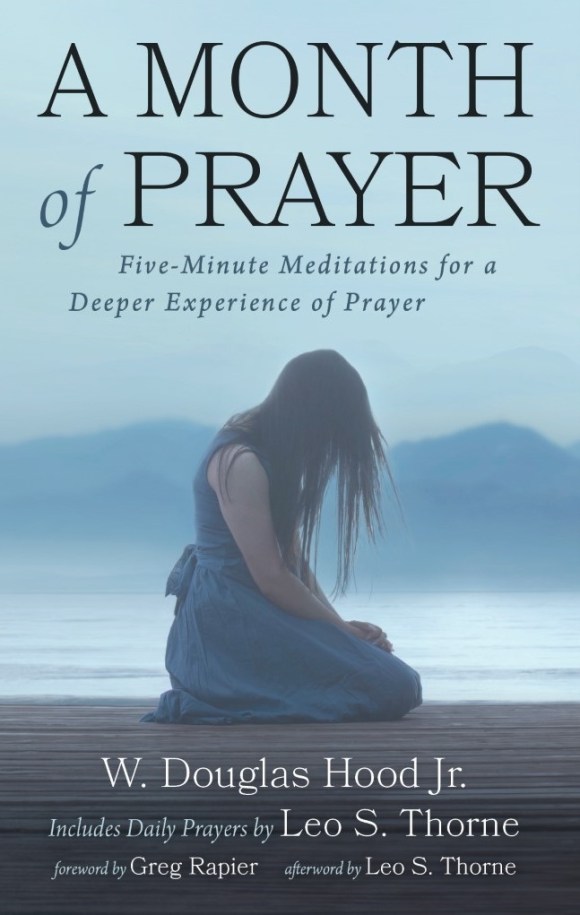
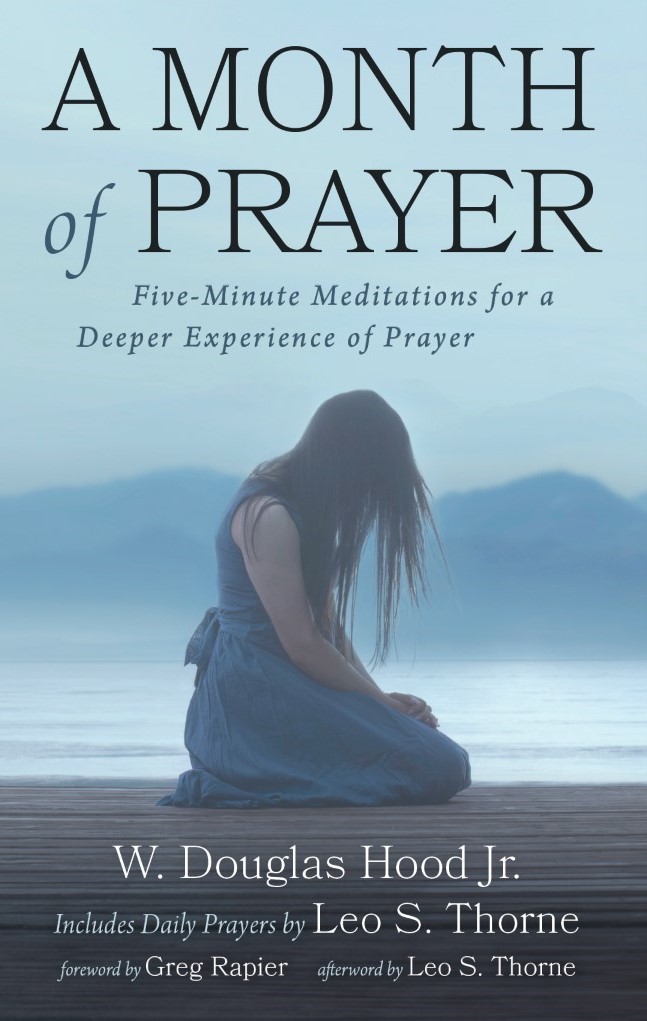
Read more meditations on prayer by Dr. Doug Hood in his new book, A Month of Prayer: Five Minute Meditations for a Deeper Experience of Prayer, available on Amazon.

Categories
Religious

Hesitant Believers

“At that the boy’s father cried out, ‘I have faith; help my lack of faith!’”

Mark 9:24 (Common English Bible)

The boy’s father cried out, “I have faith; help my lack of faith!” His cry is our cry. We live in an anxious time. Natural disasters, terrorist activity, and anger unleashed in the midst of shifting cultural values have brought uncertainty and fear. We may profess faith in God, but that faith is hesitant, uncertain, and unsatisfactory. The forces of evil, destruction, and pain can do that, diminishing a steady and certain faith in the presence and activity of a loving God. Faith may remain, but it isn’t the robust faith we desire. Mixed with our faith is a good measure of doubt: “help my lack of faith!”

This father’s son is possessed by a destructive spirit. From an early age, this spirit has thrown the boy into a fire and into bodies of water with one intention: to kill him. The Bible doesn’t tell us how many years this has been going on, but the Father has now exhausted all hope for his son. Hope extinguished is reflected in the Father’s question to Jesus: “If you can do anything.” (Mark 9:23). It is a frail request. It is what anyone who has nearly given up would ask. In modern parlance, it is a resignation to “What can it hurt to ask Jesus to help.” The Father has moved way past desperation.

It is then that the arch of the story shifts. Jesus confidently answers, “All things are possible for the one who has faith.” (Mark 9:23). The Father finds that he stands before a faith so glorious and strong, a faith that has sufficient resources to meet any need, that his prayer grows larger. Certainly, the Father’s desire for his son’s wholeness remains. But suddenly present is something more. The Father seeks to possess the faith he sees in Jesus, “help my lack of faith!” How many of us are represented by that Father’s plea?

Each of us has felt the desire to find within our faith the resources to counterbalance the tumult of the world. These are desperate days we are living through. And as one tragedy follows another, we grow weary. Jesus does heal the Father’s son. And when the disciples ask how, Jesus simply answers, “Throwing this kind of spirit out requires prayer.” Apparently, Jesus speaks of something more than perfunctory prayers offered before a meeting, a meal, or bedtime. If we wish to be glorious believers who call upon uncommon powers, we will fulfill the conditions of a more thoughtful, robust life of communion with God. This is a deeper prayer life than many of us have ever known.

Joy,


This meditation appears in Dr. Doug Hood’s new book A Month of Prayer: Five Minute Meditations for a Deeper Experience of Prayer, coming soon

Categories
Religious

Faith in Prayer

“Jesus was telling them a parable about their need to pray continuously and not to be discouraged.”

Luke 18:1 (Common English Bible)

I believe in prayer. I believe that prayer is the most important fact in the life of anyone who is determined to follow Jesus. The trouble with prayer is not belief in the practice—it is what is expected from it. For many, prayer is practiced as some sort of holy magic. Pray correctly and with enough faith, and the desired result arrives every time. Unanswered prayer is simply the result of praying incorrectly or with insufficient faith. This belief is troubling, if not downright harmful, to a person of faith. In this sentence from Luke’s Gospel, Jesus teaches that we are to “pray continuously.” Rather than suggesting yet another formula for prayer—pray continuously—I believe our Lord is inviting us to discover at least two ways that prayer is effective.

On one level, prayer opens the one who is praying to a relationship with God. Meaningful relationships are not built by one or two sentences that are shaped into a request, not with God or anyone else. “Continuous prayer” is the cultivation of a regular conversation with God. This is the kind of conversation between two people caring for one another. Whether we are angry or thankful, whether we are sharing from a broken heart or celebrating, we share continuously with those whom we love. Such conversations draw us closer to one another. It is that closeness with us that God desires.

A second level involves the one for whom we pray. By our prayers, that person is not alone. Continuous prayer keeps them in the fellowship of our thoughts and our hearts. A community of faith is created, which liberates them from walking a difficult path unaccompanied by someone who cares. Encouragement and strength bubble forth when we know that there is someone who is “pulling for us.” Creating community among people of faith is one result of continuous prayer.

Faith in prayer does not exclude expectations of the miraculous. God is still in the miracle business. But we are guilty of a grievous error when we reduce prayer to “getting what we want.” That makes God a dispenser of religious goods and services while we continue to build the life we want apart from God’s claim upon us. Christian prayer is always undergirded by a conviction that God is reconciling us to God’s self for the purpose of being used by God for God’s ongoing work in the world. “Continuous prayer” is an affirmation that our life is not ours to do as we wish. We belong to God, and it is for God that we live.

Joy,


This meditation is from Dr. Doug Hood’s new book, A Month of Prayer: Five-Minute Meditations for a Deeper Experience of Prayer, coming soon.

Categories
Religious

Summons to Gratitude

“Truly God is good to Israel, to those who are pure of heart.”

Psalm 73:1 (Common English Bible)

The creation story of Genesis summons God’s people to gratitude. The Lord took Adam, the first man of God’s creation, and placed him in the Garden of Eden to farm and take care of it. Additionally, Adam is invited to “Eat your fill from all of the garden’s trees.” (Genesis 2:16b). Yet God’s abundance did not end with an orchard. God realized that being well-fed isn’t enough. God declared it was not good for Adam to be alone. So, God fashioned a woman and brought the woman to Adam, who embraced her as his wife. Together, they would share in the goodness and abundance of God. For this, Adam and his wife were created. For this, Adam and his wife were summoned to gratitude, and in this gratitude, they would find their happiness. Gratitude is how we measure what is made available to us, however much or little it may be. It is a spirit that positively shapes us and folds us into a life of faith.

The Seventy-third Psalm celebrates this summons with a ringing declaration, “Truly God is good to Israel, to those who are pure in heart.” But as the psalmist continues to write, we discover that gratitude had nearly been lost for a moment. Immediately after the bold declaration of the first verse, there is a confession that the psalmist’s feet had almost stumbled. The cause is quickly identified: human eyes turned away from what God is providing to look upon the prosperity of another. Comparison is measured between what we have and what another enjoys. The result of this comparison is a perceived imbalance—the other has more! Jealously poisons the heart, and bitterness, or anger, or both, presses against a heart once pure. This sight of another’s prosperity created a sickness of heart and fueled a cynical spirit. And the psalmist’s feet nearly stumble beneath.

The antidote to this sickness, to this cynicism, is then announced: The psalmist went into the sanctuary of God. Eyes were directed away from another, and their prosperity to see God once again. In prayer, in reading the Bible, and in worship, we are reminded once again that we deserve nothing. Yet, in God’s grace, we have. We may have little or much, as the apostle Paul declares in one of his letters, but we have. Eyes directed back to God returns to us a true perspective—to view life, as it were, through the eyes of God. In the creation story of Genesis, Adam is placed in an orchard. Yet, careful attention to the story reveals that Adam is not to eat of one tree. Though this detail holds rich theological implications, let this one thing be understood: we were never created to have it all. Eyes turned away from God strive for much. But eyes turned toward God release gratitude for what we already have.

The Bible’s summons to gratitude does not minimize the pain of loss and disappointment. Each is experienced during life, though some may experience both in greater measure than others. There are people who have longed to marry and never do. Others have wrestled with the loss of marriage, either through divorce or the death of a spouse. Health challenges or the loss of a child challenge the maintenance of a robust faith. The apostle Paul speaks of an unnamed “thorn in the flesh” and asks God on three occasions that God remove this pain from him. God does not. What is important is that Paul turns his attention from his struggle to focus on something beyond himself—the building of the church. Paul demonstrates that experiencing gratitude is possible only when one can direct attention from what one lacks to the presence of God. And God promised Paul that God’s grace continued to abide.

Joy,

Categories
Religious

When Faith Is Difficult

“We can’t find goodness anywhere.”

Psalm 4:6 (Common English Bible)

If there remains anyone who argues that the Bible isn’t relevant for today, they have demonstrated that they haven’t paid attention to the Bible—not close attention, anyway. Is there anything more timeless than the agonizing cry, “We can’t find goodness anywhere?” Each morning our minds are disturbed by the growing threat of the militant Islamic group, ISIS, the conflict between Israel and Palestine, and the racial unrest in Ferguson, Missouri. Beneath these attention-getting headlines is the less-mentioned but the continuing concern of the growing wealth gap in our country and the millions in our nation who struggle daily to simply have enough. There are no snappy answers to the painful question of human struggle.

It is well that the Bible does not offer a quick and pre-fabricated answer to this despairing cry. And it is best for us to refrain from such a temptation. First, we are not free to indulge in cynical or dismissive attitudes such as, “Well, that’s life,” or “Bad things just happen.” As followers of Jesus, we are baptized into the common confession that our lives are in the hands of God and that this God is a God of love. Second, we don’t occupy some place between God and humanity’s struggle. Not one of us has some special insight into the mysterious work of God in the midst of our common difficulty. Each of us must sweat it out with everyone else.

What remains is a prayer: “Lord, show us once more the light of your face.” This is the prayer of the Psalmist, and nothing new can be added. The prayer is the same today as it was yesterday, fresh and urgent. It is as new as the earthquake that shook the San Francisco Bay Area a few days ago and the agony that kept someone awake last night. It is new when we utter it personally today. No devotional, not one inspirational book can answer the plea, the emotional depth of that prayer.

On our knees, we pray. If we listen in the silence between our words, the Holy Spirit reminds us that God was never absent in the horrors of human life in the Bible—nor will God be absent today. On the Via Dolorosa—the way of the cross—in Jerusalem, God was very present in the heart of human misery, giving, giving, and giving himself so that after this, there would be no fear, no despair, and no doubt of God’s love. The cry, “We can’t find goodness anywhere,” still sounds in the streets of our communities. We live with it, and we hear it echo in our souls. But the spirit helps us recall the suffering of Christ—a suffering accepted out of Christ’s love for us. It is a love that will work for the good of all those who love him.

Joy,


This meditation is from Dr. Doug Hood’s soon to be published book, “A Month of Prayer: Five Minute Meditations for a Deeper Experience of Prayer”.

Categories
Religious

Brush Strokes

Don’t be conformed to the patterns of this world, but be transformed by the renewing of your minds so that you can figure out what God’s will is—what is good and pleasing and mature.”

Romans 12:2 (Common English Bible)

Gilbert “Dibo” Doran holds the Curacao’s 2019 title as the King of Tumba, Curacao’s Carnival anthem. A music genre indigenous to this area of the Caribbean, Tumba has its roots in the history of slavery and remains popular for ending parties on a high note. “Nowadays, the Tumba Festival is the biggest music festival on the island. Local composers and musicians compete for living their culture to the max.”[1] Doran self-identifies as a “patriot to the bone” asserting that one’s culture and tradition are part of your identity. It’s your roots. Through his original music compositions, Doran desires to leave his mark on the music genre, to be an example, and contribute to the longevity of the cultural imprint of the Tumba Festival. Perseverance is key, adds Doran.

Gilbert Doran is a man whose life is organized around a central purpose. Raised in a single-parent home, Doran neither ran away from life nor ran along with life. He set himself apart from other children by intentionally directing his life around a core passion—a passion for the culture, folklore, and tradition of Curacao, particularly as expressed in music. “Instead of a bike or a Nintendo, I would ask for drums, a piano, or cymbals as a gift.”[2] Doran stands proudly among women and men who have done the most for the world precisely because they are nonconformists. He has elevated the level of life for ages to come for the people of Curacao because of a driving passion to contribute positively to his corner of the world.

This is precisely what the Apostle Paul is asking of those who would follow Jesus Christ. Be a nonconformist! Don’t go along with life, drifting wherever the flow of life may take you, becoming shaped by whatever forces surround you. Set your mind on God. Learn of God. Seek to know God’s will and discern all that is good, pleasing, and mature. As Doran held, perseverance is key. The distinguished preacher from another generation, Robert J. McCracken once observed, “The reason why so many people are at the mercy of circumstance is that they have neither discovered a faith by which to live nor a cause to serve.”[3] The “patterns of this world” exert a powerful shaping influence upon each person. The Apostle Paul provides another way. Draw on spiritual resources greater than your own. Fix your eyes on God.

Many people today take the path of least resistance. Without a driving conviction to mature in the faith through regular time with God by prayer and reading the Bible, they are caught by the flow of life and carried along paths and channels they have not chosen. The usual result is that their life begins to reflect the standards and practices of their environment. The people they meet and the things that happen to them likely shape who they become. It is as though they surrender the brush strokes that paint their life portrait to an unknown hand. Here, in his letter to the church in Rome, the Apostle Paul urges that we submit the brush strokes that will paint our portrait to the hand of the Master, Jesus Christ.

Joy,


[1] Rosa, Nelly, “I Want My Legacy to Live On”, Caribbean Beat, January/February 2020. 85.

[2] Rosa, Nelly, “I Want My Legacy to Live On”, Caribbean Beat, January/February 2020. 85.

[3] McCracken, Robert J., “The Peril of Conformity”, Best Sermons: 1951-1952 Edition, New York: McMillan Company, 1952, 24.


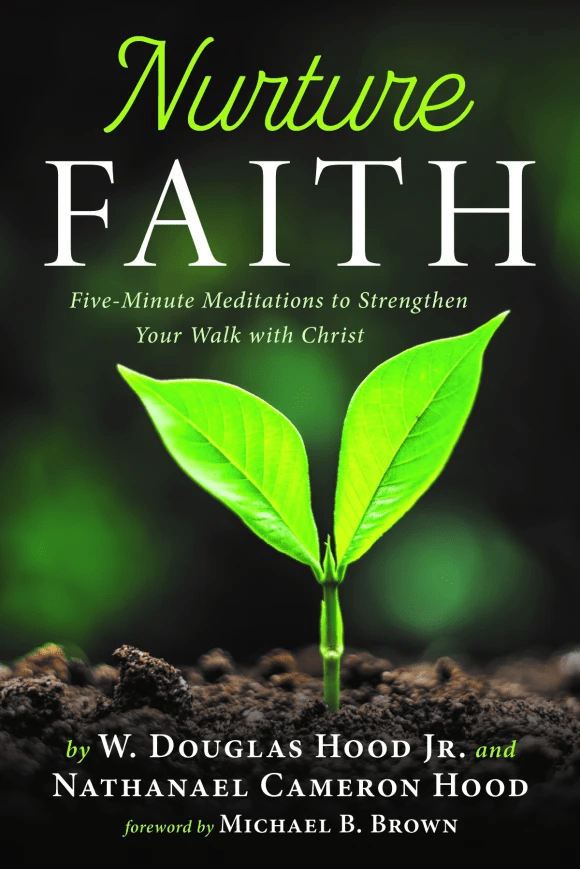
To read more meditations by Dr. Doug Hood and Nathanael Cameron Hood, you can purchase Nurture Faith: Five Minute Meditations to Strengthen Your Walk with Christ from your favorite book seller.

Any royalties received support the ministry and mission of First Presbyterian Church of Delray Beach.

Categories
Religious

A Thankful People

“The peace of Christ must control your hearts—a peace into which you were called in one body. And be thankful people.”

Colossians 3:15 (Common English Bible)

There is an unsettling moment in the novel, Girl with A Pearl Earring, by Tracy Chevalier. Set in the Netherlands in the mid-1600s, a family that struggles to have enough grieves the loss of a young daughter, Agnes, from a plague that griped their residential quarter of Delft. With a despairing shake of the head, the mother laments, “God has punished us for taking for granted our good fortune. We must not forget that.”i The loss of a young daughter is tragic, particularly a loss due to a plague that outruns us. Yet, the loss is made even more tragic when one is gripped with a flawed notion of the character of God. A lack of gratitude does not stir the wrath of God; it does not move God to punish. Continuing from one generation to the next is a failure to grasp what God is up to into the cross—God’s movement toward our brokenness is one of grace, not vengeance.

A theme of Paul’s correspondence to the church in Colossae is gratitude—one captured three times in three verses! But this theme is not generated as a warning to the church. Rather, the invitation to gratitude is promised as an opportunity to break, and finally diminish, a culture of ingratitude that permeates our lives. Ours is a culture that seeks to grasp more and more as though there exists a scarcity of resources. Hidden deep within our consciousness is a fear that failure to acquire good things now will result in our missing out. The result is a growing hunger to acquire more. Fear grows that we may not have enough, exhaustion in our striving diminishes appreciation—even joy—in what we presently have, and a competitive spirit shapes a heart that results in dissatisfaction. Finally, we are consumed by this endless striving, our hearts are emptied of peace, and we become an ungrateful, even unhappy, people.

Paul’s antidote is gratitude—generating intentional thankfulness for God’s good creation, for the gift of our lives and the opportunity to love and be loved, and for the gift of redemption from brokenness and sin. Cultivation of gratitude for the ordinary as well as the extraordinary moments available each day will break the culture of ingratitude that tightly secures us in chains. A simple lunch shared with friends, the laughter of children at play, and taking notice once again of the beauty of the earth—the seashore, lush mountains, or flowery meadows—grows upon our consciousness, and we question how we failed to enjoy them before. More, we realize a movement away from a lonely and competitive pursuit of new riches and a movement toward a strong sense of community cohesion that marks us as part of something so much more than our individual lives—members of the body of Christ.

David L. Bartlett shares that in Decatur, Georgia, there is a church that might have been named with Colossians in mind: The Thankful Baptist Church. “Colossians claims that, as with Thankful Baptist Church, when we dress up for each day’s work, we dress ourselves in Christ, with thanksgiving. In a religious marketplace that pushes happy Christianity, Colossians speaks a word for thankful Christianity.”ii Bartlett advances his observation here that thankfulness is harder to come by than happiness but is immeasurably better. Vibrant churches—as well as vibrant disciples—understand the need for gratitude to guard from self-absorption and, finally, despair. Jesus’ own prayers sparkled with expressions of gratitude. Each prayer cultivated, strengthened, and reminded him that God is the very center of our life. Bartlett suggests this prayer, “You have given me so much, O God—I ask but for one thing more, a grateful heart.”iii

Joy,


i Tracy Chevalier, Girl with A Pearl Earring (New York, New York: Penguin Books 76.

ii David L. Bartlett, Feasting on the Word: Preaching the Revised Common Lectionary, Year C, Volume 1: Advent Through Transfiguration (Louisville, Kentucky: Westminster John Knox Press) 163.

iii Ibid, 163.


To read more meditations by Dr. Doug Hood and Nathanael Cameron Hood, you can purchase Nurture Faith: Five Minute Meditations to Strengthen Your Walk with Christ from your favorite book seller.

Any royalties received support the ministry and mission of First Presbyterian Church of Delray Beach.

Categories
Religious

Borrowing Time for Prayer

“Jesus was telling them a parable about their need to pray continuously and not to be discouraged.”

Luke 18:1 (Common English Bible)

Near the beginning of my present ministry, I placed a brass plaque on the pulpit positioned just above the Bible. It reads, “The pulpit must be the grave of all human words” by Edward Thurneysen. We don’t come to worship for human advice. If we did, a church service would be no different than a Ted Talk. I need to be reminded each week that people come not for an expression of my opinion; they come for the Word of God. Here in this teaching from Luke’s Gospel, Jesus is telling a parable about an opportunity to pray continuously. Jesus believed in prayer. Jesus prayed often. Jesus now wants us to know that prayer is nothing less than approaching the presence of an infinitely holy God. It is an invitation received from God. We must sense the gravity of that invitation and not be relaxed about prayer. Thought, preparation, and intentionality are a more responsible response to God’s invitation to prayer.

A shared difficulty with this approach to prayer is sheer busyness. A man I admire in my present congregation once told me that Jesus’ invitation for regular, daily prayer was a “tall ask.” He owned a business with nearly nine hundred employees. Regular demands upon him rarely left time for reading the Bible, a helpful daily meditation, and prayer. I sympathized and tried to understand. Yet, I also hear that God’s claim upon us—God’s claim upon the life of my friend—isn’t negotiable. Jesus asks that we pray continuously. That isn’t advice from the pastor. It isn’t the opinion of a human. It is all Jesus. A hit-or-miss casualness toward prayer is simply unacceptable. Close attention to Jesus’ life discloses that Jesus remained busy healing, teaching, and proclaiming God’s Kingdom. It would be an interesting debate between my friend and Jesus, which one of them worked harder.

What my friend failed to grasp is that the time borrowed for reading Scripture, a brief meditation, and prayer will not be lost from his work. The poise, and steadiness, and increased wisdom granted from time with God each morning will be recompensed to him many times over. That great leader of the early church, Martin Luther, understood this. He commented that the busier he was, the more time he took in the morning for prayer. There is simply no substitute for the value added to each day after being steadied and strengthened by God. Bruce Larson, a Presbyterian pastor of another generation, once spoke at a conference I attended on the value of prayer in his life. He said that if he missed a day of prayer, he noticed the difference. If he missed several days of prayer, his family noticed the difference. If he missed three days, his friends noticed the difference. If he missed for a week, his congregation noticed a difference.

Bryant Kirkland shared in a sermon before the faculty and students of Princeton Theological Seminary something he once found on the wall of an army chapel. It said, “Nothing happens here unless you want it to.”[i] Naturally, the question for each of us is, what do we want to happen by prayer? What Jesus found in prayer was less a power to effect miracles and more a presence—God’s presence—that brought in generous measures of strength in weakness, encouragement in discouragement, and inspiration to reach for greater heights. More, Jesus found someone who would never abandon him. Anne Frank wrote that she was prompted to keep a diary simply because, “I don’t have a friend.”[ii] Jesus doesn’t want that to be our story. Rather, Jesus desires to introduce to us, through prayer, a God who not only desires to draw close to us but will create in us a transformative story. Confidently, Jesus asks, “Pray continuously and not to be discouraged.”

Joy,


[i] Bryant Kirkland, God’s Gifts, The Princeton Seminary Bulletin, Volume VII, Number 3, p.268.

[ii] Anne Frank, Anne Frank: The Diary of a Young Girl (New York: Anchor Books, 2001) 6.


To read more meditations by Dr. Doug Hood and Nathanael Cameron Hood, you can purchase Nurture Faith: Five Minute Meditations to Strengthen Your Walk with Christ from your favorite book seller.

Any royalties received support the ministry and mission of First Presbyterian Church of Delray Beach.

Categories
Religious

God of the Mundane

The following meditation was written by Doug Hood’s son, Nathanael Cameron Hood, a recent graduate of Princeton Theological Seminary.

“While they were eating, Jesus took bread, blessed it, broke it, and gave it to them, and said, ‘Take; this is my body.’ He took a cup, gave thanks, and gave it to them, and they all drank from it. He said to them, ‘This is my blood of the covenant, which is poured out for many.’”

Mark 14:22-24 (Common English Bible)

Something I’ve discovered as I’ve gotten older is that few things make me sound crazier than trying to explain social media trends and memes to people who don’t have or use social media. Therefore, I usually try to avoid mentioning things I see on those sites, but recently I stumbled across a post that stopped me in my tracks like a sudden thunderclap. The post in question was from a young woman explaining how she lost her faith and stopped going to church. Roughly paraphrasing, she wrote that she believed in God as a child because she felt moved by her megachurch’s worship music. However, one day she went to a pop concert, felt the same emotions, and realized it wasn’t God that moved her but live music. As of my writing this article, the post has been viewed and liked over two million times and received over three thousand comments, many from other young people proclaiming similar experiences and disenchantment with organized religion. There was, however, one exception. One of the many comments asked a simple question: “Well, are you sure it wasn’t God you felt at that pop concert?”

Reading this comment, my mind immediately flashed to many of the stories I’d encountered in my church history classes at seminary. Entire wars were fought between different Christian groups and denominations over the “correct” ways to worship and know God. With music, without music. With strict liturgy, without strict liturgy. With lavish decorative artwork, without lavish decorative artwork. My point is that Christians take these things very, very seriously—in many cases, to a dangerous fault. One need scarcely imagine the horror many fellow believers might feel at the idea that you can experience God not in a church but in a concert venue and not with religious hymns but secular pop music.

But is it really that extraordinary to imagine? Time and again in the Bible, we find God deliberately working with the ordinary and the mundane. In Genesis, God uses dust from the ground, not gold or jewels, to form the first human. Many of the miracles in the Hebrew Bible display God’s power not in wealth and physical might but in simple provisions for the poor, needy, and desperate: water from a rock, manna in the desert, and jars of oil in a widow’s house. Jesus himself chose to teach in parables which used common, everyday images familiar to even the poorest of the poor: a farmer sowing seed, a shepherd keeping their sheep, and an attacked traveler. When he wasn’t healing or exorcising demons, Jesus’ miracles seldom strayed far from the table: jars of wine at a wedding, loaves and fish for hungry crowds, nets of fish that threatened to capsize boats.

And then, of course, there is the Last Supper. When Jesus made his everlasting covenant with all humanity on that fateful Passover night, it wasn’t with choice meats and oils, expensive fruits, and imported spices. It was with bread and wine. And with which bread and which wine? The fine, processed white loaves and opulent wines of a king? Almost certainly not. When Jesus broke bread and said, “this is my body,” it was with the tough, grainy loaves of a peasant. When he poured wine and said, “this is my blood,” it was with the watery swill of the poor. Taken together, the Bible doesn’t seem to just approve the search for God in the mundane, it demands it. After all, a God that can only be felt and known in a church is no God at all. Ours is a God who can be found in all facets of creation from the stars in the sky to smell of fresh bread in an oven. And, yes, ours is a God who can be found even at pop concerts.

Joy,


To read more meditations by Dr. Doug Hood and Nathanael Cameron Hood, you can purchase Nurture Faith: Five Minute Meditations to Strengthen Your Walk with Christ from your favorite book seller.

Any royalties received support the ministry and mission of First Presbyterian Church of Delray Beach.