The following meditation was written by Dr. Greg Rapier for Dr. Doug Hood’s upcoming book, A Month of Prayer & Gratitude: Five-Minute Meditations for a Deeper Experience of Gratitude.
“Jesus told this parable to certain people who had convinced themselves that they were righteous and who looked on everyone else with disgust: ‘Two people went up to the temple to pray. One was a Pharisee and the other a tax collector. The Pharisee stood and prayed about himself with these words, “God, I thank you that I’m not like everyone else—crooks, evildoers, adulterers—or even like this tax collector. I fast twice a week. I give a tenth of everything I receive.” But the tax collector stood at a distance. He wouldn’t even lift his eyes to look toward heaven. Rather, he struck his chest and said, “God, show mercy to me, a sinner.”’”
Luke 18:9-13 (Common English Bible)
The big danger in comparing ourselves to others is that we often, even when we don’t mean to, compare our worst with others’ best. We compare the inner machinations of our hearts, our deep and hidden struggles, against the public-facing version of our peers, the pristine and polished, Instagram-filtered, highly curated, tactfully presented as reality but not really reality versions of people we see online. Or at church. Funny how those can feel the same. I imagine most of us, if we’re honest with ourselves, make these comparisons and wince. We feel less-than, broken, and incomplete.
My first time at the Metropolitan Museum of Art in New York, I was absolutely flooded with stimuli—artwork stacked high to the ceiling, people everywhere you look, large tour groups hastily ushered from one room to the next, over two million square feet jam-packed with some of the finest art in the world. In one of the rooms—I couldn’t tell you which because the place was a decadent maze—my friend, a resident New Yorker and de facto tour guide, completely froze. He looked up at a long wall stretched even longer by all the artwork on display. Amongst the ornate, centuries-old, immaculate compositions, one painting stood apart, not because of its perfection, but because of its flaws.
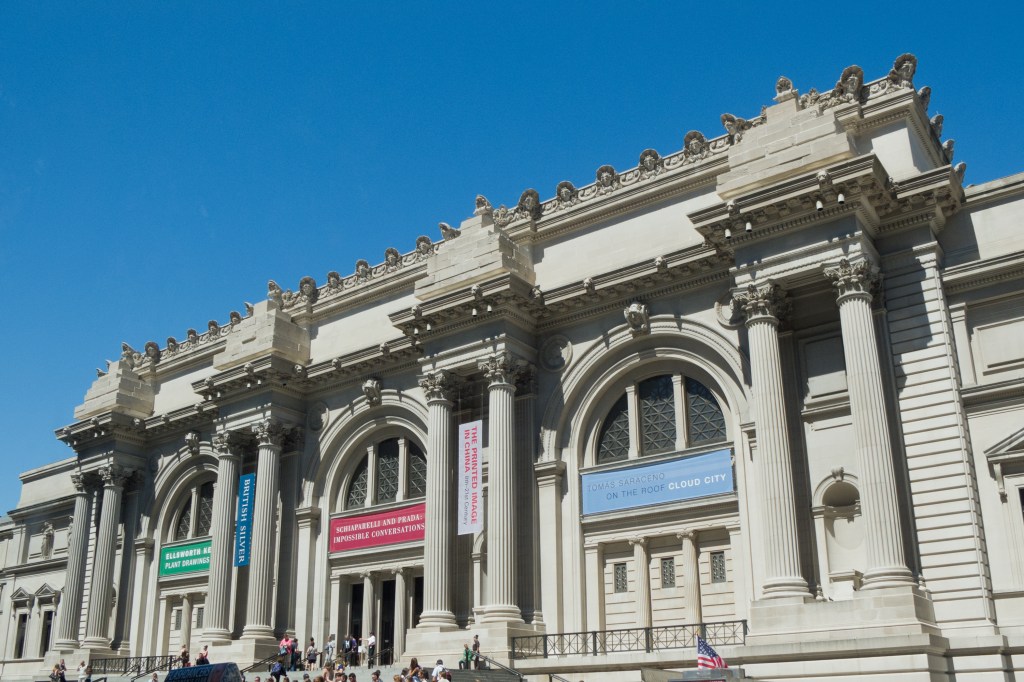
Much of the canvas featured precise, lifelike depictions of saints and angels and Jesus Christ, but in the upper left-hand quadrant, prominently positioned against a blue backdrop, rested two beige mannequin-like figures, sketched out but never completed. Part of the painting was missing. My friend leaned over and whispered, “I like this one because it’s unfinished.”
Jesus’ parable in Luke 18 reminds us that we are all unfinished and that there’s no sense in pretending anything else—not for other people, and certainly not for God. There’s power in humility and dignity in vulnerability. This is how we ought to come before God and pray, not as perfect people, but as works in progress, some quadrants of life more sketched out than others. Because when we do that—when we show up to pray not as our perfect selves but as our whole selves—we discover a God of infinite grace, a God who sees our flaws and loves us anyway, who says this messy, unfinished canvas of a life holds innate beauty and deserves to be displayed. The Scripture reminds us that we’re all God’s people, and that in God’s great gallery, Jesus Christ has reserved a place for us all.
Joy,


One reply on “Work in Progress”
very meaningful…..thank you. Sue A.
LikeLike