Categories
Religious

Strength in Remembering

The following meditation was written by Rev. Dr. Michael B. Brown, Pastor of Blowing Rock Methodist Church in North Carolina.

“Take the things you heard me say in front of many other witnesses and pass them on to faithful people who are capable of teaching others.” 2 Timothy 2:2 (Common English Bible)

“‘I bring Naya into the Magic Kingdom.’ The Eyes of the Heart begins with a reference to Frederick Buechner’s maternal grandmother, Naya. But this time, he isn’t remembering Naya. Instead, Naya (who died in 1961) is there with him.”[1] Such is often one of memory’s gifts to us as part of the greater gift of grace. If people were special to us, they remain special with us. Some lessons we learn stay with us always. So, also, do the ones who imparted those lessons.

My father taught me a love of public speaking, Duke athletics, and the New York Yankees. He is deceased, but every time I stand behind a pulpit, watch the Blue Devils play, or turn on a Yankees-Red Sox game, he is there with me. My mother was a magnificent southern-style cook. My unending love of culinary arts is one of many ways she lives on in my life, despite the fact that she died forty years ago. I developed a love of poetry from a high school English teacher named Lena Flenniken, who has long been deceased. And yet, never do I experience the lyrical loveliness of William Butler Yeats, Emily Dickinson, or Robert Frost without feeling her presence in their words. Owen Weatherly taught me theology. Mickey Efird taught me biblical interpretation. John Carlton taught me homiletics. All now reside in that “eternal house in heaven, not built by human hands.”(2 Cor 5:1 NIV) And yet, each of them in very real ways lives on with me, in me, and through me. Death is not strong enough to erase the presence or influence of those who helped shape us into who we are. “Where is your victory, Death? Where is your sting, Death? . . . Thanks be to God, who gives us this victory through our Lord Jesus Christ” (1 Cor 15:55, 57) and his resurrection. Death is no match for the impact sacred lives have on our lives.

When he wrote to Timothy, whom he considered his son in the faith, Paul confessed that he had made a sincere and concerted effort to teach Timothy the deep truths about Christ and Christian living. He sought to be a lasting influence in Timothy’s life. And, he hoped his young spiritual protege would then pass those lessons along and influence others, who would do the same for others still. “Take the things you heard me say in front of many other witnesses and pass them on to faithful people who are capable of teaching (passing them on to) others.” (2 Tim 2:2)

As part of this meditation, I suggest that you make a list of five names from your past. Beside each name, briefly note the impact that person had on your life, the key lesson you learned from them.

[1] Name ____________ Lesson ____________________

[2] Name ____________ Lesson ____________________

[3] Name ____________ Lesson ____________________

[4] Name ____________ Lesson ____________________

[5] Name ____________ Lesson ____________________

What would your life be like were it not for the contributions of the persons whose names and lessons you listed? What would your faith be like were it not for the contributions of those individuals, and perhaps a list of additional names, as well?

Buechner brought Naya into the Magic Kingdom with him. Her influence, her impact, her life had been too large ever to be erased or deleted from his essential self. Something of her went with him as he carved and crafted his own experience of living. Who goes with you? And, who will take you with them?

Joy,


[1] Munroe, Jeffrey. Reading Buechner (Downers Grove, Illinois, InterVarsity Press, 2019), p. 58
Categories
Religious

The Comfort and Challenge of Grace

The following meditation was written by Rev. Dr. Michael B. Brown, pastor at Blowing Rock Methodist Church in North Carolina and a professor at Wake Forest University.

“ . . . where sin increased, grace multiplied even more.” Romans 5:20 (Common English Bible)

“God’s love does not presuppose goodness in us, but rather causes it.”[1] I find these words from Thomas Aquinas to be both comforting and challenging.

Initially, I am comforted that I do not have to earn God’s love. I’m not required to attain it by deeds, merit, or even proper mortality. God doesn’t love me “because of,” but rather “in spite of.”

Think of the child who is told to change clothes after coming home from church. But, he is so anxious to work on the fort he is building in the backyard that he conveniently forgets to do as told. Later, when he enters the house covered in mud and dirt (perhaps with a rip in those new Sunday pants you purchased), do you quit loving him? If the question were, “Do you become frustrated?” the answer would doubtless be “Yes” (and understandably so). “Do you get angry?” Probably another “Yes.” “Do you scold? Even punish (“No TV tonight!”)? “Yes” and “Yes.” But, do you quit loving your child? When he is scolded and the smile on his face turns upside down and tears begin to make small rows down his muddy face, isn’t your immediate impulse to gather the child into your arms and comfort him?

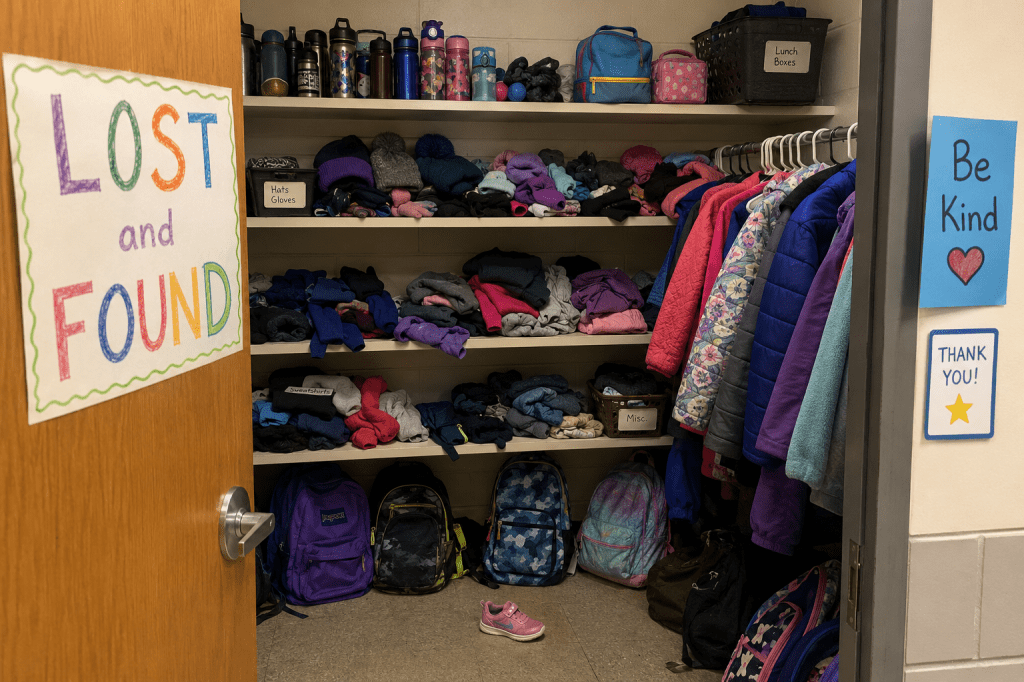
Our younger daughter consistently left things at elementary school, having no idea where those items were when asked about them. Often, they were unusual things to be left behind. We would regularly go to the Lost-and-Found closet at her school and find one missing show. Who loses one shoe, and how does that even happen? Or, we would find her sweater or coat that had been left behind on a day with a low temperature in the 30s. Were we frustrated? Sometimes, yes (though often it was more humorous than irritating). Did we seek to correct her, possibly even lecturing from time to time? I’m sure we did. But, did her mistakes cause us to stop loving that little human gift who God had placed in our lives? Of course not.

God loves us because we are God’s children. We don’t earn it. We are marred by failings and flaws. But, as Martin Luther observed, “God does not love us because we are lovable, but because he is love; not because we are worthy, but because he is merciful.”[2] As one who makes mistakes on a daily basis, I find comfort in that. “Where sin increased, grace multiplied even more.”

And, don’t forget that second lesson from Aquinas: God’s love causes goodness in us. Grace may be free, but it is never cheap. It assumes that lessons learned by sinning and being forgiven will alter the ways we do business morally. We will move in new directions (which, in fact, is what the word conversion means). One of those new directions becomes the discipline of forgiving. What was provided to us, we feel called and compelled to pass along to others. We are forgiven, and therefore, we forgive. Jesus taught his disciples to pray, “Forgive us . . . just as we also forgive those who have wronged us.” (Matt 6:12) That is the challenging part, that you and I are expected to “treat people in the same way that you want them to treat you.” (Luke 6:31)

When I served as Pastor at Marble Collegiate Church in New York City, our resident on-staff Bible scholar was a Roman Catholic nun named Sister Carol Perry. Sister Carol was a walking source of wisdom, witticisms, and modern-day proverbs. One that I heard her articulate frequently was: “Begin and end every day with the words, ‘God loves me and calls me to pass it along’”. That’s a lovely definition of grace, isn’t it? I am loved often in spite of myself and am, therefore, called to pass along to others that which God has shared with me.

Joy,


[1] Aquinas, Thomas. The Summa Theologica. Translated by the Fathers of the English Dominican Province. New York: Benziger Bros., 1947, 1, q.20, a.2.

[2] Luther, Martin. “The Heidelberg Disputation.” In Luther’s Works, Vol. 31: Career of the Reformer I, edited by Harold J. Grimm and Helmut T. Lehmann, 35–70. Philadelphia: Muhlenberg Press, 1957, Thesis 16, 56.

Categories
Religious

Prayer as Listening

The following meditation was written by Dr. Michael B. Brown, pastor at Blowing Rock Methodist Church in North Carolina.

The Lord called to Samuel. “I’m here,” he said. Samuel hurried to Eli and said, “I’m here. You called me?” “I didn’t call you,” Eli replied. “Go lie down.” So he did. Again the Lord called Samuel, so Samuel got up, went to Eli, and said, “I’m here. You called me?” “I didn’t call, my son,” Eli replied. “Go and lie down.” (Now Samuel didn’t yet know the Lord, and the Lord’s word hadn’t yet been revealed to him.) A third time the Lord called Samuel. He got up, went to Eli, and said, “I’m here. You called me?” Then Eli realized that it was the Lord who was calling the boy. So Eli said to Samuel, “Go and lie down. If he calls you, say, ‘Speak Lord. Your servant is listening.’” So Samuel went and lay down where he’d been. Then the Lord came and stood there, calling just as before, “Samuel, Samuel!” Samuel said, “Speak. Your servant is listening.” 1 Samuel 3:4-10 (Common English Bible)

Using cell phones in restaurants shouldn’t be allowed. Not only is it dismissive of others at your table, but it is rude to those sitting anywhere within earshot. Nonetheless, what we overhear is sometimes intriguing or even entertaining.

Recently at a lovely cafe not far from my house, I had the misfortune of being seated only a few feet away from a woman who was obviously livid. For at least five minutes, she used her cell phone to unload on the object of her wrath. Loud, agitated, and animated, never once did she appear to come up for air. I feared that if she didn’t pause long enough to inhale, she might faint and land squarely on my plate of pasta. If conversations are dialogues, then hers was not a conversation. It was, instead, a monologue, a lecture.

Prayer is essentially dialogical, at best more a practice of listening than speaking. Too often we pray like that woman in the cafe, raging at God when we feel life is treating us unfairly. Or, just as often we act as if God is little more than a shopping mall Santa. We present our list of desires, say a quick “Amen,” and decide to get back in touch when our next wish list is ready. Either way, prayer is a monologue rather than a conversation.

When Samuel was a boy under the tutelage of the priest, Eli, he learned one of faith’s powerful lessons: that the most important prayers ever offered may be prayers without words. Four times during the night, Samuel was awakened by hearing someone call his name. Twice he went to Eli, asking why he had been summoned. Each time Eli replied that he had not called and sent Samuel back to bed. On the third occasion, Eli understood. “Go and lie down,” he told Samuel. “If he calls again, say, `Speak, Lord, your servant is listening’.” Samuel did what Eli suggested, becoming still and silent. He simply listened. In so doing, unimagined doors opened for Samuel – doors to become a great Prophet and to name Israel’s first two kings, Saul and David. Arguably the most important prayer Samuel ever prayed was one without words, a simple act of listening for God.

How can we know what God wants for us or from us if we only speak but never listen? A spiritual discipline of indescribable importance is the practice of silence. Sitting quietly in God’s presence. Opening oneself to the movement of the Spirit. Waiting for insights we are often too busy to hear. “Speak, Lord, your servant is listening.”

Joy,

Categories
Religious

Life as Prayer

The following meditation was written by Dr. Michael B. Brown, pastor of Blowing Rock Methodist Church in North Carolina.

“Aaron will burn sweet-smelling incense on the incense altar every morning when he takes care of the lamps. And again when Aaron lights the lamps at twilight, he will burn incense. It should be a regular incense offering in the Lord’s presence in every generation.” Exodus 30:7, 8 (Common English Bible0

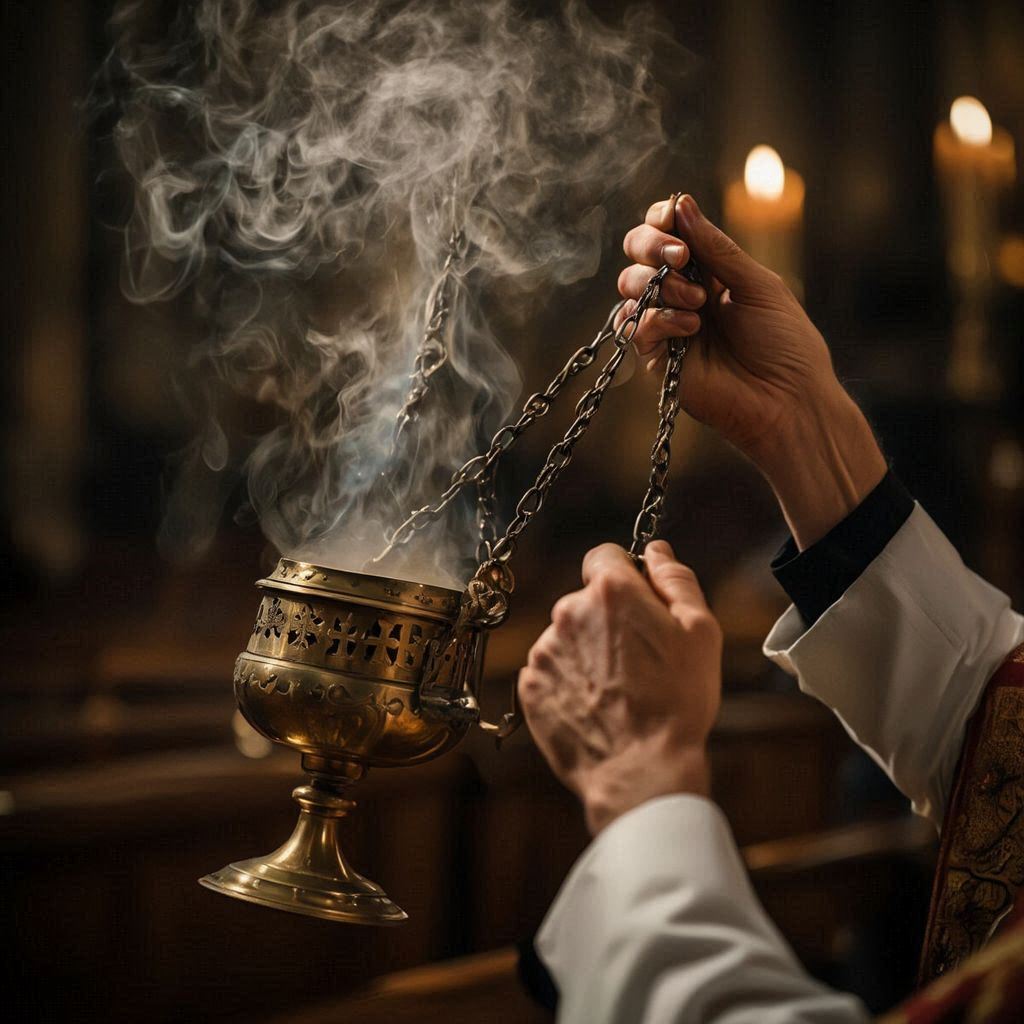
During worship in an Episcopal church I sometimes attend, the opening processional is led by a thurifer swinging a container of sweet smelling incense. At designated moments throughout the service (e.g., before the reading of scripture or the quoting of liturgical prayers) one of the participating clergy will swing the thurifer near the altar, allowing smoke from the incense to fill the chancel and rise to the ceiling. That provides the congregation with a visible symbol of prayers wafting their way toward heaven.

In the Book of Exodus is a text about Aaron, the priest, burning incense at the holy altar morning and night. Consistently. Unfailingly. Paul said it this way: “Pray continually.” (1 Thessalonians 5:17)

Morning and night? Continually? Perhaps both Aaron and Paul were suggesting that prayer is not so much a momentary experience as it is an ongoing way of living. Our lives, like incense, continually waft their ways toward heaven. Our daily experiences are part of the fabric of praying.

At its heart, prayer is communication with God, which is rooted in relationship. God and we are making life’s journey together. When hiking with a friend, you don’t pause occasionally and say, “Now is a scheduled time for us to chat.” Instead, you carry on a very natural conversation as you make the journey. At home, at work, at school, in our laughter and tears, in our hard striving or leisure, in all places and at all times, our lives are connected to our Creator-Friend. We are hiking together. The invitation, “Lord be with me,” or the commitment, “Where you lead me, I will follow,” are confessions that we desire ongoing divine presence. We don’t have to make contact with God once in a while (before meals, at bedtime, in church, or in moments of crisis or need). Instead, that contact is unceasing. Morning and night. Continual.

One of the kindest and gentlest persons I ever knew was a member of the first congregation I pastored following seminary. He was a retired mill worker and a devoted participant in our church. For forty years he had supervised other workers in a textile mill, and all of them seemed to love him deeply and dearly. His neighbors felt the same way. Church members trusted and relied on him, electing him to a wide variety of leadership positions. In fact, our whole little community considered him to be light who brightened the shadows. Why was he so universally loved and respected? I think the secret lay in a statement I heard him make once. He said, “In every encounter I have with another, in every conversation, I know that God is listening. So,” he concluded, “no matter who I’m talking to, it still winds up being a kind of prayer.” His recipe for fulfilment and positive relationships was located in understanding all of life as a form of praying. His spirit, like Aaron’s incense, was forever wafting its way toward heaven. God was unfailingly close, making the journey with him. Recognizing that, he understood that God could not be excluded from anything else he did. In short, his life became an unending experience of prayer. At its best, that’s what prayer is for us all. We “pray continually.”

Joy,

Categories
Religious

Keep the Door Open

The following meditation was written by Dr. Bruce Main, President and Founder of Urban Promise Ministries in New Jersey.

“Look! I’m doing a new thing….” Isaiah 43:19a (Common English Bible)

“You gotta keep the door open.”

Evidently my body language suggested I wasn’t completely understanding her comment.

“You know,” she clarified. “It’s the heart. You’ve got to keep it open to new opportunities. Shut the door and you wither up.”

My new friend Kathy is figuring out retirement. She still consults a little, but at this stage of life she’s looking to give back as a volunteer. 

So, she’s “keeping the door open” for opportunities to engage with her community.  That’s why she was in my office. Our campus gardens need TLC and Kathy can’t wait to get started.  “I love working outside and with my hands. Grew up on a farm. Never really leaves you.”  Music to my ears. 

But besides gardening, Kathy is thinking about aging. And since we’re all on that path, it might behoove us to spend a little time reflecting on how we can do it well. Like Kathy—who tries to keep her heart open to new challenges, expanding her circle of friends and intentionally hanging around younger people—we too choose how we meet our future. 

Kathy’s onto something. And it’s no coincidence I stumbled across a prayer by James Finley:

“God, help me to be the kind of old person young people want old people to be. Help me not just to talk like this but help me to walk around like this and answer the phone like this and talk to my grandchildren like this.”[1]

Finley’s prayer raises a great question: What kind of old person do we want to be? We’ve all met our share of duds. Cranky. Bitter. Anxious. Controlling. Stuck.  Miserable. But like you, we’ve met a few whose depth of wisdom, grace and generosity perfume the world with a beautiful fragrance. Never enough of these blossoming flowers.

So, what’s aging well got to do with prayer? Here’s a possible connection.

Ironically, despite advances in technology and accessibility to knowledge, humans have not evolved much in the past 2000 years.  Our primal impulses of fear, control and power are still very much alive—roadblocks to growing into old people young people want old people to be.   

In the Bible we meet numerous characters.  Some age well. Others do not do so well.  Aging well seems connected to the openness of one’s heart. Remember King Herod? Guess what? Door closed. No space in his heart for the presence of a child who brings light, hope and healing to those living in darkness. And we all have a little Herod in us—clinging to our small, temporal empires while forfeiting the new things God wants to do in our lives. Fortunately, the wise men Herod sent to reveal the location of the Christ child—so he can execute his sinister, murderous plan to rid Jesus—kept their hearts open, muster the courage to disobey his orders, protect the child and allow the Christmas story to take root.

“I think people who live their lives open to awe and wonder have a much greater chance of meeting the Holy than someone who goes to church but doesn’t live in an open way,” reflects Fr Richard Rohr. “I see people come to church day after day unprepared for anything new or different. Even if something new or different happens, they fit it into their old boxes.”[2] 

We should all want to “meet the Holy.” And through prayer, solitude and meditation we open the door to God’s ever moving spirit and to a life of awe and wonder. Let’s protect and nurture the new things God is birthing in the world and in you and me. Let’s age well.  Let’s become old people that young people want us to be.


[1] Finley, James, “Becoming Light for Others”, https://cac.org/daily-meditations/becoming-light-for-others/.

[2] Rohr, Richard, “Willing to Be Amazed”, https://cac.org/daily-meditations/willing-to-be-amazed/#:~:text=I%20think%20people%20who%20live%20their%20lives,Holy%20than%20someone%20who%20just%20goes%20to

Joy,