The following meditation was written by Rev. Catherine Cavazos Renken, pastor at Kirkwood Presbyterian Church in Kennesaw, Georgia.
“So many gathered that there was no longer space, not even near the door. Jesus was speaking the word to them. Some people arrived, and four of them were bringing to him a man who was paralyzed. They couldn’t carry him through the crowd, so they tore off part of the roof above where Jesus was. When they had made an opening, they lowered the mat on which the paralyzed man was lying . . . Jesus raised him up, and right away he picked up his mat and walked out in front of everybody.” Mark 2:2-4, 12
An hour after I gave birth to my son, a nurse was doing a routine examination in our hospital room when her demeanor suddenly shifted from friendly to serious. Something was wrong. The nurse hastily took my child from my arms and left the room, saying over her shoulder that she needed to take him right away. Bedbound with an epidural and confused, all I could do was scream for her to bring my baby back. My husband rushed after them, returning a few long and horrifying minutes later with the news that there was a problem with our son’s heart.
In the days and weeks that followed, our son was moved to the local children’s hospital, where specialists could better handle his care. Multiple times, day and night, alarms would go off, doctors would rush into his room, and I’d be asked to step aside while the medical team worked. As my newborn screamed, all I could do was watch and cry. The intensity was unbearable, and I felt the terror of losing my child weighing heavily in every part of my body.
My heart ached with such grief and fear that I was unable to articulate any prayers. Although my every breath was a plea for help, words would not form, not even to God.
I had been an ordained minister for a decade. I had prayed aloud and in private thousands of prayers, in all kinds of situations. I knew all the words to say in times of crisis and the right intercessions to lift up for healing. But in my most desperate moment, I could not utter a single one.
During this time, my phone lit up every day with friends, church members, and colleagues telling me they were praying. Their messages held me together. Every card, every Facebook post, every text message and voicemail offered my weary soul hope and peace. The prayers of the community sustained me. I began to receive their prayers as my own. I let their words serve in my stead.
God and modern medicine eventually healed my son’s heart, but mine felt broken. For a while after his birth, I carried a secret shame. I never doubted God’s presence; I felt the Spirit all around me. I was embarrassed that my faith had been so paralyzed by fear that I was unable to do for my child what I did for others so readily: offer intercessory prayers. I worried this was a sign of weakness and insufficiency in my calling. Years later, I would come to know this as a lesson in humility. I learned the power of being prayed for. My community had words when all I had was tears.
In Mark’s story, a group of friends helps a paralyzed man reach Jesus. Because the crowd had grown so thick, they literally cut a hole in the roof and lowered the man down to where Jesus stood. Seeing their faith, Jesus healed him.
Too often we get trapped into thinking we ought to be able to save ourselves, but in this story, the paralyzed man plays a passive role. We are not told that he even asked for help. The man was healed not from his own doing but from the persistence of the people who loved him. It was their refusal to give up and their trust in God’s power that led to this miracle.
In my most trying moment, when I was incapacitated with grief, it was the persistence of my community and their trust in God that held me. Their words of comfort, their eloquent prayers, their trust in the power of the Holy Spirit cut through the roof and set my son and me before our Savior.
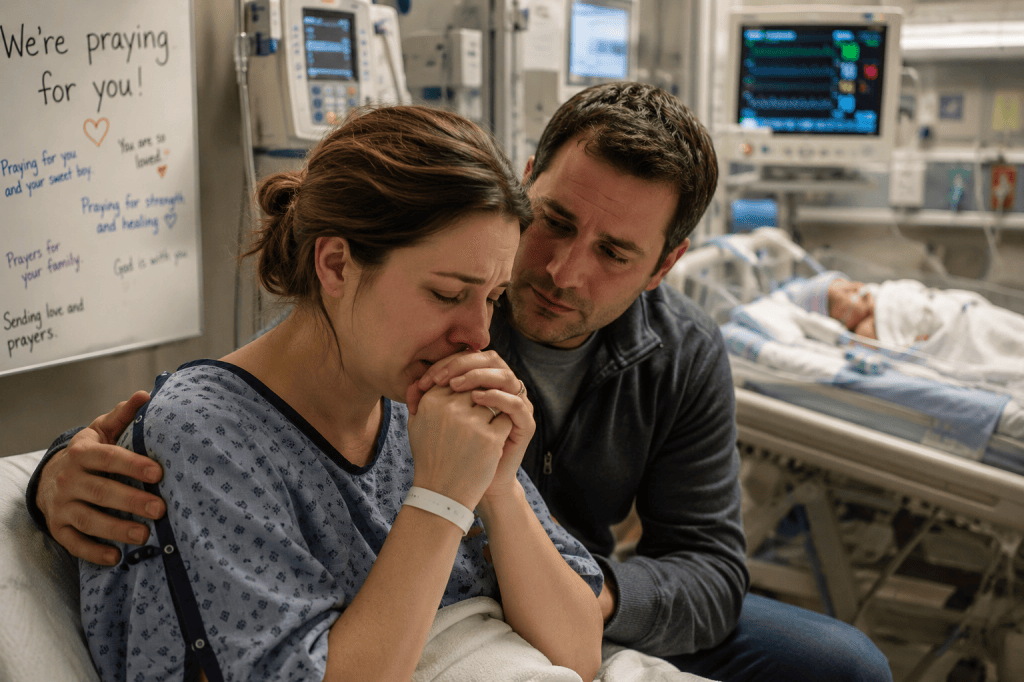
Sometimes we are the ones who send the cards, lay on hands, pray from a distance, send the encouraging text message. And sometimes we cannot. When our sighs are too deep for words, when the best we can do is survive, we have each other. God created us to live in community, to pray for and lean on each other. We are not meant to bear the hard things alone. We have friends in Christ who can carry us when we cannot carry ourselves.
Joy,

